The UK launches its first-ever UK Town of Culture competition
The UK has launched the inaugural UK Town of Culture competition — a new national initiative designed to support small and medium-sized towns, strengthen local identity and stimulate cultural life beyond the major metropolitan centres. The programme will run alongside the well-established UK City of Culture scheme, originally conceived as a way to replicate the so-called “Liverpool effect” following the city’s year as European Capital of Culture in 2008.
This article is also available in Russian here
City vs town: what’s the difference?
In the British context, the distinction between a city and a town is not directly linked to size or population. City status is an honorary title, historically granted by the Crown and still carrying symbolic weight and prestige. A town, by contrast, is a broader and more formal designation for a settlement without that status. Many towns are larger and economically stronger than some cities, yet remain legally classified as towns. This is precisely why the launch of UK Town of Culture marks a significant shift in cultural policy: it offers national recognition to places long overlooked simply because they lack formal city status.
How it connects to UK City of Culture
The idea of a City of Culture was first floated in 2009, when then Culture Secretary Andy Burnham proposed a national title and appointed television producer Sir Phil Redmond — creator of Grange Hill, Brookside and Hollyoaks — to chair a working group. The scheme was set to run every four years, with Derry/Londonderry becoming the first UK City of Culture in 2013, followed by Hull in 2017 and Coventry in 2021, whose programme was delayed by the pandemic. Bradford (2025) is the current titleholder, while the competition for UK City of Culture 2029 is already under way.

Dawlish. Photo: Anthony / Unsplash
Against this backdrop, Town of Culture appears as a natural extension of a proven model. The focus now expands beyond places with city status to towns such as Reading, Luton, or Northampton — communities whose populations rival those of cities, but which formally remain towns.
What Town of Culture offers
The winning town will receive £3 million to deliver a year-long cultural programme in 2028, with two runners-up awarded £250,000 each. A shortlist will be announced first, and every shortlisted town will receive £60,000 to develop its final bid.
Applicants are encouraged to focus on honest, lived storytelling rather than glossy presentation: what makes their town distinctive, what residents take pride in, and which traditions and new initiatives sustain local life. Sir Phil Redmond has echoed this approach, saying the panel is looking for “passionate, authentic voices” and a “unique story” from each place.
Representation is also built into the structure of the competition. The three finalists will include one small town (under 20,000 residents), one medium-sized town (20,000–75,000), and one large town (over 75,000). All towns are eligible to apply, with the exception of those within Greater London.
The government expects to announce the shortlist in the spring, name the winner in early 2027, and begin the Town of Culture year in 2028.
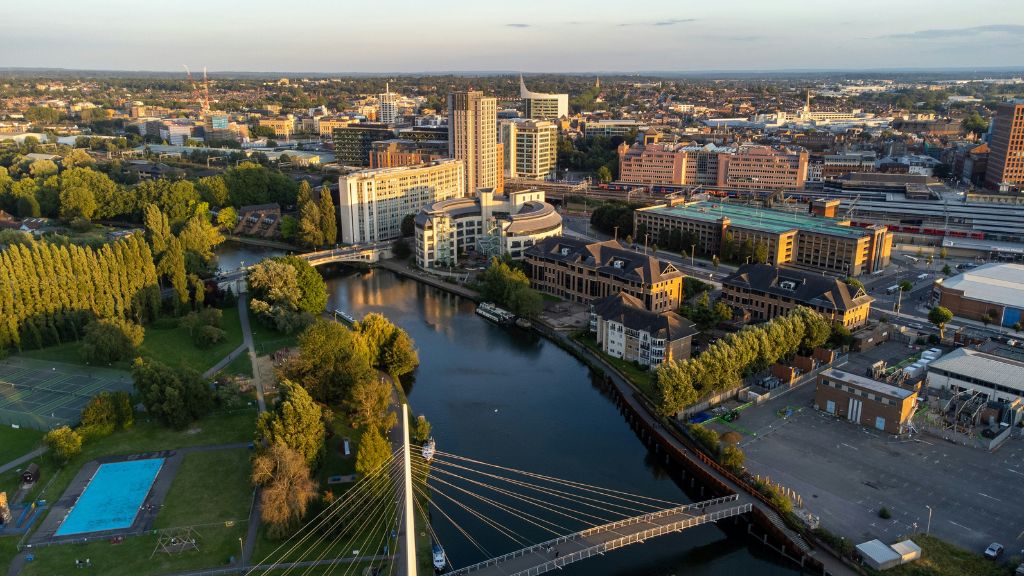
Cover photo: Reading, Marco Zuppone / Unsplash
Read here:
The City is getting a new free rooftop garden overlooking the Bank of England
BFI dedicates a season to the memory of David Lynch — one year after his passing
Related Articles
SUBSCRIBE
Receive our digest once a week with quality Russian events and articles