After Chernobyl: Tarkovsky and Eastern Bloc cinema at the Barbican
London’s Barbican Centre has unveiled Cold War Visions, a retrospective devoted to cinematic responses to nuclear anxiety across the Eastern Bloc. Running from 1 to 29 April, the programme spans seven decades of filmmaking — from the 1960s to contemporary documentary practice. It coincides with the 40th anniversary of the Chernobyl disaster, a catastrophe that reshaped not only the history of the region but the very language through which such disasters are understood.
This article is also available in Russian here
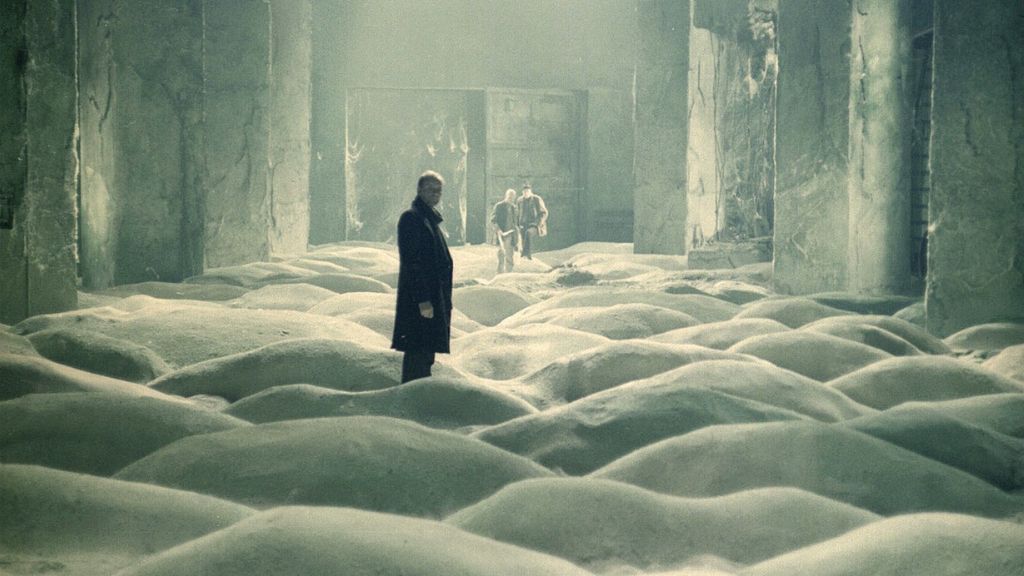
At its core is a selection of rare and canonical works from Bulgaria, Czechoslovakia, Yugoslavia and the Soviet Union. The curators foreground how filmmakers working beyond the so-called Iron Curtain articulated the fear of nuclear threat — often in ways markedly distinct from their Western counterparts. Among the key screenings are Ikarie XB-1 (1963), widely regarded as an influence on 2001: A Space Odyssey, and Stalker by Andrei Tarkovsky, where an industrial wasteland becomes a haunting metaphor for ecological and moral decay.
Chernobyl as a point of no return
The Chernobyl disaster unfolded on 26 April 1986 in Pripyat, then part of the Ukrainian Soviet Socialist Republic. The explosion of Reactor No. 4 released vast quantities of radiation, affecting not only Ukraine, Belarus and Russia but large swathes of Europe.
The catastrophe resulted from a lethal convergence of design flaws and human error during a safety test. In its immediate aftermath, information was suppressed, exacerbating the consequences: the evacuation of Pripyat began only a day later.
Chernobyl quickly came to symbolise a convergence of crises — technological, environmental and political. It exposed the vulnerabilities of nuclear power, as well as the cost of opacity within state systems and bureaucratic culture. In popular imagination, it marked a decisive shift: where nuclear threat in the 1960s and 70s had been largely speculative, tied to the spectre of war, after 1986 it became irrevocably real — a catastrophe already lived through.
This shift underpins the Barbican programme, which traces a trajectory from apocalyptic speculation to documentary reckoning.

Ikarie XB-1 (1963)
The season opens with a newly restored 4K presentation of the Czechoslovak adaptation of Stanisław Lem’s The Magellanic Cloud. Set in the year 2163, it follows a space expedition in search of life in another galaxy, only to confront reflections of its own fears. Directed by Jindřich Polák, the film is considered a cornerstone of the genre and, according to critics, a formative influence on Stanley Kubrick.
The Sun and the Shadow (1962)
A rarely screened Bulgarian feature, presented in the UK in a restored version for the first time. A seemingly light romance set on the Black Sea coast is gradually overshadowed by the dread of a potential nuclear strike. What begins as an intimate story evolves into a subtle meditation on the anxiety permeating everyday life during the Cuban Missile Crisis.
Atomic War Bride (1960)
This Yugoslav drama also receives its first UK screening. On the day of their wedding, the protagonists find their lives abruptly shattered by the outbreak of war. Directed by Veljko Bulajić, the film stands as a rare example of personal tragedy refracted through the lens of global conflict.
Stalker (1979)
One of Tarkovsky’s most significant works, charting a journey into the enigmatic «Zone», where the laws of reality collapse. Long read as an allegory of the post-industrial condition and ecological catastrophe, the film now resonates as an uncanny premonition of technological disasters such as Chernobyl.
The Sacrifice (1986)
Tarkovsky’s final film, made in exile. Against the backdrop of an impending nuclear war, its protagonist is prepared to relinquish everything to avert catastrophe. A philosophical meditation on fear, faith and human responsibility in the technological age, the film stars Erland Josephson, a frequent collaborator of Ingmar Bergman, with cinematography by Sven Nykvist.
We Live Here (2025)
A contemporary documentary examining the aftermath of Soviet nuclear testing in Kazakhstan. Through the lives of three generations, it reveals how radiation continues to shape human existence decades after the collapse of the USSR.
Chernobyl 22 (2023)
A short documentary by Ukrainian director Oleksii Radynskyi. Drawing on footage recorded by plant workers, it documents the events of 2022, when the Chernobyl Exclusion Zone fell under Russian occupation — a stark reminder of how a site of historical catastrophe can once again become entangled in contemporary conflict.
Chernobyl on screen
Chernobyl endures not only as a historical event but as a powerful cultural symbol. One of its most significant reinterpretations is the 2019 miniseries Chernobyl, created by Craig Mazin. Across five episodes, the series reconstructs the disaster, its aftermath and the attempts to comprehend its causes.
Drawing on archival sources and eyewitness testimony, its creators sought to depict not only the event itself but the system that enabled it — one in which secrecy and bureaucracy compounded the scale of the tragedy. Mazin has cited Chernobyl Prayer by Svetlana Alexievich as a key literary influence.
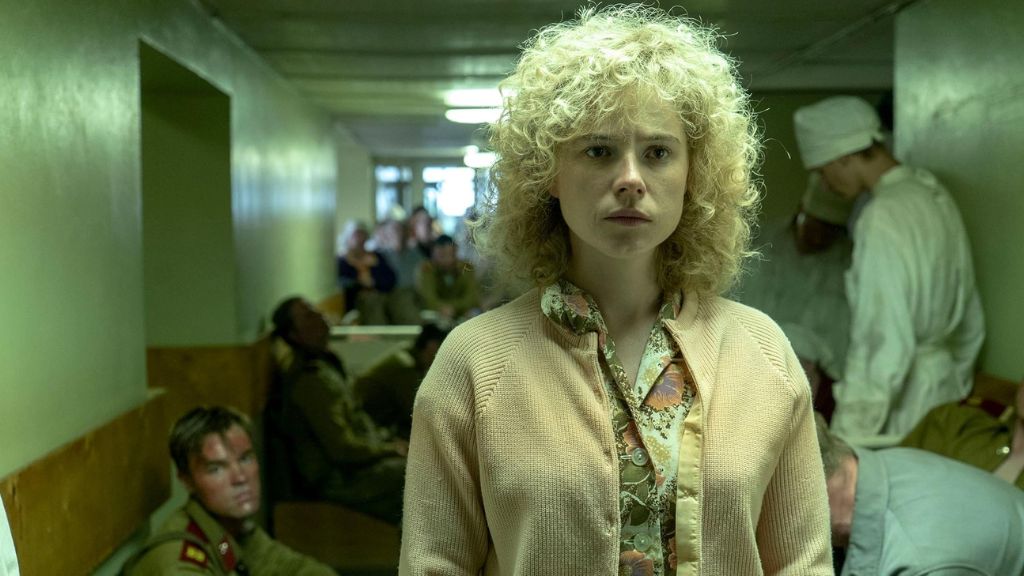
Jessie Buckley, Oscar winner for Best Actress (2026), in the miniseries “Chernobyl.” Photo: Sky Atlantic, HBO
The series achieved international acclaim, winning multiple awards including Emmys, BAFTAs and a Grammy, while also prompting renewed public interest in the disaster: visitor numbers to the exclusion zone rose sharply, and archival materials became more widely accessible.
Within the context of Barbican’s programme, this renewed attention feels particularly resonant. If the cinema of the Cold War grappled with the fear of a catastrophe yet to come, contemporary works — alongside projects such as Chernobyl — bear witness to its aftermath. This spring, audiences are invited to reflect on that transformation through some of the most compelling works ever committed to the screen.
Tickets for the screenings can be booked via the Barbican website.
Cover photo: “Stalker”, Mosfilm
Read also:
London’s spring art season 2026: retrospectives, rediscoveries and the spectacle of display
The right to create: A conversation with Dmitry Krymov
Russian classics on London stages in 2026: from Turgenev to Chekhov
Related Articles
SUBSCRIBE
Receive our digest once a week with quality Russian events and articles