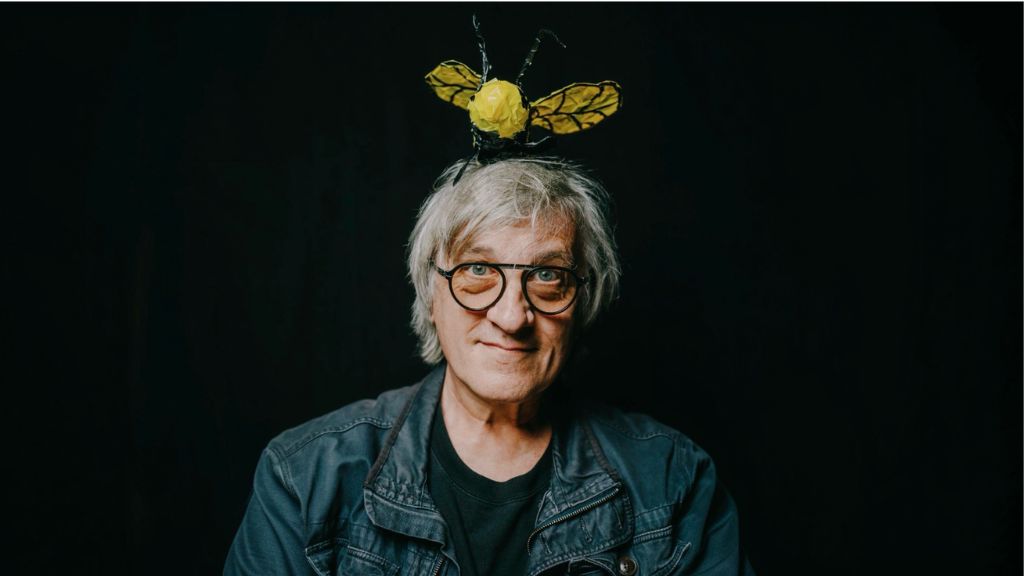
The right to create: A conversation with Dmitry Krymov
Dmitry Krymov now lives in New York, yet his theatre continues to surface in different cities and languages. Countries and stages may change, but the tone remains recognisable — attentive to the human condition, drawn to metaphor, and almost stubbornly resistant to overt political commentary. Margarita Bagrova, publisher of Afisha.London, spoke with the director about his Prague “Musketeers and me”, about the grandmother as a keeper of memory, about his New York laboratory, about censorship and political correctness, and about whether audiences can still be shaped today.
This article is also available in Russian here
— Dmitry, you have worked in London several times. Could you remind us when those visits took place, which productions you brought, and how British audiences received them?
— We brought productions from our Moscow Laboratory — Opus No. 7 and A Midsummer Night’s Dream, both in 2014. It was a wonderful trip. The audience received us beautifully — very warmly, very energetically. Yet despite that energy, I felt a kind of old, almost intimate cosiness in the city. London is huge, of course, but everything seemed to feel like the centre. I would be driving somewhere and the sensation wouldn’t change — historic houses, squares, decorative flourishes on facades. It all looks central, even when you must already be far from it.
There’s a wonderful atmosphere in London. The parks! And the cemeteries… I’m speaking as an outsider, of course — locals probably see many different sides of the city — but to me it feels very appealing.

— You are currently working on a Dickens project in London, combining Hard Times and Great Expectations. Did you find inspiration in Dickens-related places?
— I saw a few things, yes. I visited the museum, of course. But generally I’m not someone who likes to check his inventions against reality. To my mind, what I imagine becomes reality. Still, I did sense the city’s “smell” — very interesting, very warm. “Pleasant” and “warm” are probably the words that best describe my feeling towards London. Forgive these impressions from an outsider.
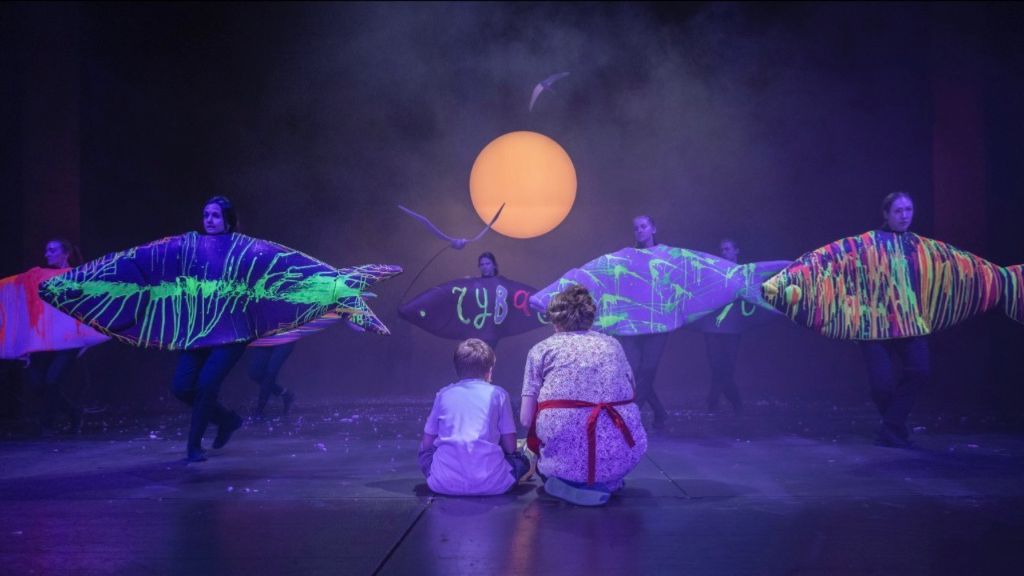
The Three Musketeers and I. Photo: Pyotr Voznesensky and Dmitry Krymov
— At what stage is the Dickens project now? Have rehearsals begun, and is there a sense of how it might develop further?
— We completed our first two-week rehearsal block and created a sketch of the future production. At the showing there was an excellent audience, many of the right people, and I was told it was received kindly. You know, the paths such projects take are often unpredictable. It’s one of those mysteries of Western life I’ve never quite managed to decipher. I wanted to work with English actors, and that was wonderful. I don’t want to make predictions, but I do hope this sketch will lead to something more.

— What are you currently working on in New York? And how does your production cycle work — how long does it take to create a performance?
— My laboratory in New York is a story of its own — it depends only on us. I don’t wait for invitations: I come up with a production, and we realise it together, roughly one per year. We’re now working on the fourth. At the moment we’re doing Uncle Vanya in our Laboratory, and we’ll be performing it at La MaMa Theatre. It’s a wonderful theatre that has taken us under its wing. We’re residents there, which means we have something like a clear run for the next few years.
— Is it Off-Broadway? When we met at Seagull: True Story in London, Alexander Molochnikov mentioned this distinction in relation to his production.
— Everyone says it’s better to work Off-Broadway, yet people still jump for joy when they’re invited to Broadway. I have an actress — very dear to me and extremely talented — who was meant to play in Uncle Vanya. She had already begun rehearsals, and then one morning she called and said, “I need to talk to you.” I asked, “You’re not pulling out, are you?” She said, “No, but we need to discuss something in person.”
Read also: Russian classics on London stages in 2026: from Turgenev to Chekhov
I thought: what actress calls in the morning to discuss some new interpretation I came up with in a sleepless night? That never happens. In the end she came and simply said, “Broadway”… Almost in tears, but happy, of course, because everyone dreams of it.
Yes, our theatre is Off-Broadway. It’s well known and has a strong reputation. It was founded about sixty years ago by the remarkable Ellen Stewart — first as a café, then a theatre. She invited directors like Kantor and Wilson to New York and had a real instinct for experimentation. Today it’s run by her former student, also a gifted and worthy figure, and that taste for experimental theatre is still very much alive there.
-
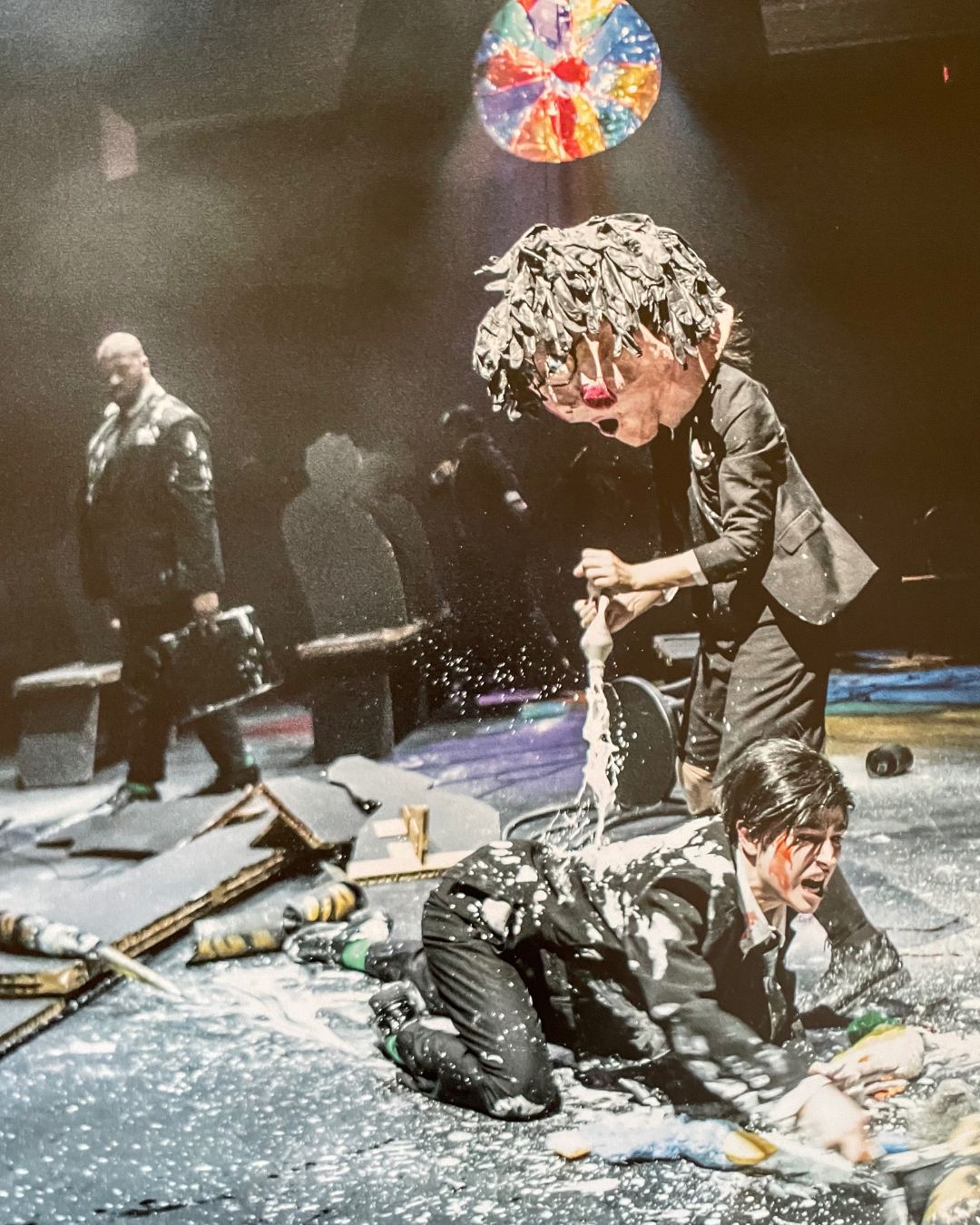
- Metamorphoses, KrymovLabNYC, LAMAMA Experimental Theatre, New York. Photo: Marina Levitskaya
-
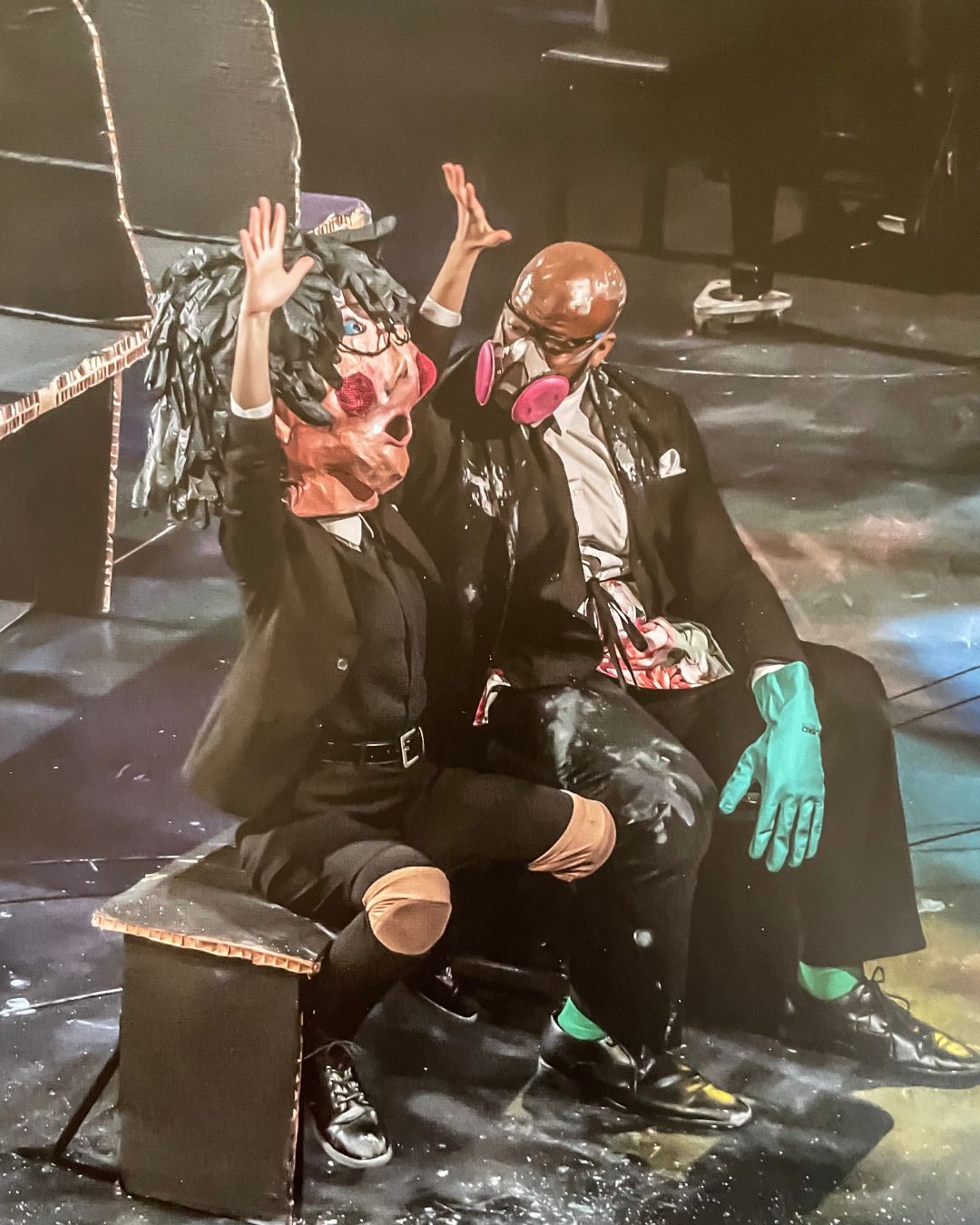
- Metamorphoses, KrymovLabNYC, LAMAMA Experimental Theatre, New York. Photo: Marina Levitskaya
— Who is your audience there?
— I love everyone who comes. Everyone. And I’m grateful to them for their attention. But with all respect to Russian audiences, I invited American actors into the Laboratory because I like it when Americans come to our performances — especially young Americans. If they respond to our theatrical language, to the way we think on stage, that’s when it becomes meaningful for me. Then I understand why I’m here.
There’s a powerful energy in connecting people from different continents and cultures — in making them forget whether they’re Russian or American and simply watch theatre as theatre. That’s the real thrill.
If you think of theatre as an art form rather than as a kind of psychological support club for émigrés who miss the Russian language and their favourite actors, then the task becomes different — and, I suppose, more difficult.

— Could you imagine your New York productions eventually coming to London? Are they created with touring in mind?
— Yes, of course.
— Over the past few years — with changes of country, language and acting traditions — has your directing language shifted at all? And if so, in what direction?
— I hope not, because it would be painful to discover that something had broken. On the contrary, my idea is to show that however sad certain things in life may be, no rupture should stop a person from doing their work. A cabinetmaker keeps making chairs after a volcanic eruption — he steps aside, if he survives, finds wood, dries it, and continues to make chairs. Theatre is more complicated than making chairs, so of course there are changes. One has to feel what is happening around you — and often what’s happening is a nightmare. That nightmare has to be visible. This is one of my main concerns.
I don’t want to show it directly — I never have, not even in Moscow when there was complete freedom. I’ve always worked through metaphor.
Read also: The last Stroganov: how Hélène de Ludinghausen revived a lost Russian legacy
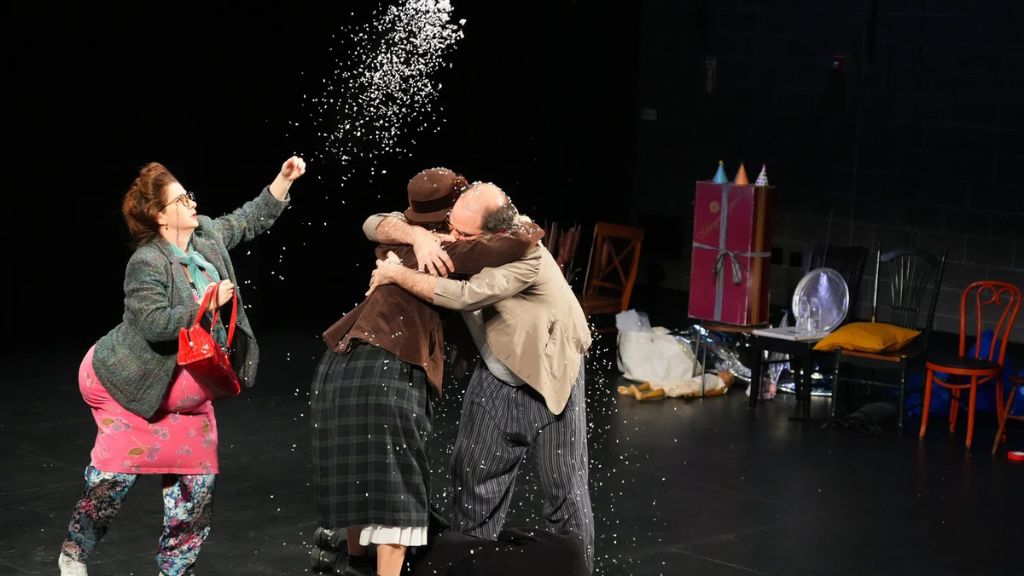
Eugene Onegin. Krymov Lab. Photo: Steven Pisano / Bronwen Sharp
For instance, how would one stage Little Red Riding Hood — and I would very much like to — so that it’s understood as being about the war in Ukraine? Or rather, so that it’s clear that, while making Little Red Riding Hood, I know that a war is going on? Does that mean dressing the wolf in a military uniform? And how do you make a serious play about a human being at a time of war? After all, in Richard III what matters is not the wars themselves but the psychology: the psychology of evil, jealousy, trust, deception, resilience, wisdom, grief — human qualities, and love.
How do you create a work against the backdrop of surrounding horror that can still “bloom” and have its own scent? A scent, forgive me, stronger than the smell of war —
a scent that absorbs that terrible smell. That’s the question. I realised I had never really thought about it before, but in the past four years I’ve understood that there’s no way around it. It’s very difficult, because around us there’s almost nothing that offers an answer.
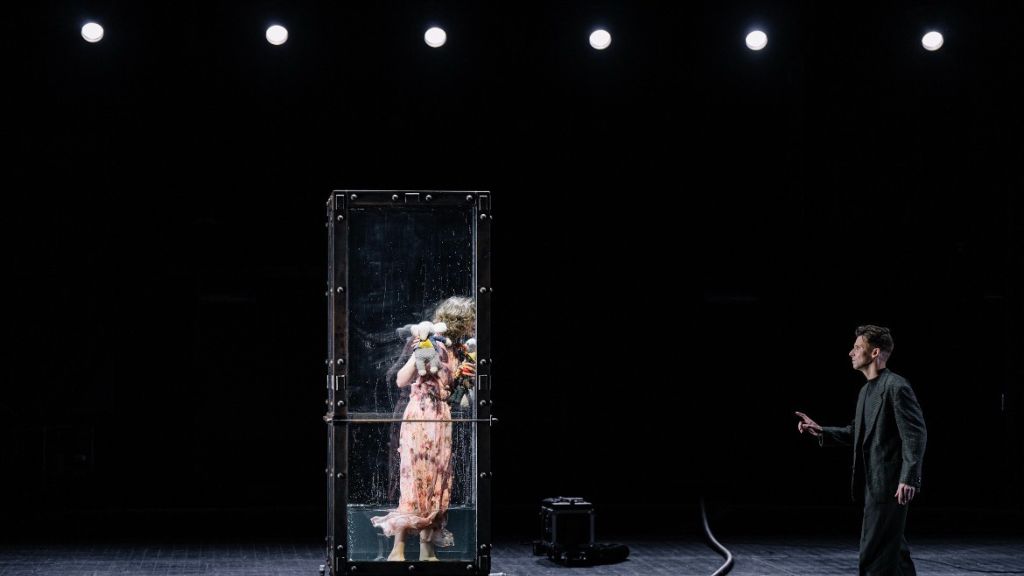
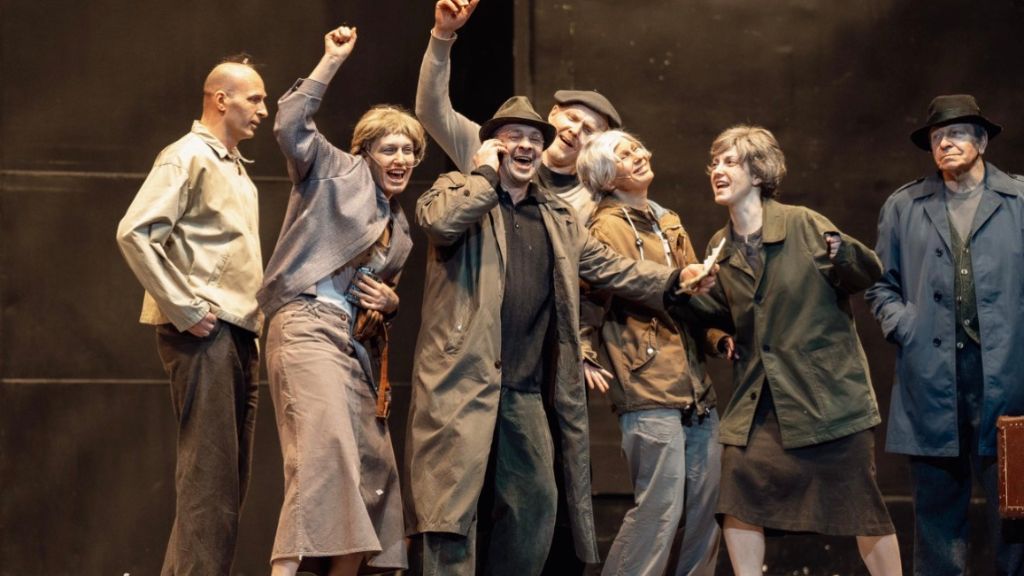
Requiem, Klaipėda Drama Theatre, Lithuania. Photo: Dima’s Rimelka
— You’ve had quite a few projects in Europe as well as in the US. Over the past few years I’ve managed to see two: Peter Pan in Riga and The Three Musketeers and I in Prague. How did the Prague story begin? And what did it mean to work on the stage where Mozart once conducted?
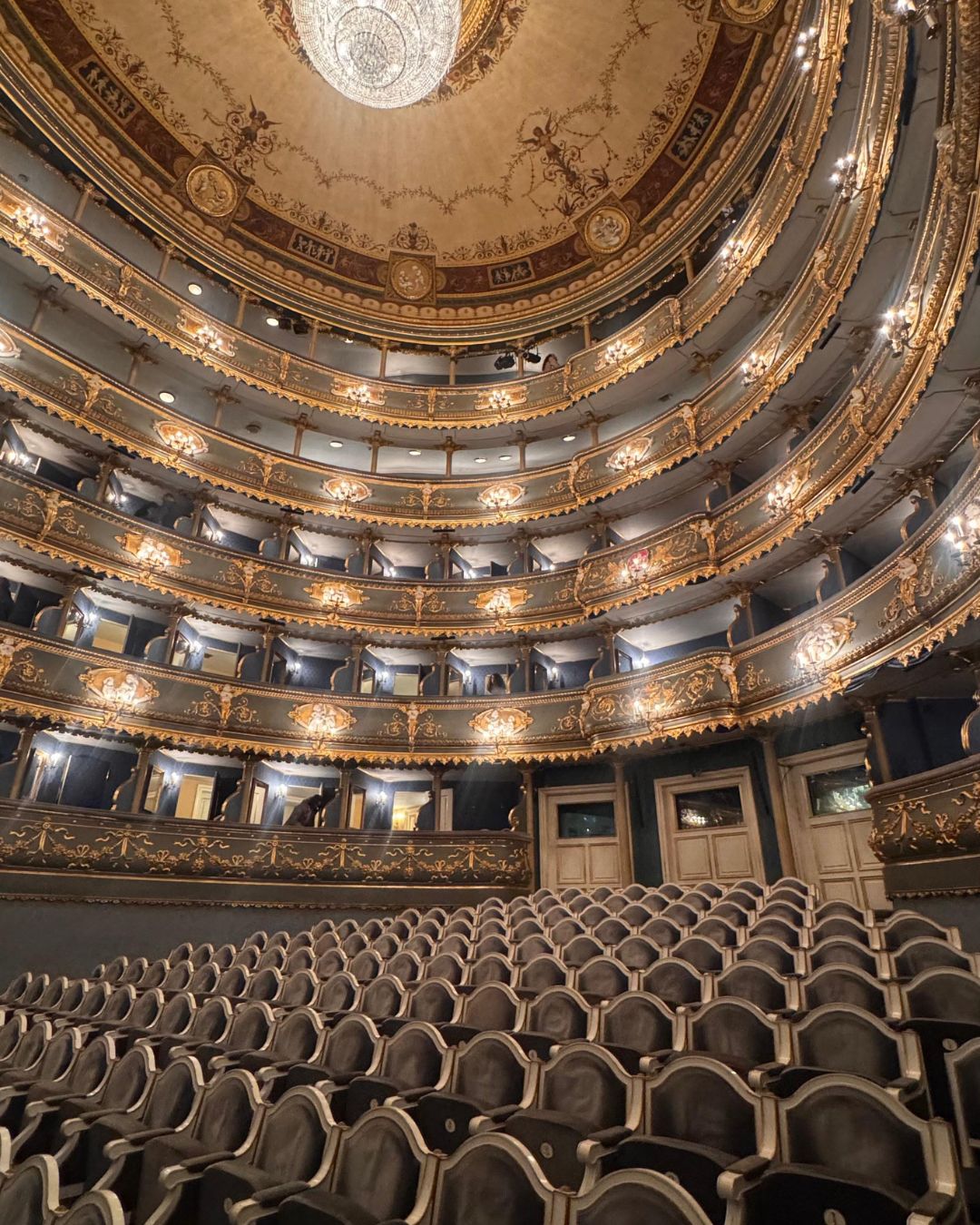
— Two directors from the Prague theatre came to Klaipėda for the premiere of my production. They watched it, we spoke, and they invited me to Prague, to the National Theatre. They showed me four spaces — enormous, astonishing ones: one modern and three historic. They said, “Choose.” I chose the one where Mozart conducted the premiere of Don Giovanni. There’s a historical marker there, a plaque showing where he stood. It’s not a large hall, but very intimate and warm.

— Was this production a long-standing idea, like Peter Pan, something that matured over time? Or did it emerge from the new realities of recent years?
— No, there was no old idea at all. I had never planned to stage The Three Musketeers in Moscow. Something just began to flicker… many things do. I suppose it went like this: when I was offered the production — two, maybe two and a half years ago — the question of Russian culture abroad was extremely sensitive. Many people wanted to cancel it altogether.
I understood it would be unfair to put them in an awkward position by proposing Chekhov, for instance. They would have searched for a polite way to say no, felt uncomfortable, but still said it. The mood would have been spoiled before we’d even begun.
So I thought it might be better to offer something indisputable, even harmless — say, The Three Musketeers. Only it had to become something personal. I came up with the idea of making a play about how my grandmother read that book to me in childhood. In fact, I staged a play about myself, not about the musketeers — about myself and my grandmother.
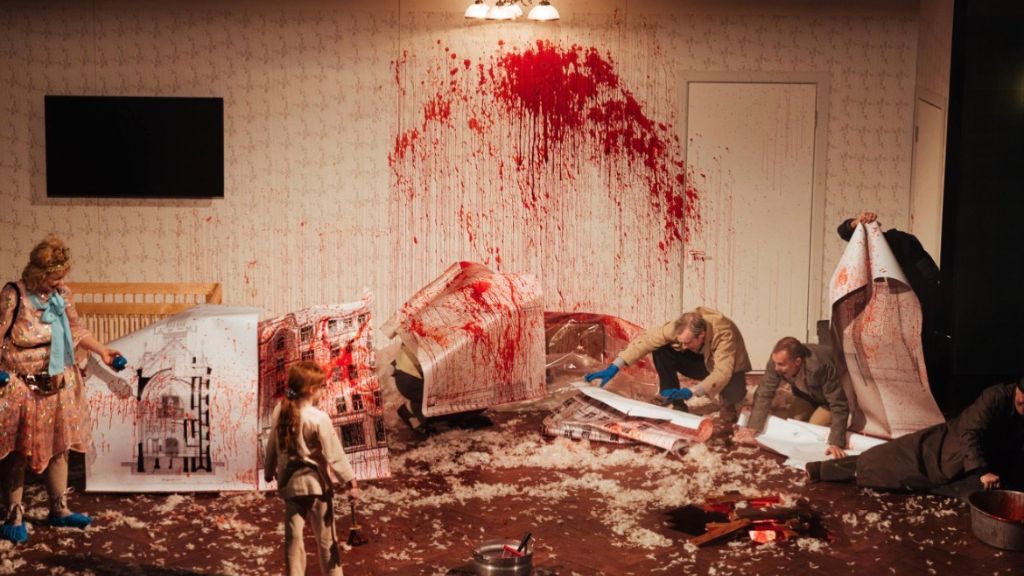
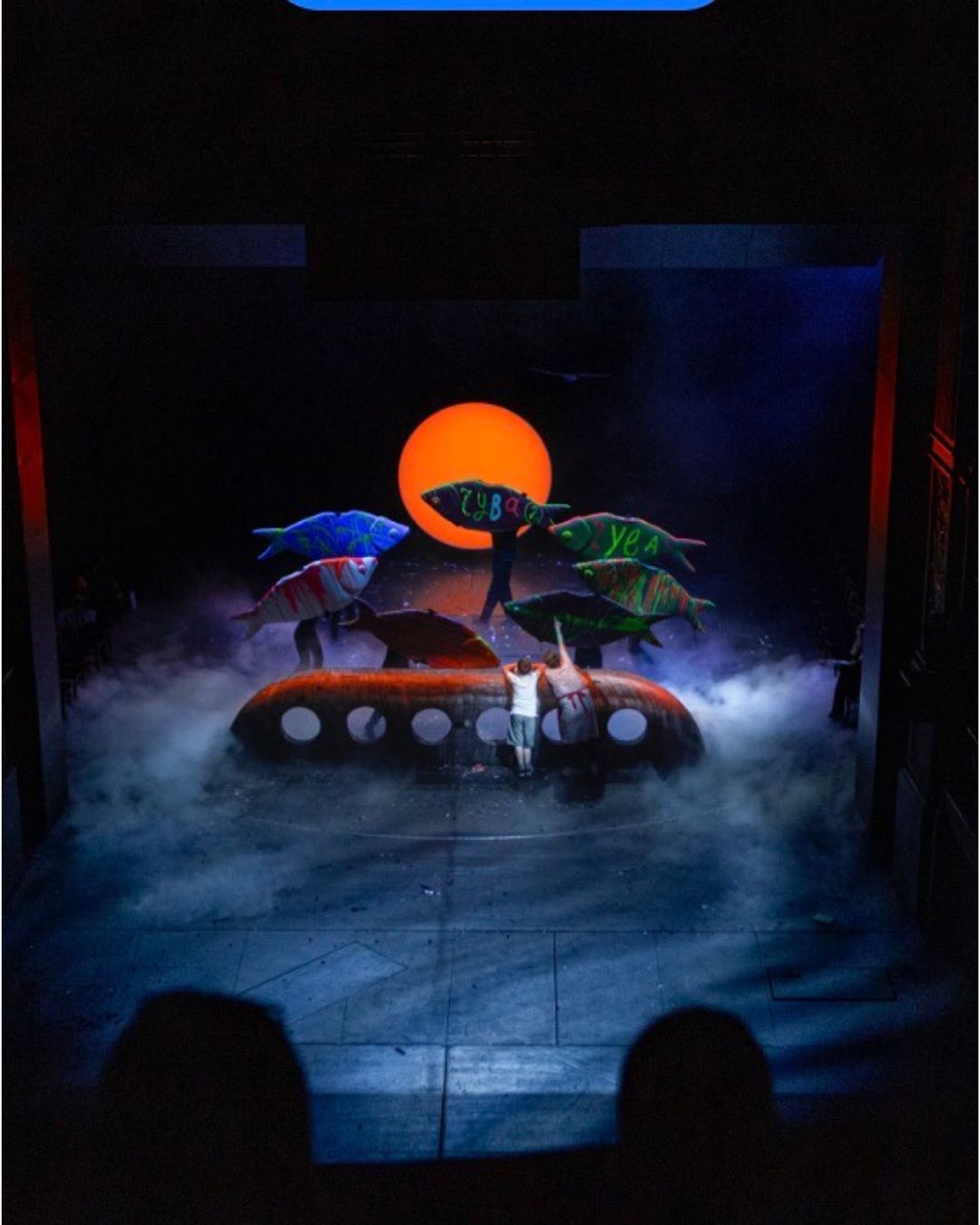
Peter Pan. Photo: Roland Lagun, Linda Gibiete, Girts Ragelis
— How autobiographical is The Musketeers and I — not literally, but internally? Could it be seen as a conversation with your own childhood?
— Absolutely. But that doesn’t mean it’s a literal portrait of my childhood. My father wasn’t like the one in the play, nor my mother. But we did have a cat, and when it peed on the floor my grandmother cleaned it up and got very angry that it always fell to her. There you are — that detail with the cat comes straight from my childhood.
In truth, the play is simply about childhood — about childhood that ends, but not before a grandmother manages to pass on certain foundations that stay with a person for life, and then she leaves.
— Watching the play, I felt it wasn’t only a personal story but also about the broken chain between generations today. Grandmothers once passed on memory, language, values — that line often feels interrupted now, especially in emigration. Do you feel the play resonates differently with different generations? And what is the grandmother’s role for you in that inner system of coordinates?
— I do what feels important to me. I want to say what I never managed to say to her — how grateful I am, how much I love and remember her. To do that, I invent a theatrical story and tell it in a lyrical, humorous way: how it was with my grandmother, what she taught me, what has stayed with me and continued all these years. It was a powerful investment.
Even for those who didn’t have that kind of closeness with their grandmother — however distracted children may be, however half-listening they are — something still remains. As children, boys and girls sense that “tree” going back into the past, and the grandmother is the best link to it. Without a sense of the past, a person simply isn’t whole.
Read also: The biggest museum thefts and art forgeries of 2025
Thanks to my grandmother, the Russian Civil War — which happened long before I was born — feels close to me, because she was a commissar in the Iron Regiment during that war. She hardly told me anything about it, but the knowledge alone, the photographs… Now I look at images I’ve found online: with all the moves and upheavals, things vanish into history, carried away by the wind. But one photograph I remember — it stood on our bookshelf. It shows her with her comrades, she’s nineteen. It’s an extraordinary memory. We spent more time together than I did with my parents, because they were busy, and my grandmother was mine.
I didn’t read The Musketeers or Twenty Thousand Leagues Under the Sea myself — she read them to me. It was a ritual. She would take my hand and we travelled together through those stories. Into the Civil War she did not take me — thank God. But with The Musketeers she more than made up for it.
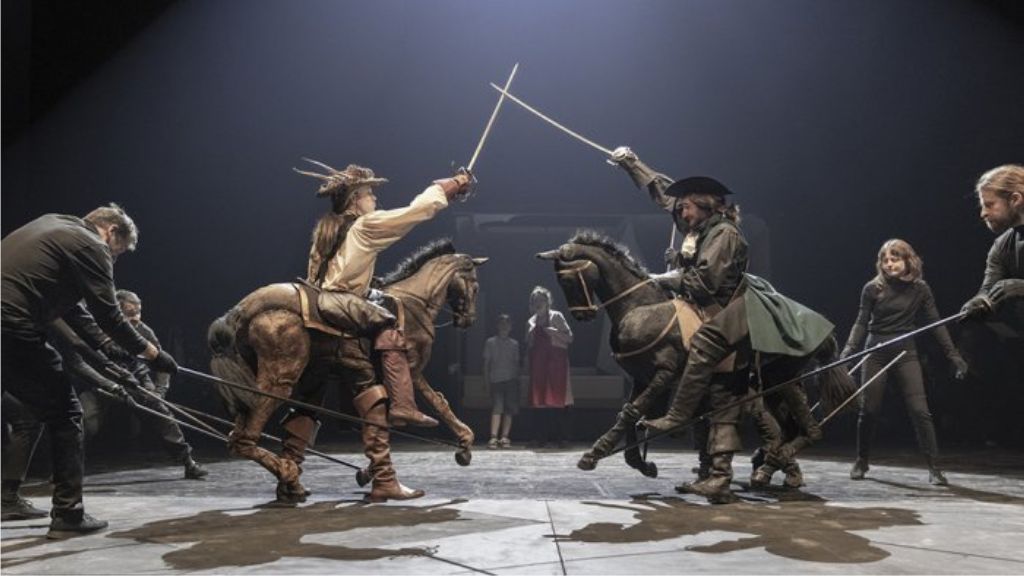
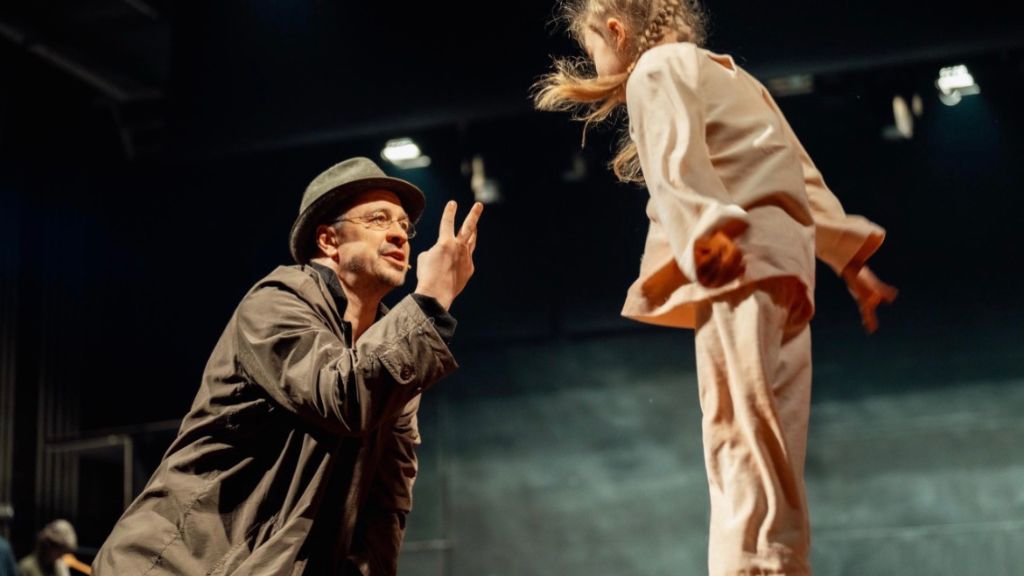
Three Musketeers and I, National Theatre, Prague. Photo: Patrick Borecki, theatre press service
— The values in the story — friendship, honour, freedom, adventure — do they still feel alive today? Or has something in that set of ideals lost its force?
— First of all, we probably romanticise things a little. In reality, the Cardinal’s guards may not have been so bad, nor the King’s musketeers so good. Quite possibly they were just reckless young men who loved horses, their comrades, and beautiful women. Maybe it wasn’t about correct ideals at all — maybe it was about the air of risk and freedom.
But parents want their children to see nobility, ideals, courage, honesty and bright love. And that’s fine — my grandmother equipped her grandson with all of that before she left: curiosity about life, drive, a thirst for adventure, the charm of friendship and a sense of honour. None of these qualities ever really harmed anyone. Well… sometimes they did, of course. Very much so.

In St Petersburg, for example, an acquaintance of ours had an old photograph of a young man on her wall, a distant relative. He was a cadet in the White Army, partly of Georgian descent, very handsome. When the Reds took him to be shot, the commander — also Georgian — recognised the shared heritage and offered him the chance to step aside. But he refused, stayed with his comrades, and was executed.
So nobility and friendship don’t always help you survive. But without them the world would be miserable — inhabited only by jellyfish, which are the best survivors in history, adapting to mammoths, pterodactyls, Egypt, the Aztecs, Greece, Rome, Babylon. Adaptability is more efficient, of course. But not everyone is built for it. It’s a difficult question. In The Three Musketeers that adaptability is seen as a flaw. And that’s why it’s such a wonderful, idealistic book.
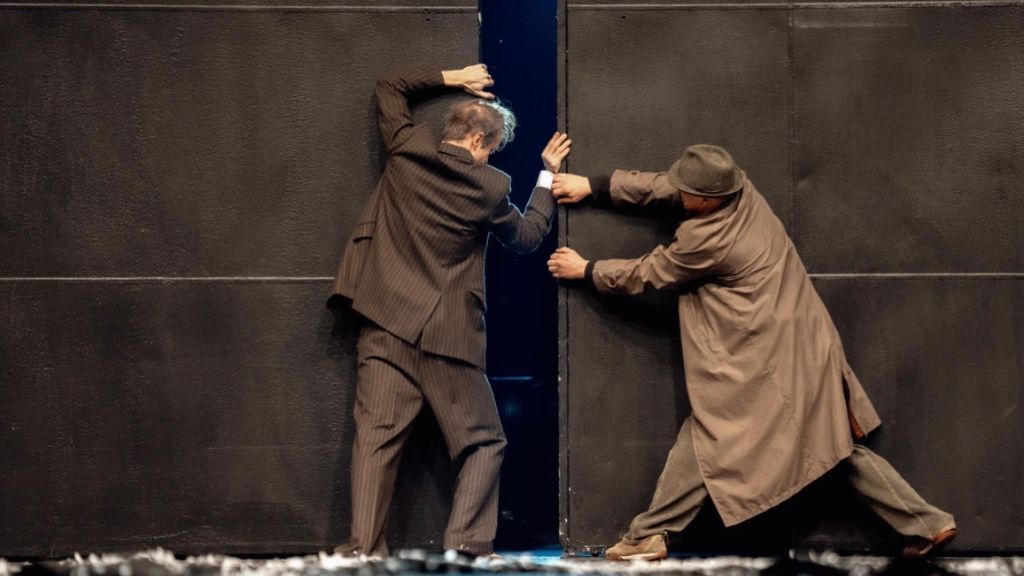
Peter Pan. Photo: Roland Lagun, Linda Gibiete, Girts Ragelis
— Could The Musketeers and I ever become a touring production? Is there any chance London might see it one day?
— The whole thing is deeply tied to the lifting mechanisms and technical features of that old Mozart stage. The construction was practically built for this production: parts of the stage have to rise and fall in specific places. That machinery, plus the large number of people involved, makes it very difficult to tour.
For now, while it’s running, you can see it in Prague. Peter Pan in Riga, for example, was removed from the repertoire because in the script Pushkin spoke Russian for five minutes. Everyone liked the show, but later the people responsible changed their minds.
Read also: How Diaghilev’s “Saisons Russes” influenced the European art world of the 20th century
-
- Photo: Afisha.London
-
- Photo: Afisha.London
— If you were staging The Musketeers and I in an ideal Russia, which theatre would you want it in? And who would you trust with the role of the grandmother?
— I have a wonderful actress I’ve worked with — Viktoria Isakova. She would play the grandmother beautifully. Masha Smolnikova is also incredibly talented — a real genius — but as a grandmother she might be a little comic. She’d be better as D’Artagnan, or Milady. My God, yes, Milady — that would be her role! We could stretch it to an hour and a half. With Masha it would be extraordinary.

— I’d like to talk about the language of contemporary theatre. In The Musketeers there’s an everyday moment — a toilet scene. We’re seeing more of this in British theatre now, opera included. What does that kind of gesture do for you on stage: is it about physicality, about collapsing the distance with the audience — or simply about life being allowed to look like life?
— My wife tells me off for putting a toilet on stage… But listen — why does everything have to mean something? A child comes home from school, drops his bag, goes to the loo, sits down to do his homework. That’s it. Nothing more. If a child eats chicken with his hands on stage — does that “mean” something? Yes. It means freedom. Children always eat with their hands — it tastes better.
And children go to the toilet. I want the kids in the audience to recognise themselves, not some sanitised, generic “theatre child”. It’s a small sign of life. Not shock, not “exposure” — just a simple, understandable gesture: the boy does what everyone does.
And then a musketeer arrives and goes to the toilet too. The sound is completely different, because musketeers are… more powerful, more, shall we say, French — more masculine. Like a fire hose. This is a musketeer. This is Athos, who is about to execute his former wife. How should he pee in a toilet? The sound has to be like the statue of the Commendatore — grand, solemn, forceful.
Read also: Fyodor Chaliapin in London: the triumph of Boris Godunov and an audience with King George V
But there was another moment in the production that was interesting. I mean the scene where, before a fight, the musketeers insult each other — a musketeer and the Cardinal’s guard.
I wrote very sharp swearing — as sharp as I could make it for a children’s audience. They translated it obediently and delivered it obediently. Then the actress playing Milady raised the question: can we show this to children? We were sitting around a table, with our boy actor there as well.
And I thought: what are we supposed to do — pretend they don’t know these words? It’s all convention, isn’t it — bans and taboos: you mustn’t smoke, you mustn’t swear. It’s absurd. People swear in the street — but in theatre they can’t? Theatre was born in the public square, as Pushkin said. And anyway, how can this be? Shakespeare exists — and here we are with these “chaste” rules. What hypocrisy. What prudishness.
So I said: let’s ask the boy. He answered very calmly: “Well, there are a few words I don’t know — but why are you asking me? You’re adults. I’m eight.” We all laughed and dropped it.
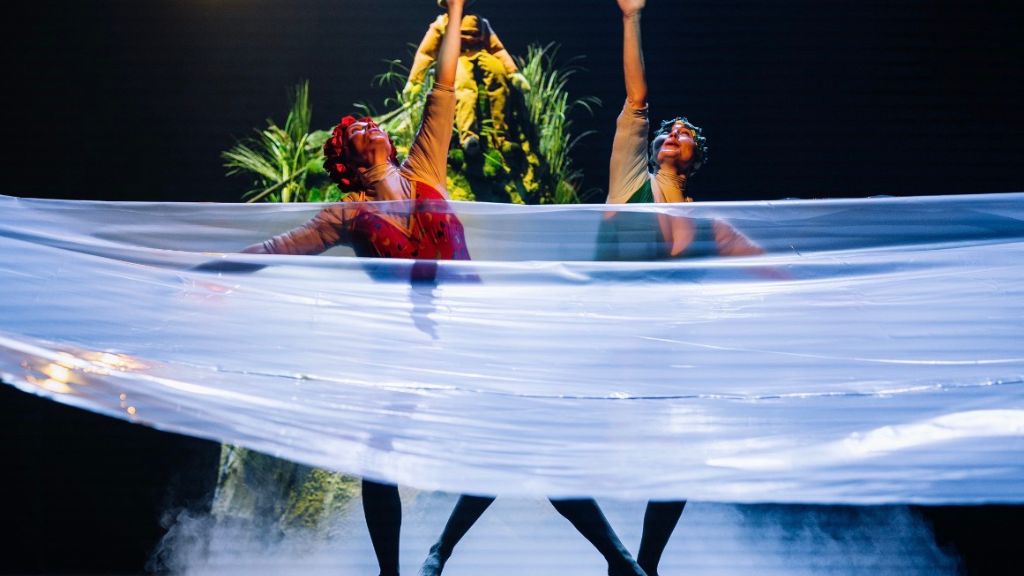
Requiem, Klaipėda Drama Theatre, Lithuania. Photo: Dima’s Rimelka
— You often work with international teams. What language do you rehearse in? Do things get lost in translation — and how do you know an actor has really heard you?
— In rehearsal I speak Russian. It’s the language I think in. After that it’s down to the interpreter — they need to be good, and quick. In America I have a translator I’ve worked with for many years; we function like one team. In Prague I was lucky too. And in Lithuania.
And how do you know the actor has heard you? It’s simple: they have to do what you need — but filter it through themselves, through their body, their nerves, their charm. If they don’t, then for whatever reason they haven’t heard you. Today things aren’t done the way they once were at the Moscow Art Theatre — over years — but in seven or eight weeks. In that short time you have to reach real understanding. There’s very little time.
So the problem isn’t language, it’s speed. And losses happen anyway — even when everyone speaks the same language…
— I wanted to ask about surtitles. This is my personal sore point: twice, in Prague and in Riga, the performance was in a language I don’t speak, and I relied on surtitles. How involved are you personally in the translation?
— Of course I worry if something is wrong with the surtitles, and I get involved as much as I can. In Klaipėda I made two productions, and everything was calmer there. Now so much depends on haste and nerves: sometimes the titles are done on the final day, and you simply don’t have time to check everything. That’s my pain too.
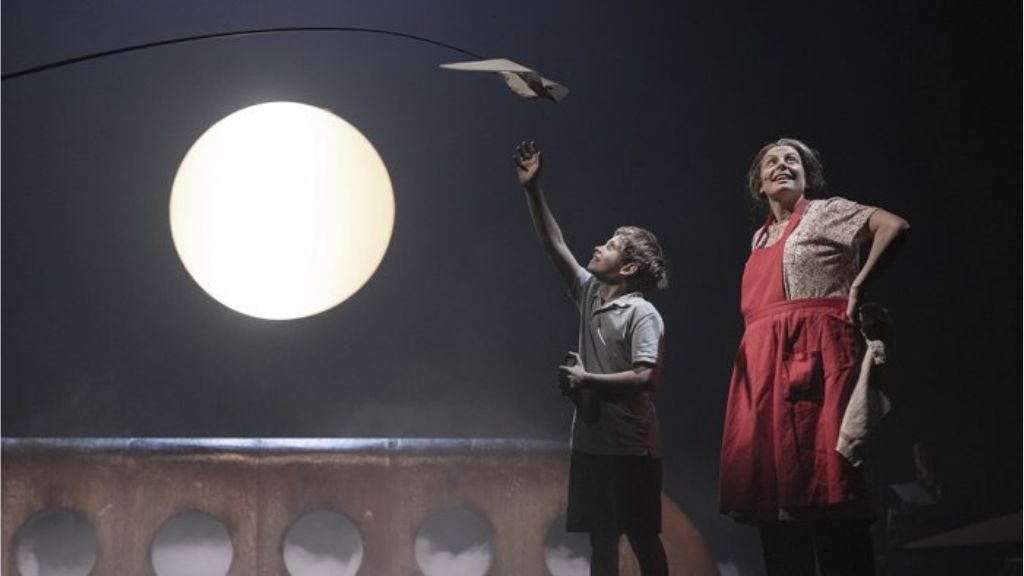
Three Musketeers and I, National Theatre, Prague. Photo: Patrick Borecki, theatre press service
— What inspires you now? Specific people, art, or the reality around you?
— Everything around me. I take in everything with that question in mind: how could this be used in my work? People — everything.
When you see something truly good, you feel a kind of exhilaration: it means it’s possible. It gives you a real push. But it happens very rarely. There are only a few directors who can create a miracle in theatre. A miracle is when you forget yourself in the auditorium and everything else stops mattering. You enter another space. You laugh differently, you cry differently. That’s a theatrical miracle — and very few people can do it. Even if you’re lucky enough to witness it, it only shows you that a miracle can be made at all. Your own miracle you still have to make yourself.As for the spark — the impulse, the “inspiration” you mention — you can find it anywhere.
Once I painted for quite a long time. I used to go to the Central House of Artists in Moscow. The exhibitions there were usually dreadful — 99% were bad. But I still went. Even just looking is useful: you can still push off from something. You don’t have to push off from something brilliant — you can push off from an argument, from irritation, from anything. In the end, you still have to do the work yourself. It’s only the first nudge. And you never know where it will come from. If you need it, you’ll find it. And then — it’s on you.

— When someone cries during your performance, is that your sign that the work has truly landed?
— Yes. It’s the highest recognition. Especially when the audience cries and laughs at the same time. But tears on their own are a good sign too.
— How does the audience differ in America, Europe and Russia? Is the emotional temperature in the room different?
— In Russia you have to win the audience over every time. It’s like a woman who doesn’t want to dance with you at first — you have to win her. Every time. Even if you already have a name and recognition, even if you’re a known “suitor”. Every time.
They’ll compare you with your past work, watch for where you slip, where you’ve become worse. And anyway, it’s still the country of Stanislavski. Nobody has seen him, but they’re proud of him all the same. And they say to you: “And who are you?” So you have to win her. That’s work.
Read also: Homewear as cultural code: why mixed-culture couples argue about slippers
In America the audience is very naive: they come to theatre to have a good time. They’re a bit like children — open, grateful. They’re intelligent and generous when they’re watching something good. But when you see them respond in the same way to a bad performance, you think: are you foolish? Why are you reacting? It’s a bad show. Why are you cheering? Maybe different people go to serious theatre and silly theatre? It doesn’t look like it. I think it’s the same people. And how those things coexist, I don’t know. I really don’t.
After that I become slightly suspicious when they laugh at my shows. Tears are deeper than laughter. You can’t fake them. It’s easier to get laughter: throw a cake in someone’s face — people will laugh. To make an audience cry, you have to be Charlie Chaplin. Chaplin created the genius image of the small, unlucky man. And when a cake hits that man in the face, you can cry and laugh at the same time. And this is what I think about audiences: they are capable of becoming extraordinary audiences — they can be educated. But you can’t feed them silage. You have to give them good food.
-
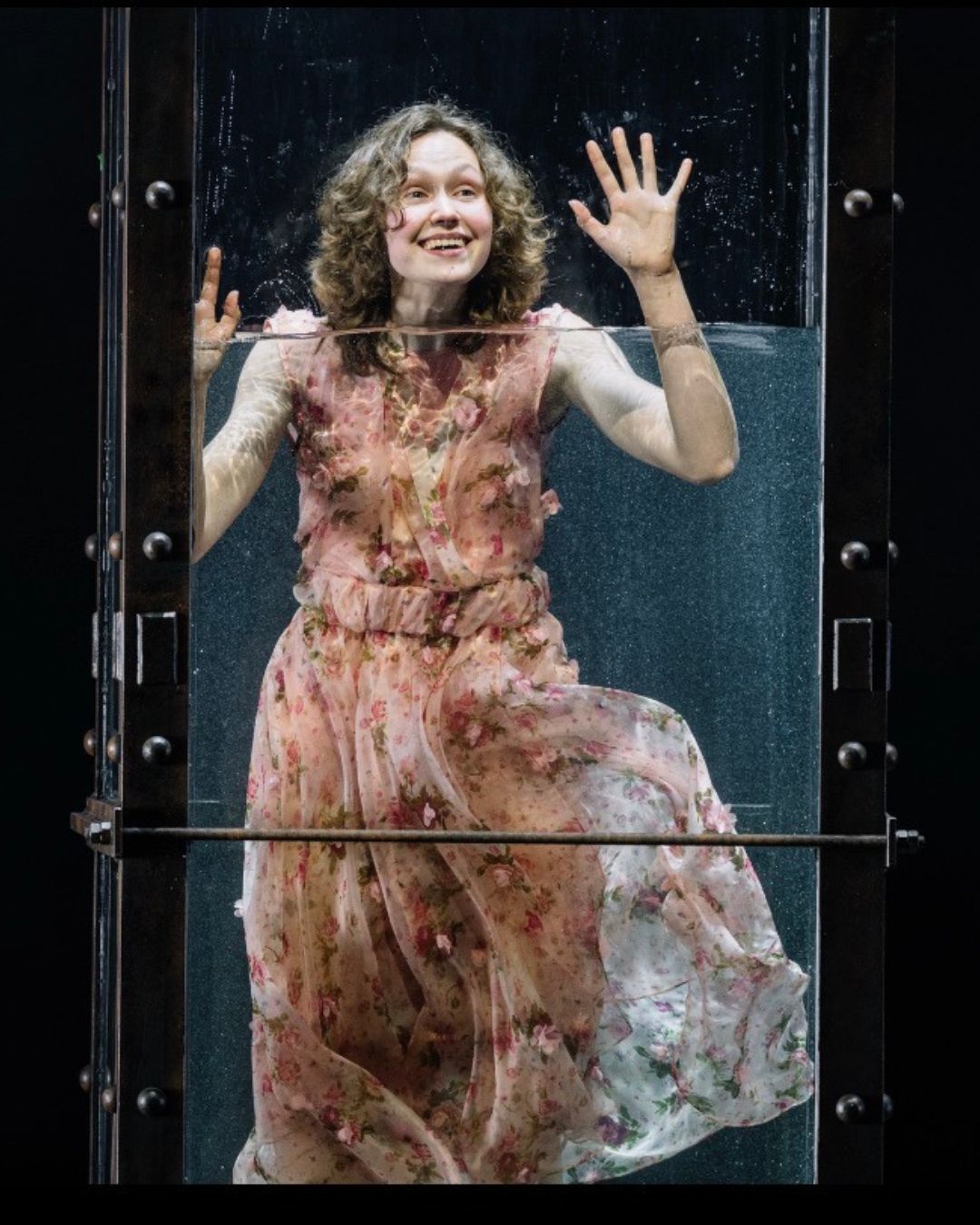
- Requiem, Klaipėda Drama Theatre, Lithuania. Photo: Dima’s Rimelka
-
- The Three Musketeers and I. Photo: Pyotr Voznesensky and Dmitry Krymov
A close friend of mine, Maria Vasilievna Rozanova — the wife of Andrei Sinyavsky — once told me how she cured her son Egor (now a grown man and a well-known French writer) of certain teenage fashions when he was 13 or 14.
For instance, he wanted to wear dreadful boots like other teenagers — with studs. She understood that if she simply said “don’t”, he wouldn’t listen: she’s his mother, she’s out of date, and so on. So she said, “Come on — I’ll buy you boots. If you want them, you can have them.” And she took him to the most expensive shop in Paris and bought him boots so beautiful, so perfectly made, you could practically eat them. After that he simply couldn’t put on his studded boots again. A good mother. That’s why you educate an audience through good examples, not through lectures.

— Dmitry, we invited readers of Afisha.London to send in questions, and we chose three.
— Question from Natalia in Leeds: I’ve followed your drama productions for years and was fascinated to hear about your first opera staging. Where did you personally feel the main difference between directing opera and directing drama?
— The experience was both absurd and incredibly rich. My designer and I prepared carefully: we built the production around screens and video. On the opening day it started raining — then a storm, water everywhere. The performance was outdoors, electricity couldn’t be used, and the show could have been cancelled. But I said: “Don’t cancel it.” We bought five torches, and I, with four assistants, simply lit the singers by hand in complete darkness. It was astonishing — electricity, quite literally, was in the air. The audience sat on wet seats, but the atmosphere was extraordinary: exotic and electric at the same time.
Read also: London: dynamic pricing in the international theatre world triggers backlash
That incident showed me the main thing about opera: you have to make it feel fresh and alive now, today. And actually that’s not only opera. Even if you’ve been preparing for a year or two, the performance has to be “today”. What seems pre-planned has to come alive in front of your eyes. That’s the trick of theatre: no matter how long you’ve prepared, it has to live in the moment.
Peter Pan. Photo: Roland Lagun, Linda Gibiete, Girts Ragelis
— Question from Vasily in London: During rehearsals for The Cherry Orchard in Philadelphia, you had a political-correctness consultant in the room. Do you see that kind of intervention as a “soft” form of censorship? And where do you draw the line between respect for context and limits on artistic freedom?
— It’s not particularly soft, really. It is censorship, of course. The woman was simply very likeable. Her job wasn’t to obstruct us. There were a few times when she wanted to stop rehearsal and talk, but I would immediately say: “We’ll remove this now. I’ll solve that scene differently. Let’s talk later. I don’t want to interrupt rehearsal.” She agreed, I changed something quickly, and that was it.
But it’s not the prohibitive kind of censorship that exists in Russia now. As someone who has arrived from there, when I look at the shortcomings of theatre here in this respect — in the censorial sense — if I don’t smile, I at least want to say: “Fools. Why are you going down our road? Why? It’s a dead end. It’s bad. Don’t do it.” And then I immediately think: perhaps they know better. It’s their country. Their history is dramatic. One has to understand that. One has to be careful.
And where is the line? God knows. For one person it’s here, for another it’s there. The line is probably where bans stop you from doing what you want — where they insult your understanding of yourself and your profession.
— What, specifically, in The Cherry Orchard might have worried the consultant?
— It was probably my fault. I didn’t think about the context. In Chekhov, Yepikhodov says: “I still haven’t decided whether to live or shoot myself, but just in case I always carry a revolver.” And I придумал a little comic bit — like Russian roulette. You know: one bullet in the revolver; he puts it to his temple — no shot; again — no shot; the tension rises.
And suddenly she said: “Stop, stop, we need to talk.” I immediately understood my mistake. Remember that recent story of Alec Baldwin shooting someone during a rehearsal? (Ed’s note: on the set of Rust in 2021 Alec Baldwin accidentally shot the cinematographer and wounded the director.) So I said straight away: “No — let’s not stop. We’ll move on; I’ll just cut this bit.” And we moved on. I needed to keep going because I had a whole idea for how to build the entire scene — not just the revolver line. The revolver was only a small detail.
Peter Pan. Photo: Roland Lagun, Linda Gibiete, Girts Ragelis
— Question from Wanda Konisiewicz in Warsaw: In one of your interviews you spoke about a тяжёлое чувство потери “your own land” and how it affects your work. What would you advise young artists who haven’t yet established themselves at home, and now find themselves facing the whole world?
— Probably the same thing an artist has to do anywhere: work. They need to understand themselves and the circumstances they’re in, try to express them, find interesting ways of articulating their understanding of those circumstances and of the world around them. They have to do what an artist has to do in any part of the world and under any conditions: squeeze the slave out of themselves, try to turn their feelings and their pain into images, stories, plots, colours. The problem now is doing it in circumstances that are not inclined to be good. But an artist, in a way, isn’t meant to do anything else.
Cover photo: Dmitry Krymov at rehearsal for Notes of a Madmen, private archive.
Read also:
Anna Wintour: how she became a fashion icon and what her exit from Vogue could mean
The life and work of Lee Miller: a retrospective at Tate Britain
Serge Lifar: reformer of the Paris Opera, the protégé of Sergei Diaghilev, and friend of Coco Chanel
Related Articles

SUBSCRIBE
Receive our digest once a week with quality Russian events and articles