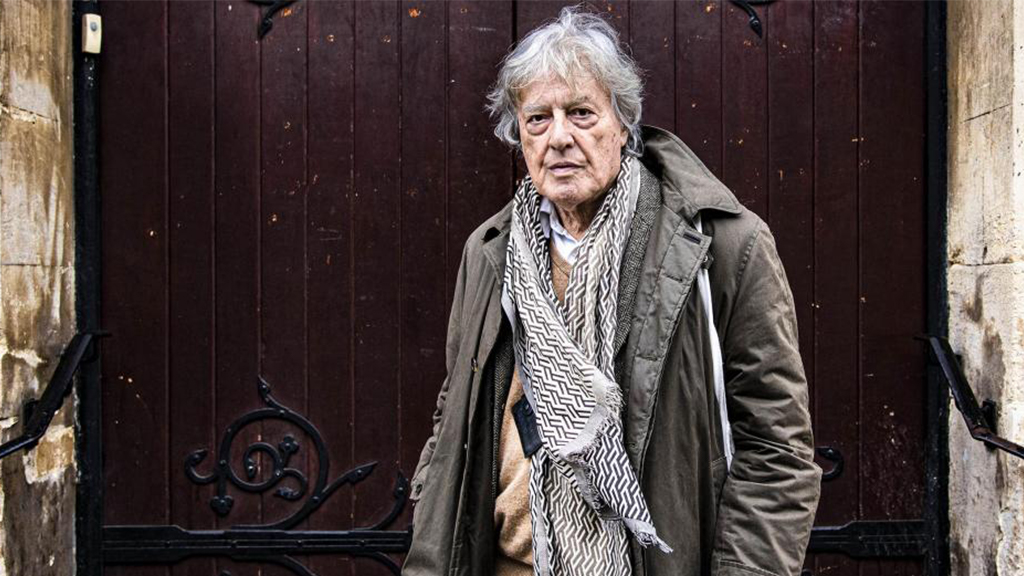
Tom Stoppard: the playwright who redefined modern drama
Ask any theatre critic or passionate theatre-goer who the greatest contemporary British playwright is, and the answer will be unequivocal: Tom Stoppard. Afisha.London tells the story of how Tomáš Straussler, a Czech Jew by birth, became a living legend of world dramaturgy, and highlights the plays that one must encounter to truly understand his work.
This article is also available in Russian here
Tomáš Straussler – the name given at birth to the man we now know as Tom Stoppard — is a multiple recipient of the Laurence Olivier Award, the Academy Award, the Tony Award and the Silver Bear. Critics regard him as the greatest living playwright not only in Britain but across the English-speaking world. Like Shakespeare, he has even inspired his own adjective: we say Shakespearean when something evokes the themes or atmosphere of the Bard; in Stoppard’s case, however, the reach is no less profound.

In 1978, the Oxford English Dictionary officially introduced the word Stoppardian. Its definition reads: “to employ elegant wit while addressing philosophical concerns.” There is little doubt that Sir Tom Stoppard has made a profound contribution to world drama.
Read also: Ivan Turgenev’s Sojourn in London: a literary ambassador between the Russian Empire and the West
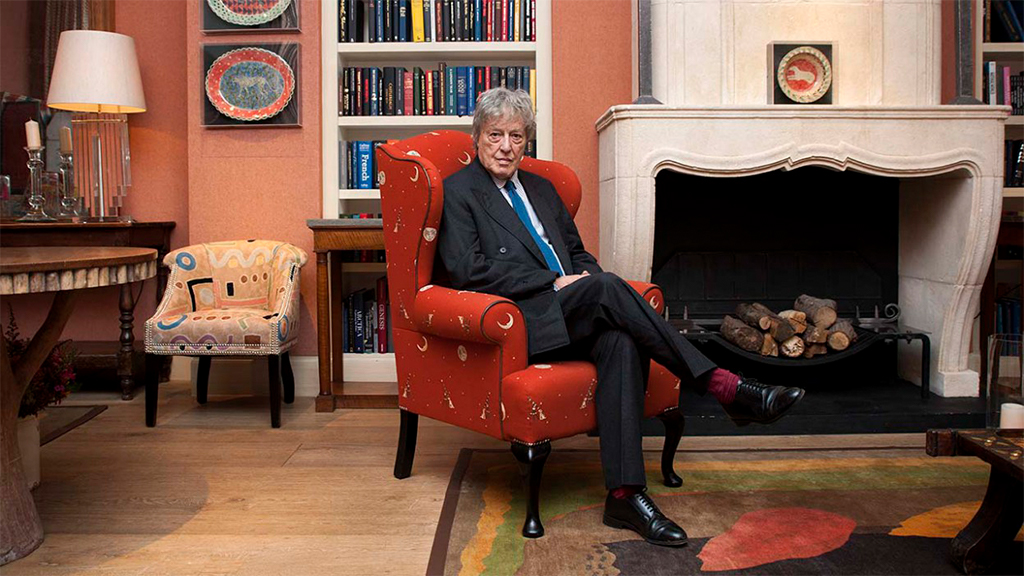
Photo: © Jooney Woodward / The Times
From Czechoslovakia to Britain via Singapore and India
A Commander of the Order of the British Empire, a Knight Bachelor and a member of the Order of Merit, Stoppard was born in the town of Zlín, in what was then the First Czechoslovak Republic. His childhood, however, was anything but peaceful. Just two years after his birth, the Nazi occupation forced the Jewish Straussler family to flee to Singapore. Yet even there they were not safe: the Japanese invasion followed, and the young Tom, together with his mother and brother, was sent to Darjeeling, while his father remained in Singapore and soon died.
Read here Fyodor Chaliapin in London: the triumph of Boris Godunov and an audience with King George V
It was in India that Tomáš became Tom. At the age of five, attending an American school, he was given the name that would follow him throughout his life. Soon after, his mother married a British officer, Kenneth Stoppard. At the age of eight, Tom arrived in Britain, leaving behind a fractured childhood and, for a time, his own origins.
Influenced by his stepfather’s conviction that to be British was the greatest possible fortune, Stoppard developed a deep desire to become an outstanding Englishman. In the end, he achieved precisely that. Curiously, he never received a university education, despite later becoming an honorary doctor of Oxford, Cambridge and Yale. Instead, after finishing school, he began working as a journalist at a Bristol newspaper, where he developed an interest in theatre by writing reviews of stage productions.
He dreamed of writing a great play and achieving global success — and, against all odds, he did.
Read also: Serge Lifar: reformer of the Paris Opera, the protégé of Sergei Diaghilev, and friend of Coco Chanel
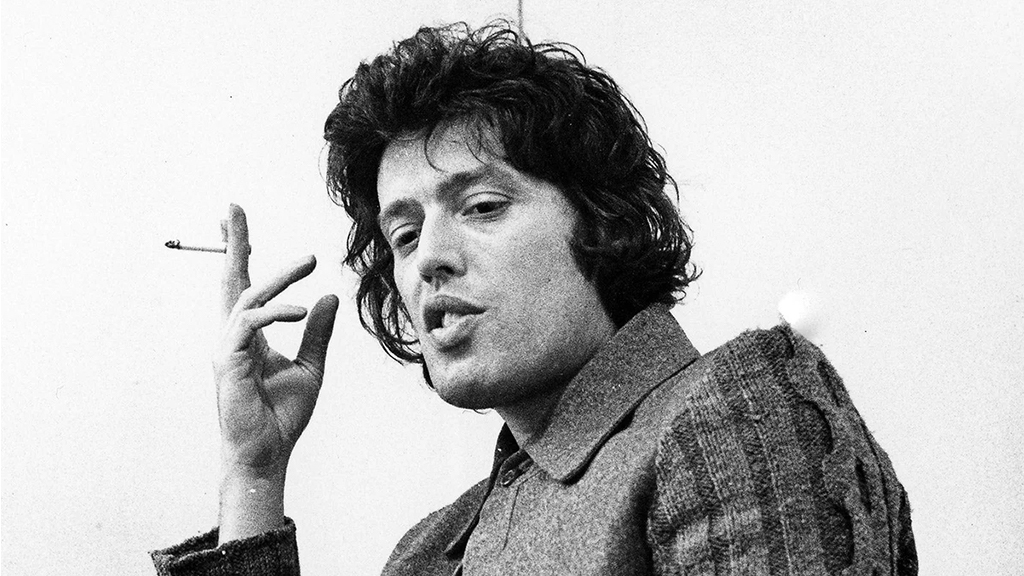
Photo: Clive Barda / Radio Times, 1970s
His first play, A Walk on the Water, was written in 1960. It was broadcast on television in 1963 and later staged in London in 1968 under the new title Enter a Free Man. Yet it was not this work that brought him fame. That distinction belongs to his fourth play, the absurdist tragicomedy Rosencrantz and Guildenstern Are Dead, written at the age of 29 and inspired by Hamlet. First staged at the Edinburgh Festival and later at the National Theatre in London, it has since entered the canon of the greatest plays ever written.
From that moment on, Stoppard’s career rose steadily. His plays are performed across the world and studied alongside Shakespeare and Chekhov. He also turned to cinema, writing, among other works, the screenplay for the Oscar-winning film Shakespeare in Love.
Read also: Great British contemporaries: Stephen Fry
Themes and ideas
In his plays, Stoppard engages with themes of political freedom, censorship and human rights — concerns that undoubtedly reflect, at least in part, the difficult trajectory of his own family history. In the 1970s, he became actively involved in the human rights movement in Eastern Europe. He visited the Soviet Union and maintained connections with Soviet dissident Vladimir Bukovsky and Czech playwright and future president Václav Havel.
It was only in the 1990s that Stoppard learned the full truth about his Jewish origins and the fate of his relatives, many of whom perished in concentration camps. These revelations informed his later work, most notably Leopoldstadt (2020), a play about a Jewish family in Vienna and the Holocaust. In interviews, Stoppard has suggested that this may be his final play.
That same year saw the publication of an extensive biography, Tom Stoppard: A Life, by Hermione Lee.
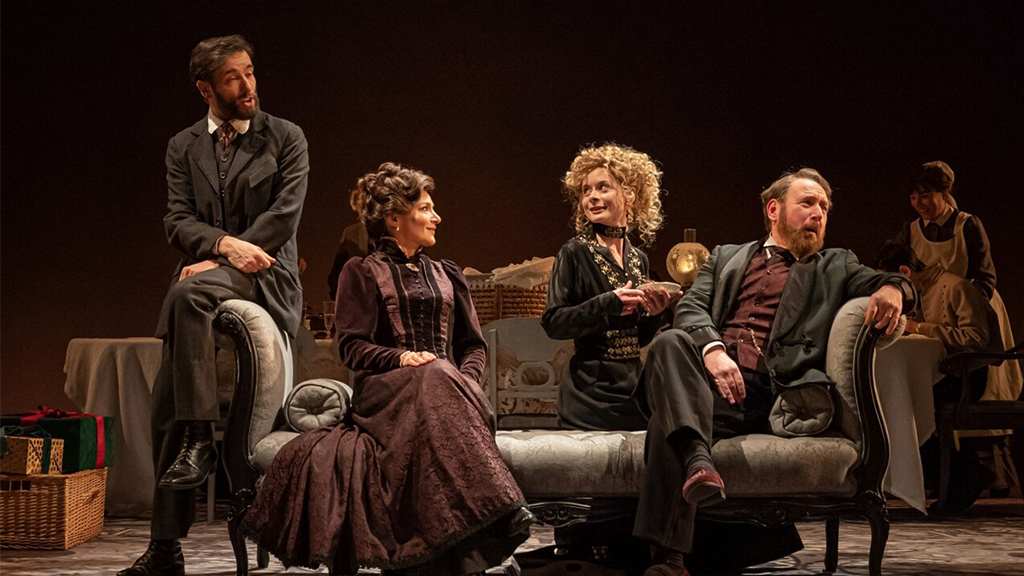
A scene from the play ‘Leopoldstadt’. Photo: Marc Brenner
Where to begin: key plays
Where should one begin with Stoppard? Here are four essential works.
Rosencrantz and Guildenstern Are Dead
Written when Stoppard was just 29, this absurdist tragicomedy premiered at the Edinburgh Festival in 1966 and brought him immediate acclaim. It remains the cornerstone of his career.
Rosencrantz and Guildenstern are minor characters from Shakespeare’s Hamlet, yet in Stoppard’s play they are brought to the foreground. The two courtiers observe events without fully understanding them, perpetually confused, attempting to interpret a narrative to which they do not have full access. Scenes from Hamlet unfold in the background, creating a layered theatrical structure.
Read also: Joseph Brodsky in London: from Soviet outcast to professor at the West’s top universities
After its success at the Edinburgh Festival, the play entered the repertoire of the National Theatre and went on to achieve worldwide recognition. It later premiered on Broadway, winning the Tony Award for Best New Play. The play was translated into Russian in the 1960s by Joseph Brodsky, and its first and only Russian-language stage production premiered at the Globus Youth Theatre in Novosibirsk in 2015.
Among notable actors who have appeared in the play are Simon Russell Beale (National Theatre, 1995) and Daniel Radcliffe (Old Vic, 2017).
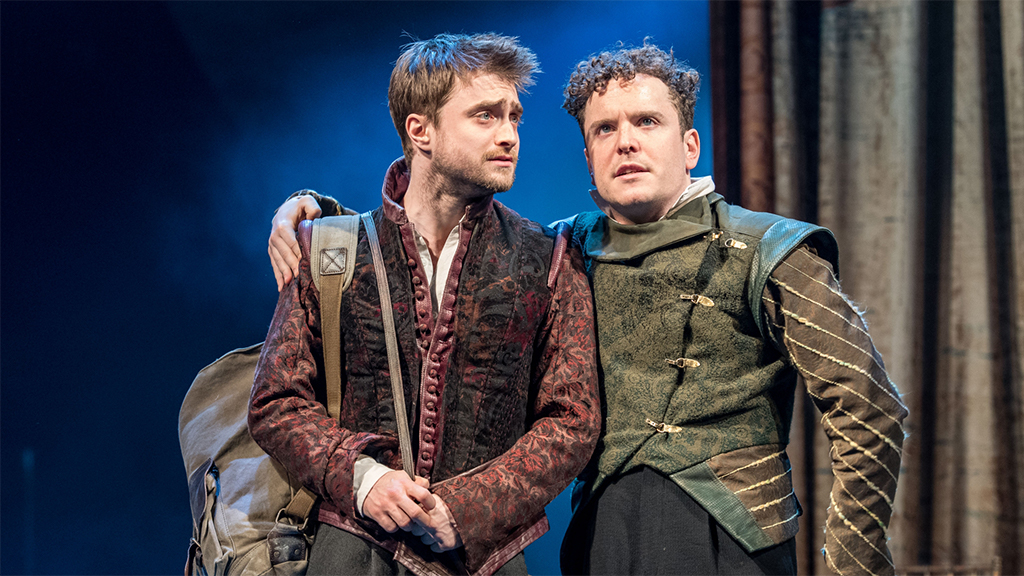
‘Rosencrantz and Guildenstern Are Dead’, staged by the Old Vic Theatre, starring Daniel Radcliffe and Joshua McGuire. Photo: Manuel Harlan
The Real Thing
The Real Thing is perhaps Stoppard’s most popular play in the United States, where it has been staged more frequently than many of his other works. One reason for this is its accessibility: here, philosophical reflection gives way, at least in part, to the structure of a romantic comedy.
The play retains its intellectual depth, yet is more economical in scale, requiring only seven actors — a contrast to the large ensembles typical of Stoppard’s writing.
It also contains autobiographical elements, as its central character is a playwright. The structure employs a play-within-a-play device, creating two narrative layers, as actors portray actors performing a play.
In Russia, the play was first staged in 2012 at the Pushkin Drama Theatre in Moscow, where it received the Russian title Reflections, or The Real Thing. The play has received two Tony Awards — one for Best Play (1984) and another for Best Revival (2000). In the original Broadway production, the lead roles were played by Glenn Close and Jeremy Irons, both of whom won Tony Awards. Other notable performers include Stephen Dillane, Ewan McGregor, Maggie Gyllenhaal and Cynthia Nixon.
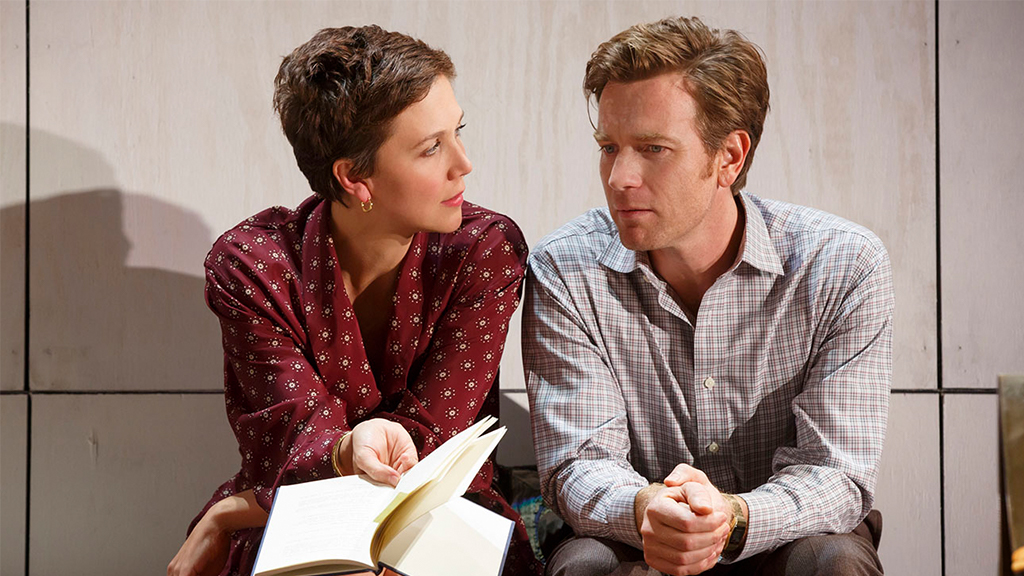
The Broadway production of ‘The Real Thing’ starring Ewan McGregor and Maggie Gyllenhaal. Photo: Joan Marcus
Arcadia
A play about God, the meaning of life, and science. Written in 1993 and premiered at the National Theatre, Arcadia has been described as one of the greatest dramatic works about science ever written.
The action takes place in a country house in Derbyshire, but its temporal structure is fluid, moving between the early nineteenth century and the 1990s.
In the modern timeline, Hannah Jarvis and Bernard Nightingale investigate events that took place in the house two centuries earlier, particularly those connected with Lord Byron. What they discover proves deeply unsettling. In the earlier period, the central figures are the young prodigy Thomasina Coverly and her tutor Septimus Hodge, a friend of Byron.
Read also: Russian classics on London stages in 2026: from Turgenev to Chekhov
Thomasina, far ahead of her time, makes a discovery that challenges existing beliefs, suggesting that the universe is destined to end, and calling into question the very possibility of divine order.
The central question of Arcadia remains: what is the meaning of life if existence itself has no inherent meaning? The play received the Laurence Olivier Award for Best New Play, as well as the Tony Award for Best Play. In the original National Theatre production, Bernard Nightingale was played by Bill Nighy. In Russia, the play premiered at the Theatre on Malaya Bronnaya in Moscow in 2009.
In 2026, ‘Arcadia’ will run at London’s Duke of York’s Theatre, following sold-out performances at The Old Vic. Book your tickets here.
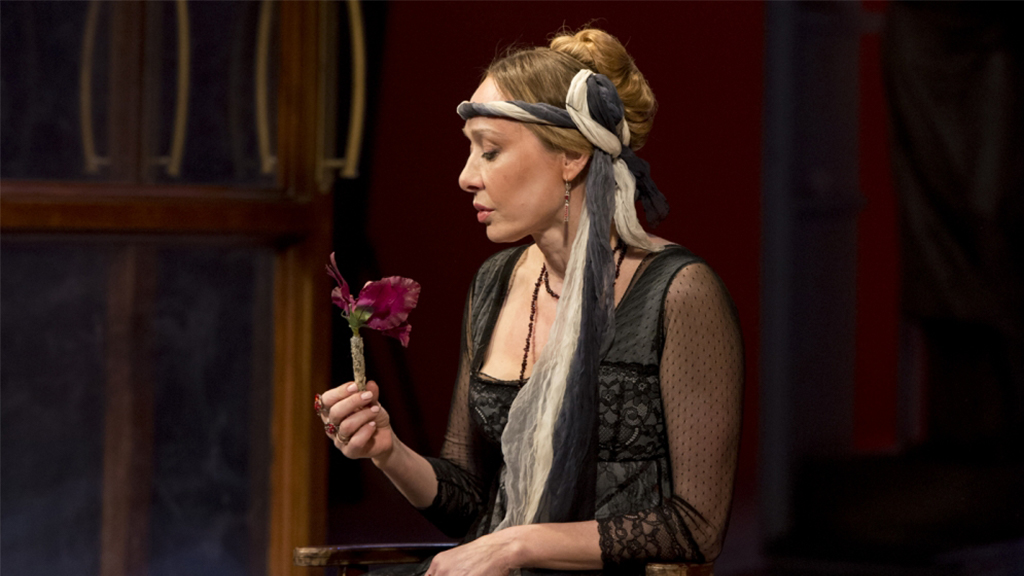
‘Arcadia’ at the Theatre on Malaya Bronnaya. Photo: Theatre on Malaya Bronnaya
The Coast of Utopia
Perhaps Stoppard’s most ambitious and intellectually expansive work, and certainly one of the most compelling for Russian audiences. The play is set in nineteenth-century Russia and features figures such as Turgenev, Chernyshevsky, Belinsky, Herzen and Chaadayev. The Coast of Utopia is a trilogy comprising Voyage, Shipwreck and Salvage. It involves around seventy characters and runs for approximately nine hours, making it a formidable undertaking for any theatre.
Despite its complexity, the play received the Tony Award for Best Play and has been staged in theatres across the UK, the US, Japan and Russia.
Read also: How Diaghilev’s “Saisons Russes” influenced the European art world of the 20th century
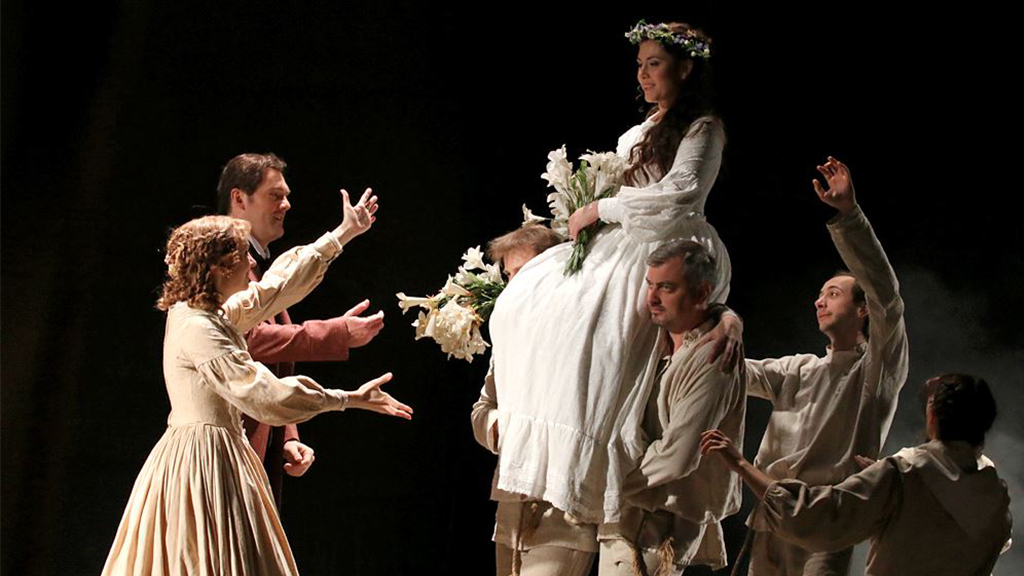
‘The Shore of Utopia’, staged by the Russian Academic Youth Theatre. Photo: RAYT
In this work, great historical figures are presented as human beings, driven by personal emotions and contradictions. The first part takes place at Bakunin’s family estate, where he, together with Turgenev, Belinsky and Stankevich, debates German idealist philosophy. In Shipwreck, their hopes are shattered by the revolutions of Europe, while in Salvage, the émigrés reunite in London after a series of failed uprisings.
Here, Stoppard explores themes of freedom and family, while posing a central question: is utopia ever possible, or does it exist only in the imagination of idealists?
The play premiered at the National Theatre in 2002 and became one of the most ambitious productions in its history. The role of Alexander Herzen was performed by Stephen Dillane. The Broadway production in 2006 received ten Tony nominations and won seven awards. The Russian premiere took place in 2007 at the Russian Academic Youth Theatre in Moscow, where, including intervals, the performance runs for more than ten hours.
Cover photo: The Sunday Times
Read also:
Anna Akhmatova in the UK: A Poetess, Muse and Femme Fatale
Pyotr Tchaikovsky in London: a journey of impressions, acclaim, and triumph
The last Stroganov: how Hélène de Ludinghausen revived a lost Russian legacy
Related Articles


SUBSCRIBE
Receive our digest once a week with quality Russian events and articles