Robin Hood’s legendary Major Oak has died in Sherwood Forest
News from Nottinghamshire has landed as something close to a personal loss for many Britons: Robin Hood’s legendary oak — the Major Oak in Sherwood Forest — has officially died. This spring, the tree, which had survived nearly a thousand years of history, failed to produce a single leaf for the first time. For biologists, this marks the end of its life cycle. For the country, it means the loss of one of Britain’s most recognisable natural symbols. As reported by Afisha.London.
This article is also available in Russian here
The Major Oak was never just an old tree. It was a living historical witness. It stood here long before the Industrial Revolution, surviving wars and battles, dynastic shifts and power struggles, religious conflict, the rise of the British Empire, and even the recent pandemic. It also managed to leave its mark in the digital age: featured in short videos, social media posts and countless photographs shared online. The tree existed for so long that, for several generations of Britons, it felt almost eternal, and many hoped to see it with their own eyes at least once in their lifetime.
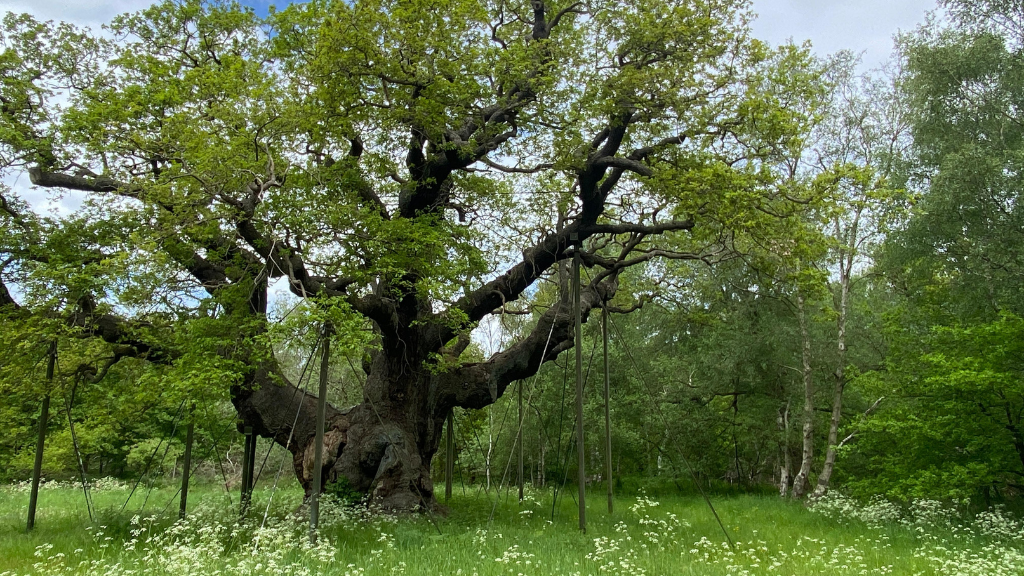
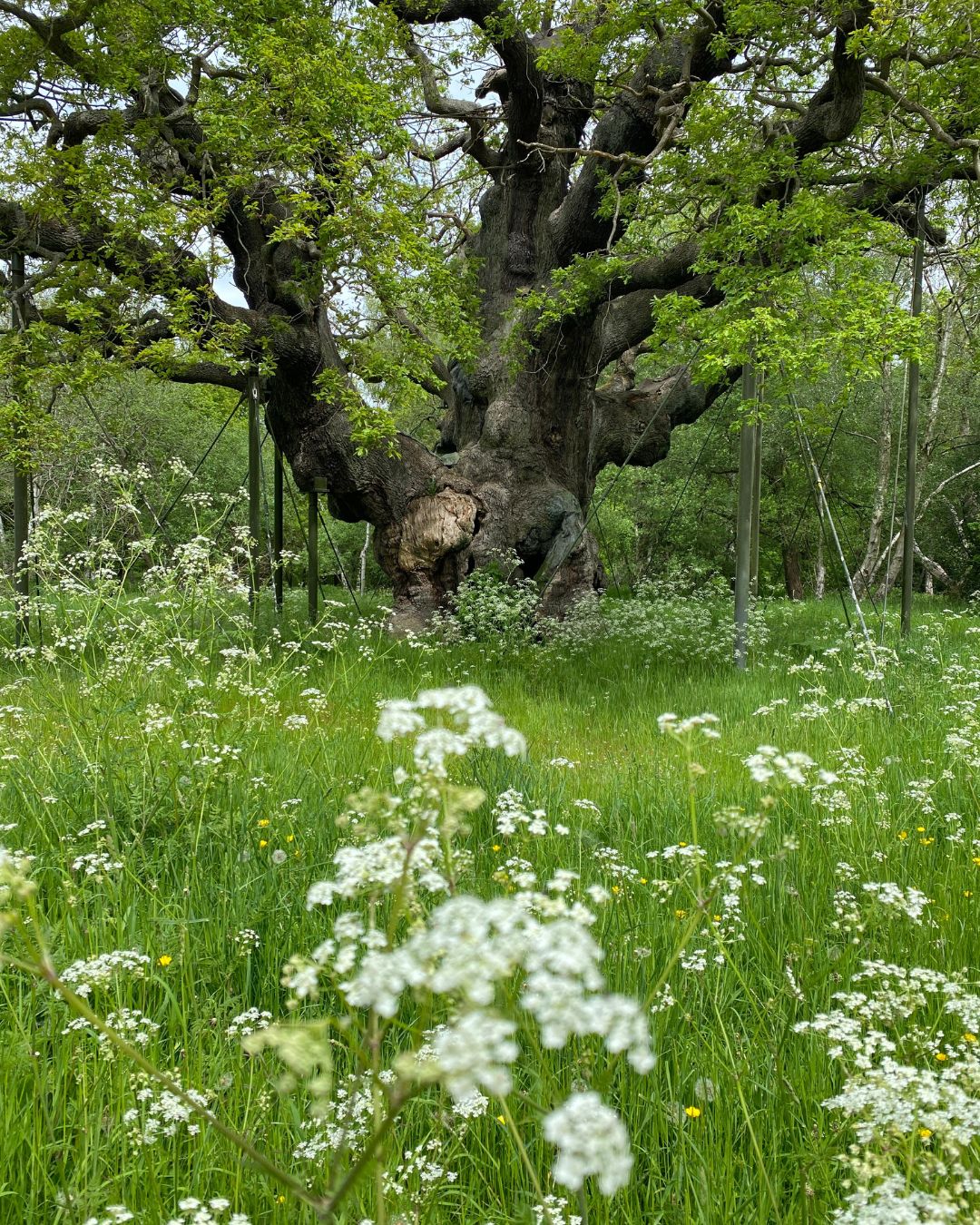
The Major Oak stands at the heart of Sherwood Forest, near the village of Edwinstowe, and is considered the forest’s largest oak. A giant English oak (Quercus robur), its age has been estimated at somewhere between 800 and 1,200 years, though most specialists believe it was around a thousand years old, if not older. Its trunk measured 10–11 metres in circumference, its canopy stretched nearly 28 metres across, and its total weight was estimated at around 23 tonnes. With age, the tree had long since become hollow inside. Visitors were once even allowed to step into its trunk — almost like entering a natural womb. Later, the tree had to be physically supported by engineering structures: for decades, its enormous branches rested on metal props, without which it would likely have collapsed under its own weight.
As early as 1974, a protective fence was installed around the tree to shield its root system from constant tourist traffic. Yet even more than half a century of conservation measures could not fully offset the damage caused by time, climate change and human attention.
“During the pandemic, we explored parts of Britain that were new to us and eventually made our way to the famous Sherwood Forest. I was especially curious to see with my own eyes the oak so often featured in British books, films and folklore. Even then, it was impossible to get close. Around the tree there was already a whole tourist infrastructure: an information centre, parking, cafés, ice cream vans, souvenirs. Paradoxically, it was precisely people’s love for the tree — and the constant number of visitors — that was slowly killing it,” says Margarita Bagrova, publisher of Afisha.London.
The oak’s global fame came through the legend of Robin Hood. According to English folklore, it was beneath this very tree — or, in some versions, inside its hollow trunk — that Robin Hood and his loyal companions hid from the Sheriff of Nottingham. Historians, naturally, treat the story with caution. If Robin Hood did indeed exist and lived in the 13th century, the oak would have been considerably younger and likely would not yet have developed its famous hollow trunk. But legends rarely submit to the logic of dendrology.
In the Victorian era, as Britain fell in love once again with medieval romanticism, the Major Oak became firmly established as Robin Hood’s official tree. It appeared on postcards, engravings, tourist posters and in children’s books. Later, the oak became part of global popular culture — from countless Robin Hood adaptations to the famous 1973 Disney animation Robin Hood, where the image of Sherwood Forest and its monumental oaks became permanently fixed in the public imagination. For millions around the world, Sherwood Forest without this tree was almost unimaginable.
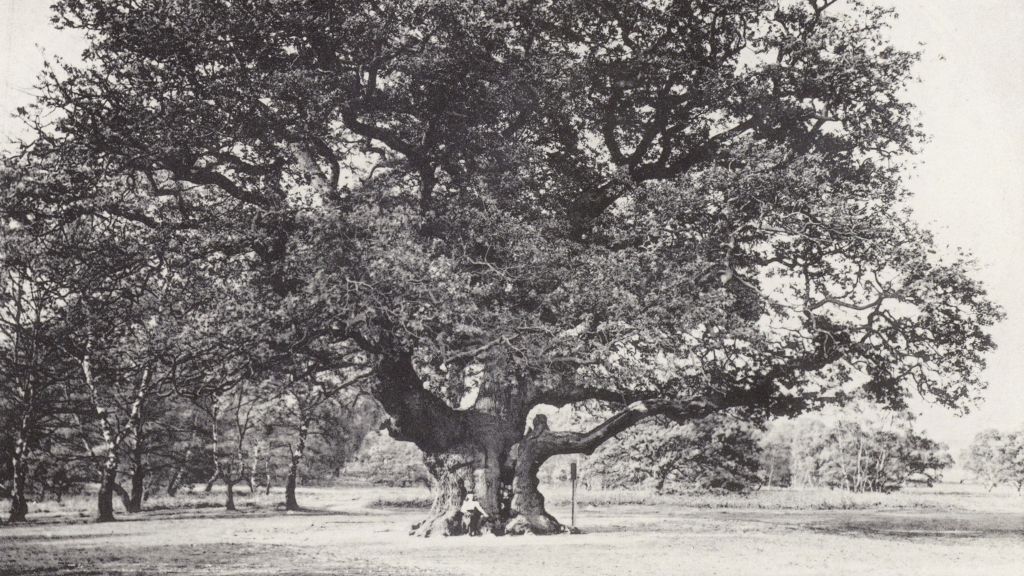
c.1890 Photo: See page for author, Public domain, via Wikimedia Commons
Interestingly, the tree acquired its current name relatively late — only in the 18th century — after Major Hayman Rooke, a soldier and antiquarian who described it in detail in 1790. There is a charming wordplay here: the Major Oak is not called “major” because it is the biggest or most important tree, but quite literally after a Major. Before that, it bore the far less romantic name Cockpen Tree.

The causes of its death, as is so often the case in nature, cannot be reduced to a single factor. The Major Oak did not die suddenly but slowly, under pressure from several destructive processes. First and foremost: age. A thousand years is an extraordinary lifespan even by the standards of Europe’s longest-living trees. Yet age collided with modern climatic stress. In recent years, Britain has endured several exceptionally hot and dry seasons followed by unusually wet winters. Drought, temperature fluctuations and changing rainfall patterns placed severe strain on the ancient root system.
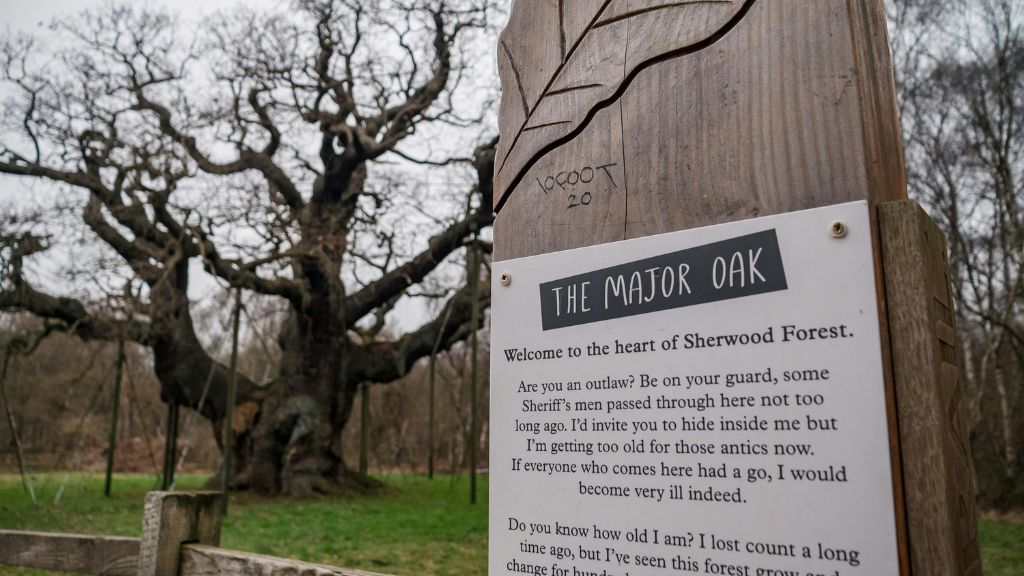
Photo: Luke Galloway / Unsplash
To this was added mass tourism. Despite the protective barriers, hundreds of thousands of visitors travelled to see the legendary tree every year, and decades of soil compaction around the roots gradually weakened it. In a cruel irony, the oak became, in some sense, a victim of its own fame.
And yet the death of the tree does not mean the end of its story. Biologists stress that the oak will not be felled. Like many ancient trees, even in death it remains part of the ecosystem: its decaying wood becomes home to fungi, insects, birds and microorganisms. It will be preserved as part of an environmental conservation programme.
-
- Photo: Afisha.London
-
- Photo: Afisha.London
Britain has a remarkable culture of protecting ancient trees. Organisations such as Woodland Trust — one of the country’s leading woodland conservation charities — are dedicated to this work. The trust even maintains a national register of ancient trees, containing thousands of the oldest specimens in the country. More than that, dozens of saplings propagated from the Major Oak have already been planted, and its descendants now grow across Britain and beyond.
What feels especially poignant in this story is how vulnerable even the oldest symbols can be. Robin Hood’s oak felt almost eternal, much like the legend of Sherwood Forest itself. And perhaps that is precisely what losses like this remind us of: even legends need protection.
Cover photo: Afisha.London
Read also:
UK museum charges: Britain debates the future of free access
“Swan Lake”: how Tchaikovsky’s ballet became a symbol of protest
Elsa Schiaparelli: from Italian aristocrat to fashion’s boldest visionary
Related Articles




SUBSCRIBE
Receive our digest once a week with quality Russian events and articles