Churchill, the artist you never knew: a major exhibition of Winston Churchill’s paintings opens in London
A new exhibition has opened at one of London’s most beautiful museums the Wallace Collection, and it may surprise even those who believe they know everything there is to know about Winston Churchill. Most visitors come to the Wallace Collection for its Rembrandts, Velázquez masterpieces, Fragonard paintings, remarkable arms and armour collection, and the atmosphere of a grand aristocratic townhouse preserved in the heart of the city. This summer, however, the museum invites visitors to encounter one of Britain’s most famous figures from an entirely different perspective.
Winston Churchill: The Painter, on view at the Wallace Collection until 29 November 2026, is devoted not to Churchill the politician, wartime leader or Nobel Prize-winning author, but to Churchill the artist. It is a role that encourages us to reconsider a man whose name has long since become part of history itself. Reporting from London is Afisha.London’s Editor-in-Chief Margarita Bagrova, who had the opportunity to visit the exhibition before the arrival of the crowds.
This article is also available in Russian here
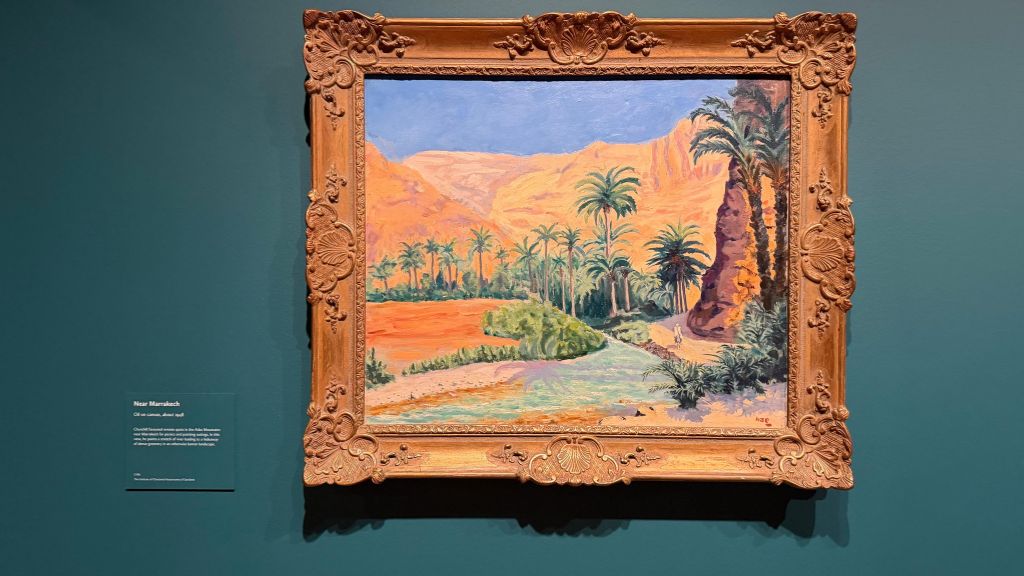
The first thing that genuinely surprises visitors is the quality of the paintings. Many arrive with a degree of scepticism, expecting to see “a politician’s paintings” rather than a serious artistic achievement. Yet after only a few rooms, it becomes clear that Churchill was a far more accomplished painter than popular perception would suggest. His works reveal a keen sense of colour, assured compositions and a remarkable ability to capture the atmosphere of a place, whether a Moroccan sunset or a quiet French garden.
The curators have assembled more than fifty works, roughly half of which come from private collections where they are rarely accessible to the public. This is the first major British exhibition devoted to Churchill’s paintings since his death.
Particularly fascinating are the works from private collections. As the exhibition’s curator explained, many of these paintings were once personal gifts from Churchill himself. He presented them to friends, allies, political figures and people he genuinely admired. Over time, the canvases found their way into the homes of influential families and eventually into private collections that are not easily accessible to scholars or the public. For art lovers, this is a rare opportunity to see works by Winston Churchill that have remained out of public view for decades.
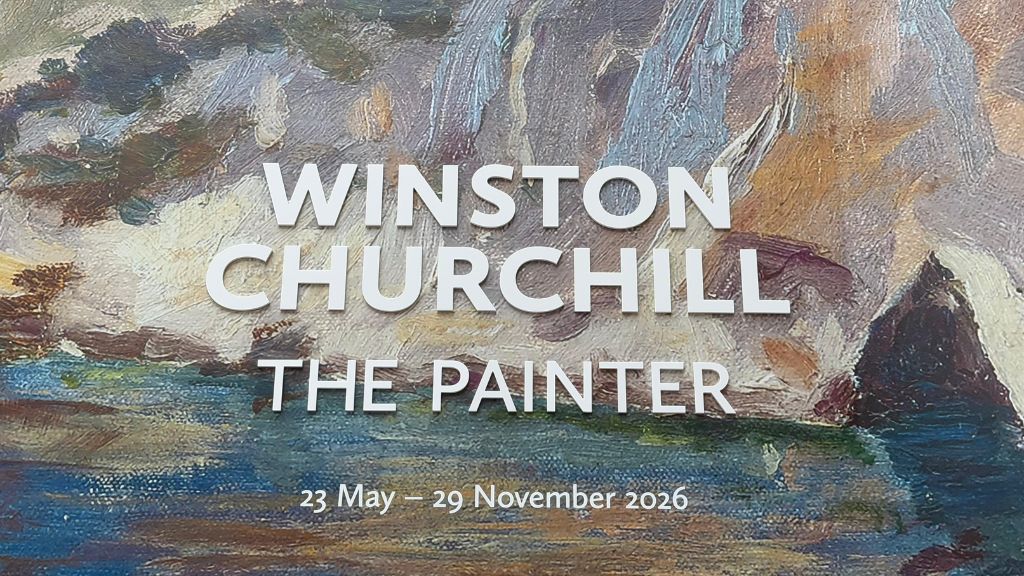
Photo: Afisha.London
Particularly fascinating are the works from private collections. As the exhibition’s curator explained, many of these paintings were once personal gifts from Churchill himself. He presented them to friends, allies, political figures and people he genuinely admired. Over time, the canvases found their way into the homes of influential families and eventually into private collections that are not easily accessible to scholars or the public. For art lovers, this is a rare opportunity to see works by Winston Churchill that have remained out of public view for decades.
Readers of Afisha.London may already be familiar with Churchill’s artistic journey, as we explored it in depth in a previous feature. Yet standing before these paintings, one inevitably returns to a simple question: how did one of the busiest and most influential figures of the twentieth century become an artist at all?

How Winston Churchill became a painter
Churchill came to painting in 1915, during one of the darkest periods of his life. Following the disaster of the Gallipoli campaign, his political career was in jeopardy and he found himself in the midst of a profound personal crisis. It was at this moment that friends quite literally insisted he pick up a paintbrush. Churchill later recalled that his first encounter with a canvas felt almost salvational. Over time, painting ceased to be merely a pastime and became something he could not do without.
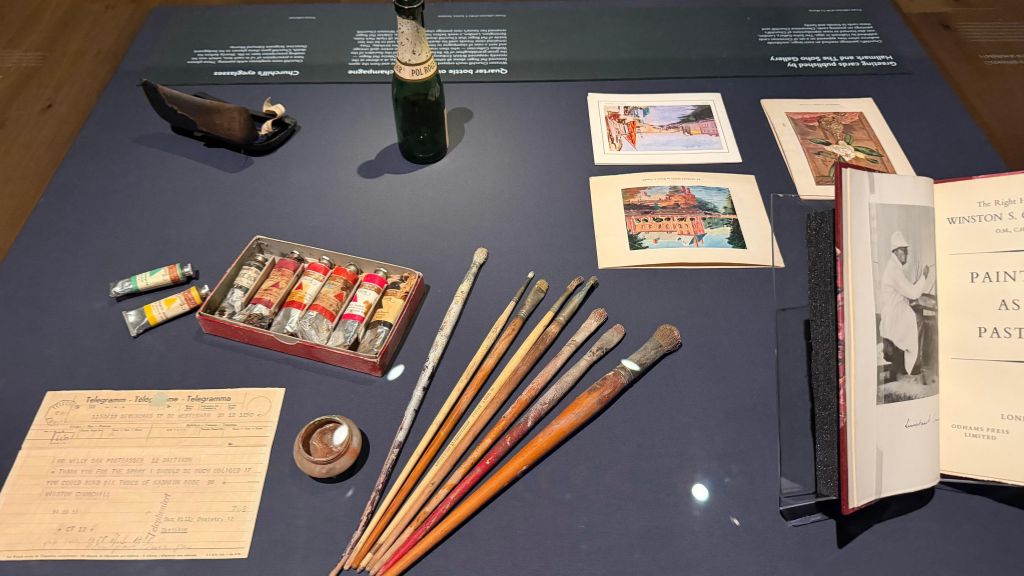
Photo: Afisha.London
Looking at these works today, one begins to understand just how important art was in helping him navigate life’s difficulties. Churchill endured world wars, political setbacks, immense responsibility, personal losses and family tragedies. He suffered the death of his beloved daughter Marigold, battled recurring depression — his famous “black dog” — and lived under constant public scrutiny.
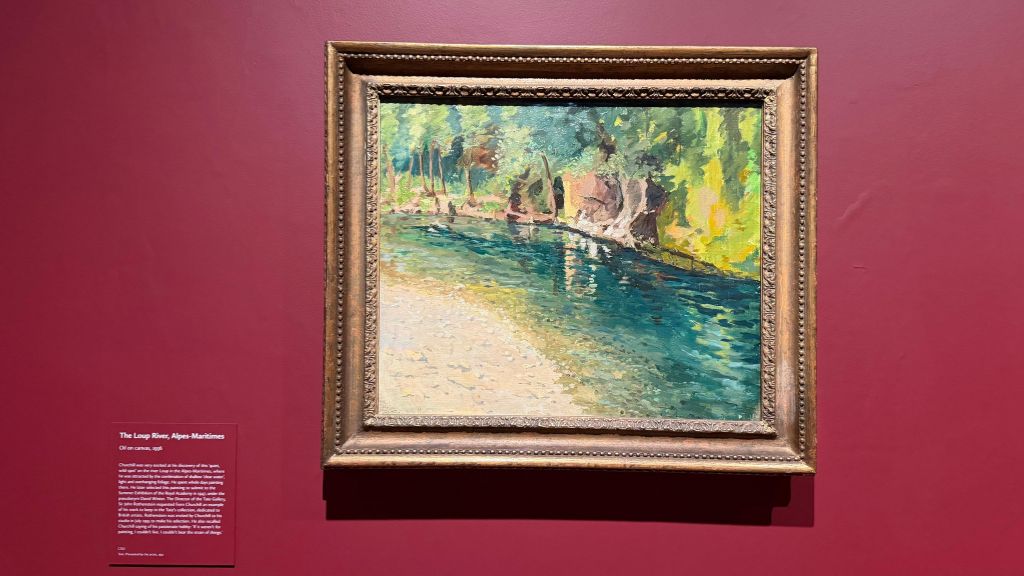
Photo: Afisha.London
And yet his paintings are strikingly luminous. There is little tragedy in them. Little war. Little politics. Instead, visitors encounter sunlit French villas, tranquil gardens, intimate interiors, still lifes with bottles and silverware, Moroccan landscapes and Mediterranean harbours. It is difficult to believe that the creator of these images spent his days immersed in crises, conflicts and political drama. Churchill’s canvases are filled with light, air and a palpable sense of calm.

It is no surprise that the exhibition’s curators describe painting as his personal refuge. Dr Xavier Bray, Director of the Wallace Collection, has observed that Churchill’s art reveals a far more intimate and joyful side of his character than the version of him usually preserved by history.
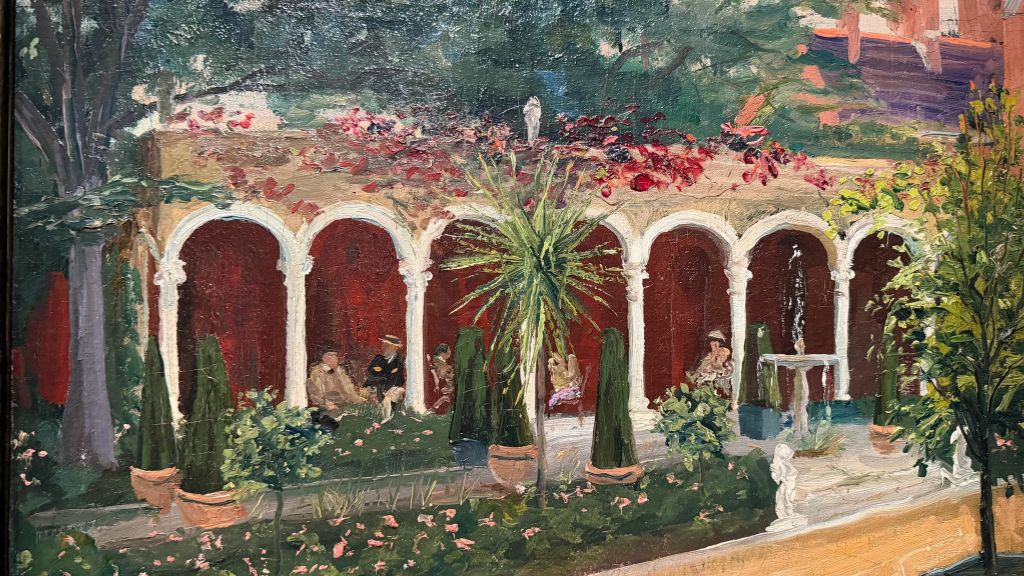
Photo: Afisha.London
From an artistic standpoint, the paintings are unexpectedly strong as well. Churchill’s style was shaped by artists such as Sir John Lavery and Sir William Nicholson, yet he gradually developed a visual language of his own. His work leans towards Post-Impressionism, characterised by a free brushstroke, a love of colour and a fascination with light and atmosphere.
For this reason, Churchill the painter increasingly attracts the attention not only of historians but also of art historians studying twentieth-century British painting. Had the author’s name been concealed, many visitors might well assume these canvases were the work of a professional Post-Impressionist painter of the early twentieth century.

What to see at Winston Churchill: The Painter
The Moroccan paintings are among the highlights of the exhibition. Here Churchill appears at his boldest. The palette becomes richer, the brushwork more liberated, and colour begins to assume an almost independent role. It is no coincidence that many scholars regard the Moroccan works as the pinnacle of his artistic achievement.
Standing before them, it is easy to understand why he returned to Marrakesh again and again. Churchill first visited the city in 1935 and went back several times thereafter. The brilliant sunlight, red earth, Atlas Mountains and vivid colours of North Africa transformed his palette in noticeable ways.
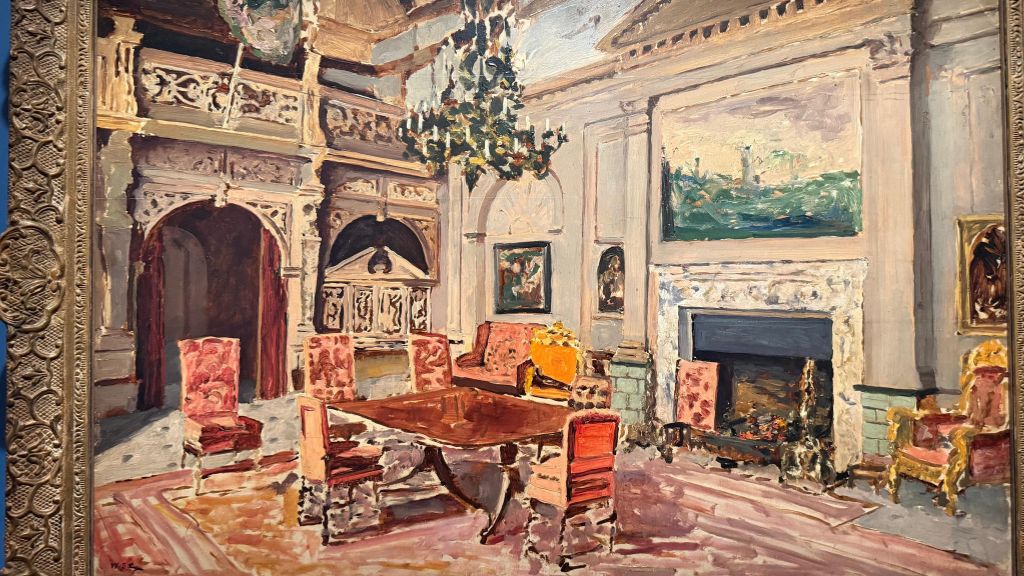
Photo: Afisha.London
The exhibition includes his celebrated views of the Koutoubia Mosque. One of these landscapes was painted following a trip to Morocco with US President Franklin D. Roosevelt in 1943 and was later presented to the American leader as a gift.
It is equally fascinating to observe how the exhibition traces Churchill’s artistic development. The early works reveal uncertainty and experimentation, but as visitors move through the galleries, a more confident artist gradually emerges — one who becomes increasingly adventurous with colour and progressively discovers his own voice. Perhaps this is the exhibition’s greatest strength.
It tells the story not only of a body of work, but of a human being. A man who led his country through some of the darkest years in its history while still finding the energy to paint sunlit gardens, quiet still lifes and Moroccan sunsets.

At a time when conversations about mental health, emotional exhaustion and personal resilience have become increasingly common, Churchill’s story as an artist feels surprisingly contemporary. His paintings remind us that creativity can be more than a luxury or a pastime; it can be a way of maintaining inner balance. And perhaps that is why Winston Churchill: The Painter leaves such a powerful and profoundly human impression.
- Winston Churchill: The Painter
- Wallace Collection, London
- Until 29 November 2026
Cover photo: Afisha.London

Read also:
Holding on to language: the rise of Russian libraries in Britain
Related Articles


SUBSCRIBE
Receive our digest once a week with quality Russian events and articles