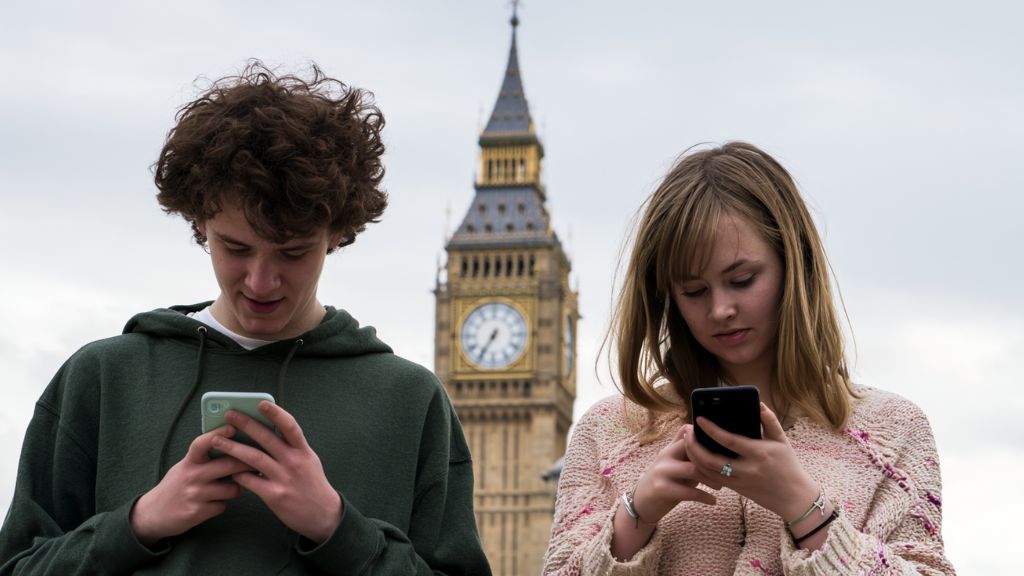
Can Britain’s social media ban save children from digital addiction?
The UK government is preparing one of the most radical restrictions on children’s digital lives in recent years: social media platforms could become completely inaccessible to users under the age of 16 as early as spring 2027. The proposed ban is expected to affect the largest platforms, including Instagram, TikTok, Snapchat, Facebook, X and YouTube. Afisha.London magazine looks at the proposed changes and speaks to psychologist Inna Royzman (PhD, member of the British Psychological Society) about the increasingly complex relationship between human psychology and technology.
This article is also available in Russian here
This is not merely another piece of tech legislation. It is, in many ways, an attempt to redefine childhood itself in an age of infinite scrolling, algorithmic addiction and permanent digital presence. The government has stated its intention clearly: children need time back — time for play, real-life interaction and healthier emotional development.
The initiative emerged after large-scale public consultations involving more than 116,000 participants, including parents, children and experts across the country. According to the findings, nine out of ten parents support a social media ban for children under 16. Perhaps even more strikingly, two-thirds of teenagers themselves agreed that children under 16 should not have access to at least some social media platforms.

The British model is expected to draw heavily on the example of Australia, which has already introduced similar restrictions. The ban, however, will not extend to messaging apps such as WhatsApp and Signal. Authorities stress that children must still be able to communicate safely with family and friends, access educational resources, consume news and use online gaming services.
— Inna, can constant gadget use in early childhood affect not only a child’s attention span, but also the formation of secure attachment between child and parent?
— Attachment is not formed during educational conversations. It develops in moments when an adult participates in a child’s life, responds to their emotions, contains their anxiety and shares their interests. Secure attachment is built not through beautiful words but through daily experience. This is when a child learns: when I need someone close, that person is available to me.
But when a parent’s attention is constantly directed towards a screen, the child encounters a new reality: they are no longer the most important focus. They are forced to compete for attention with algorithms specifically designed to hold that attention for as long as possible. In effect, the screen becomes more important than live human contact, and the child begins to internalise the idea that the attention of a loved one is unreliable. As a result, emotional security and self-confidence suffer. The problem is not the gadget itself. The problem begins when technology starts occupying the space of real relationships — the very relationships on which a child’s psychological development depends.

Yet social media restrictions may only be the beginning. The government also plans to introduce further limits on high-risk digital features, including livestreaming, direct contact between children and unknown adults, and certain mechanics within gaming platforms. These restrictions would apply to users under 16, while safety settings for 16–17-year-olds would be enabled by default.

Photo: Annie Spratt / Unsplash
Particular attention is also being paid to the rapidly growing artificial intelligence sector. So-called AI companion chatbots — bots designed to simulate romantic or intimate relationships with users — would be restricted to adults only. Those under 18 would be barred from accessing such functions.
Authorities are also considering measures that until recently sounded almost futuristic: digital night curfews for minors and enforced breaks in endless social media feeds designed to interrupt compulsive scrolling. More details are expected in July. Last week, before stepping down as Prime Minister, Keir Starmer described the reform as a defining turning point in the relationship between the state and big tech.
“Parents want their children to be safe and happy, but the digital world has made that task harder than ever,” Starmer said.

Photo: Vitaly Gariev / Unsplash
According to him, technology giants have had ample time to address the issue voluntarily — and failed to do so. One of the central challenges remains the technical enforcement of such a ban. To make the policy workable, the government intends to strengthen age verification systems. The regulator Ofcom is expected to introduce new standards in the coming months to ensure platforms can reliably verify whether a user is 16 or older.
The first package of regulations is expected by the end of 2026. If the timetable holds, the new rules will come into force in spring 2027. For many parents, the initiative feels like a long-awaited attempt to regain control over children’s digital environment. For technology companies, it signals that the era of self-regulation may be coming to a rapid end.
— To what extent is children’s digital dependency actually a reflection of adults’ crisis of self-regulation?
— Children learn far less from words than from the way adults live. If parents constantly check their phones, cannot tolerate pauses, automatically reach for screens whenever discomfort or boredom appears, the child absorbs not verbal rules but behavioural patterns. They see that anxiety can be numbed with new information, that silence is intolerable, and that attention constantly jumps from one stimulus to another. That is why simply forbidding a child from using a phone is ineffective. The first honest question adults must ask themselves is this: what kind of relationship with the digital world are we modelling every single day?
It is through meaningful relationships with close adults that future self-regulation is formed.

Experts, however, already warn that legislation alone will not solve social media addiction. Psychologists and researchers speaking to the Science Media Centre largely agree on one point: children and teenagers will almost certainly seek workarounds — using older siblings’ accounts, VPNs or less regulated platforms.
The real danger lies in creating the illusion that a complex problem can be solved by law alone. Responsibility cannot simply be shifted onto parents or children. Technology companies themselves must rethink platform design, recommendation algorithms and the engagement mechanics that trap children in endless scrolling loops.

Photo: Tati Odintsova / Unsplash
At the same time, many educators and parents believe the restrictions are long overdue. British teaching unions have for years warned about the connection between social media and declining wellbeing, rising anxiety, behavioural issues, reduced concentration and growing learning barriers. Schools increasingly report that the problem is no longer merely “phones in classrooms”, but children whose attention is permanently fragmented by notifications, short-form videos, group chats and late-night online interactions.
In this sense, the proposed ban may be understood as official recognition of a problem that families and schools have been struggling to tackle alone for years. But a ban is only the beginning of the conversation. As child-rights experts rightly point out, teenagers need more than restrictions. They need meaningful alternatives: real-life social connection, play, sport, sleep, safe spaces for growing up and adults capable of discussing the digital world with them intelligently. And this is where the most difficult conversation begins.

Because social media is no longer merely a set of apps on a phone. It has become part of the environment in which children learn to form friendships, compare themselves with others, process loneliness, seek validation and build identity. So however much parents may want a simple solution, legislation alone will never be enough. Teenagers will attempt to bypass restrictions — and many probably will succeed. The deeper question is this: why, over the last ten to fifteen years, have families, schools and society as a whole been so profoundly unprepared for raising children in a digital age?
The ban may become an important protective measure. But it cannot replace a much-needed conversation about modern parenting, digital literacy and the responsibility of technology companies for the environment in which children now grow up.
— How realistic is it to bring children back to a more natural childhood through restrictions?
— A ban can certainly reduce access, but it cannot create new behaviour, nor can it recreate childhood on its own. For modern teenagers, social media is not just entertainment. It is communication, validation, belonging and identity formation. If we simply remove social media without offering anything in its place, the psyche will quickly fill that void with something else — and there is no guarantee it will be healthier. Yes, dependence on constant digital stimulation can be reduced, much like dependence on sugar or other sources of instant reward. But this does not happen because of prohibition alone. It happens when stronger sources of meaning, pleasure and engagement appear: close relationships, sport, creativity, family traditions, autonomy and real-life connection. Progress cannot be reversed. What matters far more is teaching children how to live in a technological world without allowing technology to become the master of human life.

Photo: Sajad Nori / Unsplash
Perhaps the most important question, however, concerns not teenagers but adults.
If the state genuinely wants to change children’s digital future, a ban alone is insufficient. New disciplines are needed in schools, universities and teacher training programmes — disciplines that teach young people not only how to use technology, but also how to raise future children in a digital age. Digital literacy today must go beyond technical competence. It must include an understanding of technology’s psychological impact — on attention, emotional resilience, concentration and personality development.
Margarita Bagrova, founder of the educational project Museum Cat, shares her perspective: “It is impossible not to notice how often modern parents hand phones or iPads to very young children — at eighteen months, two or three years old — simply to keep them occupied in a pram, in a café, in a shop or during travel. Yet the child is not necessarily bored. When a toddler sits in a buggy or simply stays close to an adult, an entire world already exists around them: faces, city sounds, shop windows, movement, light, conversations. Even boredom itself is not a problem. On the contrary, boredom often becomes the foundation for imagination, patience, inner concentration, the ability to be alone with oneself and to independently find something meaningful to do.”
The paradox is that, in trying to eliminate every moment of discomfort, adults may be reinforcing dependency on constant digital stimulation. If a child learns from infancy that every moment of waiting, fussiness or boredom is instantly “treated” with a screen, dependency may already be firmly established long before they receive their first personal phone.
That is why the real conversation should not be limited to banning TikTok or Instagram. It should be about a new ethics of parenting in the digital age — about how adults themselves build relationships with technology, and what example they set for the next generation.
Cover photo: Afisha.London

Read also:
Robin Hood’s legendary Major Oak has died in Sherwood Forest
UK museum charges: Britain debates the future of free access
Elsa Schiaparelli: from Italian aristocrat to fashion’s boldest visionary
Related Articles





SUBSCRIBE
Receive our digest once a week with quality Russian events and articles