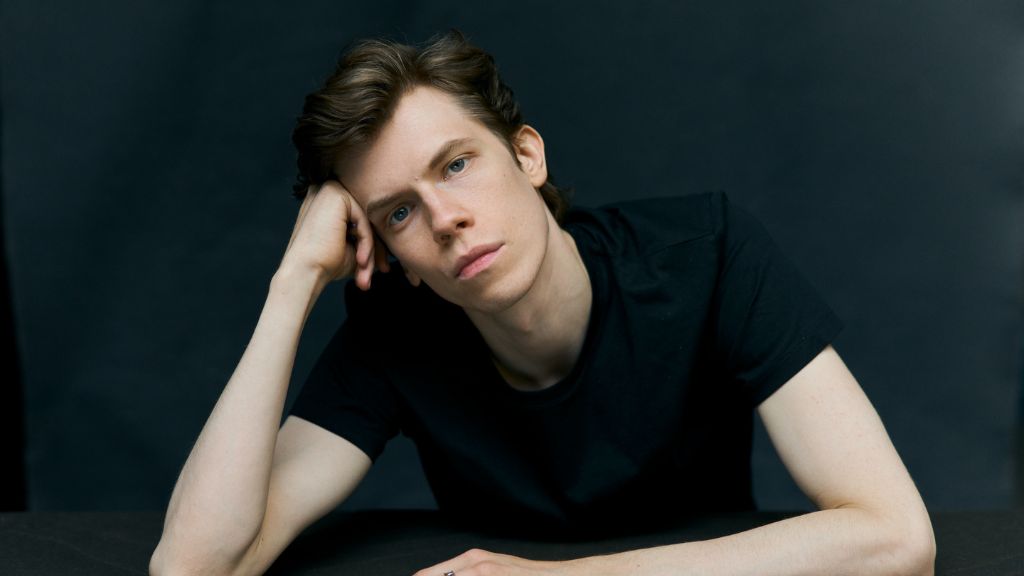
German Segal: “The hardest thing about being an actor is having to wait, every single time, for someone to choose you again”
His path into British film and television does not read like a stroke of luck. For several years, German Segal paid for a subscription to Spotlight, the UK’s professional casting platform, without securing a single role. He kept writing to agents, most of whom never replied. He went through one round of auditions after another, waited for months during the pandemic, and came to London for the first time only after he had already been cast in Peter Kosminsky’s series. Today, German Segal lives in the UK, appears in major international productions, is represented by United Agents, and is preparing for the release of the second series of The Undeclared War on Channel 4. Margarita Bagrova, founder of Afisha.London, met German to talk about the British film industry and about growing within a profession in which talent is only one of the ingredients of success.
This article is also available in Russian here
— When you look back now, does everything that happened seem inevitable? Or do you still sometimes feel that it was an extraordinary coincidence? Had someone told you a few years ago that you would be working with Peter Kosminsky alongside Simon Pegg, would you have believed them?
— I probably would have. I had always wanted to work in the West as an actor, and I realised fairly early on that this was the direction I wanted to take. So, had I heard a prediction like that, I would most likely have said to myself, “Well done, you’re doing everything right.” Of course, I would have been delighted to know that the dream was going to come true, but the dream itself had existed for a long time. It was not a desire that appeared out of nowhere.
— Your surname, and even your first name, sound almost like a ready-made actor’s backstory to a British ear. Are you rarely immediately taken for someone from Russia?
— Almost never. People generally do not realise that I am Russian until I tell them myself. Segal is a Jewish surname; as far as I know from my family history, it comes through my great-grandfather, who was evacuated during the Second World War.
There is also an amusing story connected with my first name. In English, German means someone from Germany, and there are occasions when casting directors are looking for an actor to play a German, see my name and think, “Perfect candidate,” and invite me to audition. My Russian accent is fairly soft, so when speaking to me, British people also quite often assume that I am German or from elsewhere in Europe. So my name sometimes quite literally helps me get considered for German roles.
Read also: The right to create: A conversation with Dmitry Krymov
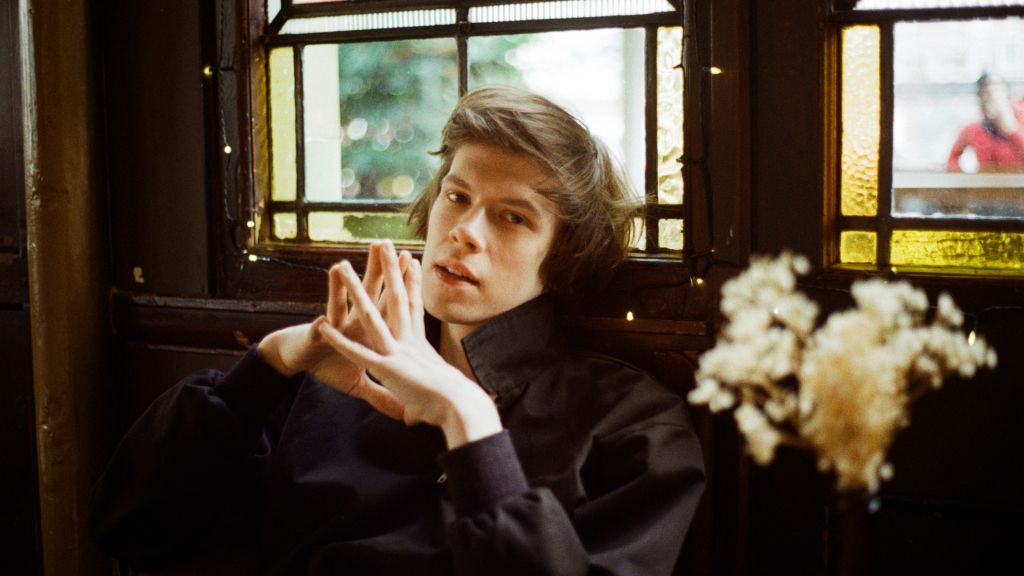
Photo: Tatiana Keating
— You graduated from the Moscow Art Theatre School, an institution with a very strong tradition and reputation. What made you want to study all over again, this time at the Royal Central School of Speech and Drama?
— In fact, the desire to work in Britain came first. After graduating from the Moscow Art Theatre School, I lived in Moscow and tried to understand how one actually found a way into the international industry. I followed actors who had managed to break into the Western market, researched casting platforms and wrote to agents. I registered with Spotlight, the main professional platform for actors in the UK. Most of the projects listed there are intended for people who are already based in Britain, but it mattered to me to remain visible to the industry. For a long time, it brought no results, but I stubbornly continued paying for the subscription. Then, one day, I received an invitation to audition for The Undeclared War: the producers were looking for a Russian actor with good English.
— So your first major British audition took place while you were still living in Moscow?
— Yes. It started with self-tapes: you record the scene at home and send it off. Then there was another round, and another after that, with months of waiting in between. Then the pandemic began, and the whole process stretched out over roughly a year and a half. At one point, the waiting became almost unbearable.
Then came a Zoom meeting with Peter Kosminsky, followed by an in-person audition in Moscow, with Peter directing remotely. We were asked to wear earphones so that after every take he could give us notes directly into our ears. It was a very strange but also fascinating experience: you’re standing in a studio in Moscow, the director is in England, you’re hearing his comments through your AirPods, doing your best in front of the camera, and somehow, despite the distance, a real creative process emerges. After that audition, I got the part.
— So the first time you came to Britain was as an actor who had already been cast?
— Exactly. I’d never been to the UK before filming. In 2021, I came over for four months to work on the first series. We filmed in Wales and Bristol. It was one of the most extraordinary experiences of my life: living in a new country, acting in English and being part of such a talented and supportive team.
Once filming wrapped, I had to return to Russia because my work visa was valid only for the duration of the production. But by then I already knew that I wanted to move here and continue building my career in Britain. Then, after the war began in 2022, it became clear that I needed to make that happen as quickly as possible.
— Was studying at the Royal Central School of Speech and Drama primarily a practical decision — a way of getting a visa and entering the industry — or did you genuinely feel the need to go back to drama school?
— There was certainly a practical side to it at first. A student visa gave me the opportunity to relocate and gradually establish myself here. But I’m very glad that I ended up spending a year on the Master’s programme. It turned out to be a completely different experience from the Moscow Art Theatre School. The training there is incredibly rigorous, which has enormous strengths, but the relationship between tutors and students can sometimes be very strict, even quite brutal.
At Central there was much less pressure. Not easier in terms of expectations, but psychologically much freer. It allowed me to open up in a different way and to try things that, in a tougher environment, I might never have dared to attempt. And, of course, working in English every day and studying alongside people from different countries and theatrical traditions was invaluable. I’ve been living in London since September 2022, and I now hold a Global Talent visa.
Photo: Tatiana Keating
— There is almost a mythical question that every actor asks: how do you find an agent? Can an agent really transform your career, or does a major project have to come first — something that makes an agent notice you?
— A strong project changes everything. Before The Undeclared War, I actively wrote to agents myself. I explained that I’d graduated from the Moscow Art Theatre School, sent headshots and showreels. Lots of actors do the same.
But the major agencies receive hundreds of emails. Unless there’s something genuinely significant in the subject line — say, a leading role with a renowned director — it’s very easy for your email to go unnoticed.
Smaller agencies are often more approachable and may even offer a Zoom meeting if you’re based abroad. But I wanted to find a top-tier agent from the outset, and at that stage I simply wasn’t in a position to attract that level of interest.
As soon as I was cast in The Undeclared War, everything changed almost overnight. Several leading agencies suddenly wanted to meet me, and I ended up receiving a number of offers. In the end, I chose United Agents, one of the UK’s largest talent agencies.
— So an agent doesn’t usually come along when an actor needs help the most, but rather when they’ve already proved their professional value?
— To a certain extent, yes. An agent needs to know that they can confidently present an actor to the industry, that there will be genuine demand for them. The clearest indication of that is when you’re already working on a strong production.
An agent’s role goes far beyond simply finding auditions. They negotiate contracts, protect their clients’ interests and advise them on which roles to pursue. In the UK, agents work on commission, which is typically around 12.5% of an actor’s earnings. In advertising, the percentage can be higher. If an agency asks you to pay an ongoing fee simply to remain listed on its website, that’s usually a red flag. A reputable agent earns money only when their actor earns money.
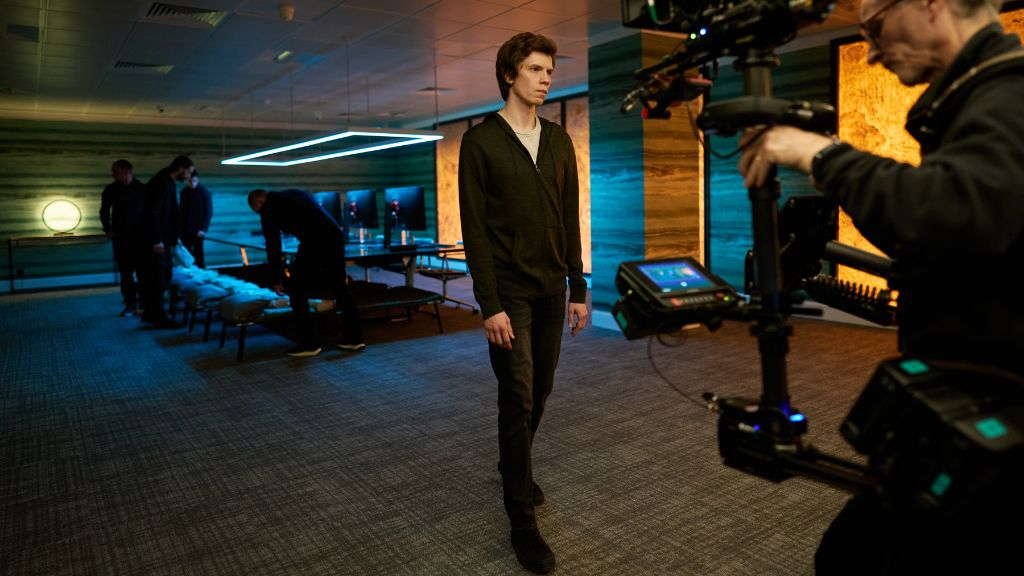
Photo: Channel 4 / Playground Entertainment
— It’s easy to turn your story into one about perseverance paying off. But acting seems particularly unforgiving because determination alone isn’t enough — in the end, someone else still has to choose you.
— That’s probably the hardest part. So many different factors have to align. You can be an excellent actor and give a brilliant audition, yet still be slightly too young or too old for the role, not match another cast member physically, or simply not fit the director’s vision of the character’s family. There are many things you simply can’t control.
With my character, Vadim Trusov, in The Undeclared War, everything came together: my age, my appearance, the language, my understanding of the material and the audition itself. In a sense, the stars really did align. But for that moment to happen, you have to stay in the profession, keep learning, and be ready when the opportunity finally comes.
Read also: Tom Stoppard: the playwright who redefined modern drama
— When the second series came around, you didn’t have to prove yourself all over again to keep the role?
— No. If a character’s story continues, there usually isn’t another casting process. New characters, of course, are cast separately. In the second series, for example, Shan Brooke and Danny Sapani joined the cast. Established actors are sometimes offered roles directly, without auditioning. But for most actors, auditions remain a constant part of the job.
— In popular culture, the Russian hacker has almost become a genre in its own right. When you first read the description of Vadim Trusov, did you worry that you were being offered another collection of familiar clichés?
— Quite the opposite. Even from the very first email, it was clear that Vadim wasn’t simply there to serve the plot or to be “the FSB hacker”. He’s someone who wants to be an artist, someone who wants to express himself creatively, but whose family pushes him towards computer programming instead.
At the heart of the character is a very universal conflict: the tension between what your parents expect from you and what you want for yourself. Vadim has a complicated relationship with his father, who is involved in weapons manufacturing. He is deeply attached to his family while, at the same time, rebelling internally against both his parents and the values they represent. What I loved was that he wasn’t written as the stereotypical “evil Russian”. He’s a real person, with fears, ambitions, talent, love, guilt and an inability to make a perfect choice.
— Peter Kosminsky often explores politics through deeply personal stories. Vadim finds himself caught between the state, his family and his own sense of right and wrong. How personally did you relate to that internal conflict?
— I related to it very strongly. Thankfully, I haven’t lived through everything Vadim experiences. But as someone who grew up in Russia, I understand the conflict between what the system expects from you and what you want for yourself.
I also recognised a lot in his family relationships and in his romantic storyline with Tinatin Dalakishvili’s character. There were moments when I read the script and felt as though certain details had been written directly from my own life.
So, while working on the role, I didn’t have to invent much. It was more a matter of recognising parts of myself in the character and giving him some of my own experiences. I genuinely brought a great deal of myself to the role, although I’d rather not analyse exactly which parts.
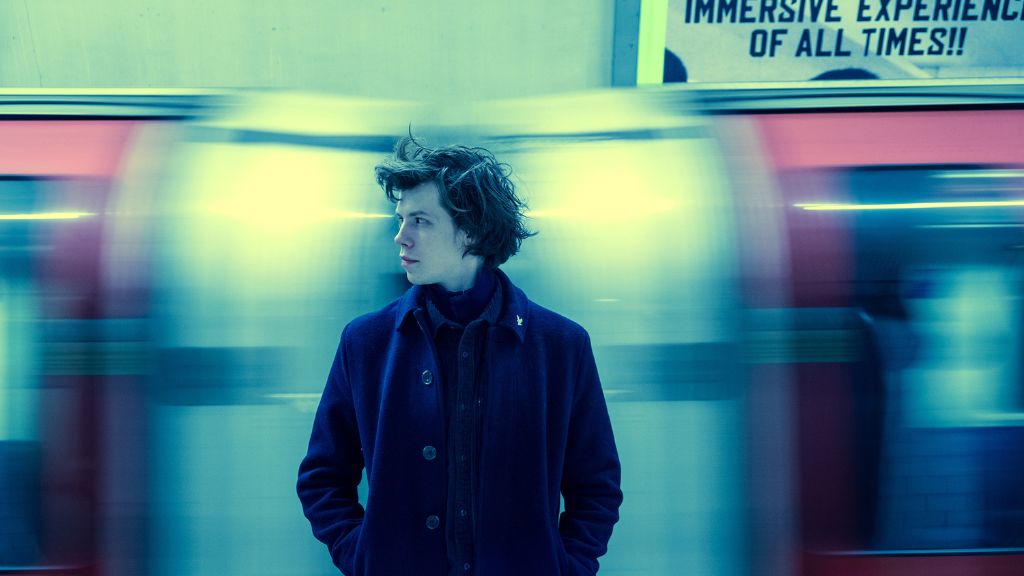
Photo: Tatiana Keating
— On productions like this, actors often become more than performers — they also become cultural consultants. Were there occasions when you challenged the script or discussed changes with the director to make the Russian setting feel more authentic?
— I was quite actively involved. The first series includes scenes both in English and in Russian because part of the story takes place in St Petersburg. Peter wrote the scripts in English and they were then translated, but a technically correct translation doesn’t necessarily sound like the way people actually speak.
I suggested changes to dialogue and to some of the characters’ actions. It was important to me that the Russian scenes felt genuine and never false. There was one small detail that we filmed, although I don’t think it made the final cut. In the FSB office there’s a bottle of hand sanitiser, but it’s empty. It had been put there because it was supposed to be there, but nobody had bothered to check whether there was actually any sanitiser inside. That struck me as a very recognisable detail — not a caricature, just an everyday reality.

— When preparing to play a hacker, did you look at other performances on screen, or did you deliberately avoid them so you wouldn’t unconsciously imitate anyone?
— I generally try not to borrow another actor’s interpretation. That’s especially true of characters that have already been played many times, like Shakespeare’s roles. It’s far too easy to start repeating someone else’s choices. For me, what’s more important is understanding the character’s inner logic and what they’re really trying to express.
So I spoke to several highly experienced software engineers. I showed them the Russian dialogue and checked the technical terminology with them. They explained where the translations sounded unnatural and what people in the industry would actually say.
I always begin with the script itself: what happened before the scene, what happens afterwards, what the character wants and why they’re saying these particular words. It’s not enough for an actor simply to learn the lines — you have to understand where those words come from.
That said, I did watch some of Mr. Robot with Rami Malek. Not because I wanted to copy his performance, but because I was curious to see how you can make a scene visually engaging when someone is spending a long time sitting in front of a computer.
Read also: Fyodor Chaliapin in London: the triumph of Boris Godunov and an audience with King George V
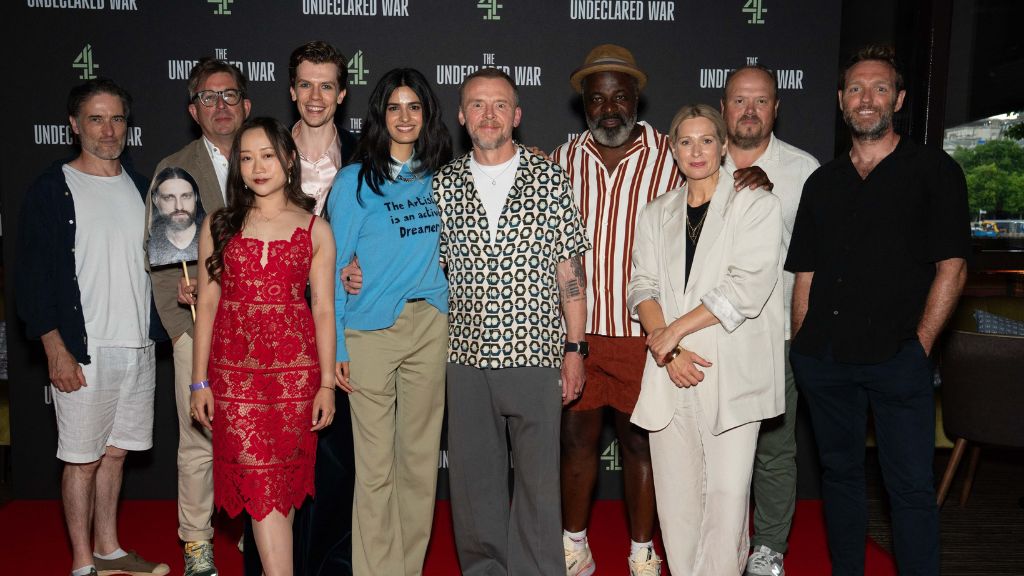
From left to right: Ed Stoppard, Collin Callender, Millicent Wong, German Segal, Hannah Khalique-Brown, Simon Pegg, Danny Sapani, Siân Brooke, Gavin Spokes, Tom McKay. Photo: Channel 4
— Since 2022, being Russian has ceased to be just another biographical detail in the international film industry. Have you felt that people’s attitude towards you has changed?
— That’s a difficult question to answer with a simple yes or no. In some ways, I was fortunate. By that point, there wasn’t very much tying me to life in Russia anymore, so I was able to pack my bags and start building a new life in Britain.
At the same time, Russia remains constantly present in the news and, as a result, in film and television scripts. Russian characters haven’t disappeared. Auditions for those roles continue, and sometimes there seem to be even more of them than before.
Has my nationality ever worked against me? Possibly, from time to time. But no one ever tells an actor, “We didn’t cast you because you’re Russian.” You simply receive a rejection and assume you just weren’t the right fit for the role. Perhaps it’s better that I don’t know all the reasons. Otherwise, I’d only have more things to worry about.
Read also: Leo Tolstoy in London: shaping the British literary landscape
— You’ve almost completely lost your Russian accent. For you, is that about expanding your range as an actor, or is it also a way of avoiding being confined to one particular type of role?
— For me, it’s definitely about expanding my range. The accent hasn’t disappeared completely. People can still hear that it’s European, and I’m often mistaken for being German or Danish. But if a role requires it, I can make my Russian accent much stronger.
I’ve been working on my pronunciation for several years, and I still train regularly. It’s actually a very physical process. We spend our whole lives using certain muscles, positioning our tongue, jaw and lips in familiar ways. To change your accent, you have to retrain your body, quite literally.

— Who helps an actor make that kind of adjustment?
— There are specialists known as accent coaches or dialect coaches. After the first series, when I was back in Russia, I had online sessions with British tutors every week. Native speakers work with them too: a British actor may need an American accent, an American actor may need a particular English dialect, and so on.
The main difficulty is that, once you are on set, you have to be able to act freely. You cannot live truthfully through a scene while frantically trying to remember where to place your tongue. So first there has to be an enormous amount of technical work, and then you have to forget all about it. I really enjoy that process: working with sound, with the muscles, with the way a voice can alter a personality.
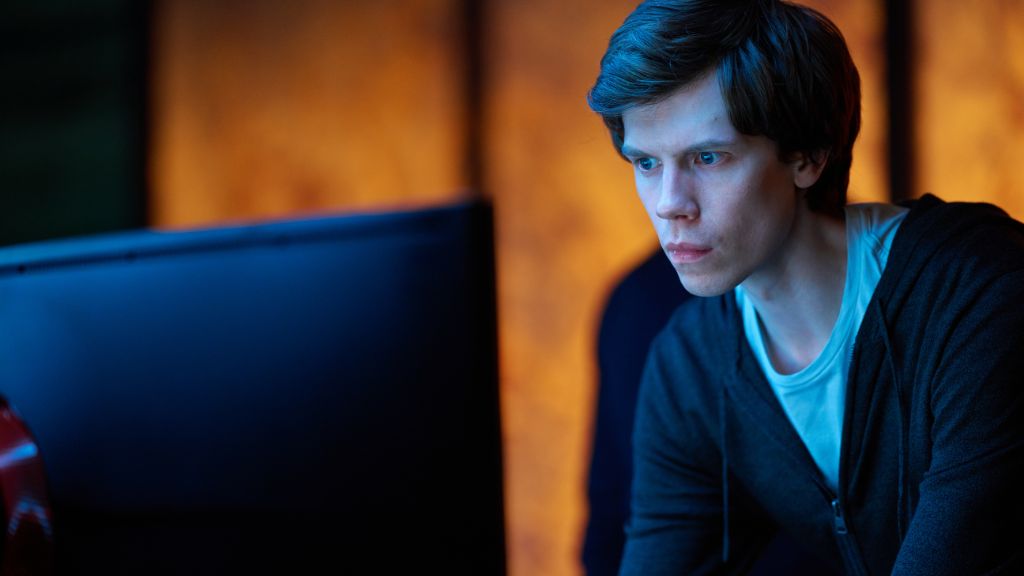
Photo: Channel 4 / Playground Entertainment
— Peter Kosminsky directed the first series, while Paul McGuigan directed the second. How does an actor’s experience change when a new directorial temperament enters the same project?
— They were very different experiences. Peter creates an atmosphere of warmth and safety. During the first series, I felt that I did not need to worry about anything apart from my role, because the atmosphere on set was so calm and respectful. Even the way he gave notes was very British. He would begin by saying at length that everything was wonderful, and then gently suggest trying another version. I never felt that he was ordering me to do something. It felt more as though he was inviting me into a shared process of discovery. He might tell me about something he had experienced himself, or share a personal story, to help me get closer to the character’s emotional state. It was very detailed and subtle work.
Paul McGuigan works differently. He engages less with the actor on a personal level and sees the scene more strongly as part of a wider cinematic structure: the camera, the rhythm, the movement, the visual result. If he was happy with everything, he might not comment on the acting at all. But whenever he did give a note, it was always extremely precise. The atmosphere on set was also very comfortable, with a great deal of humour. With Peter, the experience was deeper and more personal. With Paul, it was more about the mechanics of cinema and the filming process itself. But both gave me the feeling of working with directors of an exceptionally high calibre.
— We are living at a time when technology is already being trained to reproduce not only a person’s face and voice, but their individuality as well. Do you see artificial intelligence as a genuine threat to the acting profession?
— The fear is certainly there. But I find it difficult to believe that technology will ever completely replace living human energy. The death of theatre has been predicted many times, yet people still come to the theatre because they need direct contact with another human being who is telling a story here and now.
The risk is greater in film, because the image is already mediated through a camera, and artificial intelligence can create something that looks very close to a real person. But I still think that audiences instinctively sense when something has been substituted. Everything may appear to be correct, and yet somehow something is missing.
Photo: Tatiana Keating
— From the outside, a film set can seem like a place of constant activity. But actors often say that one of the most important skills in film is knowing how to wait. What does your filming day actually look like?
— For an actor, filming is the happiest time. You usually spend months waiting for work, and when a project finally begins, you feel like a child who has walked into a sweet shop.
If the shoot is outside London, the production buys your ticket and puts you up in a hotel. For a longer job, they may rent a flat for you. Sometimes you arrive for a few days, go home, and then return to the same place a month later. On set, you often have to be there by seven in the morning, although there can be earlier call times as well as night shoots. First comes hair and make-up, then costume, breakfast in the trailer, and after that you wait for your scene.
And the waiting is often the hardest part.
You might film in the morning, then spend four or five hours sitting in your trailer while other people work, and then return to set again in the evening. You have to preserve your energy, avoid burning out, and be completely alive at exactly the right moment. So film acting is not only about knowing how to act. It is also about knowing how to do nothing for a long time without losing your inner readiness.
And finally, a few quick-fire questions.
— What is more frightening: an audition or the first day of filming?
— An audition. On the first day of filming, the role is already yours and you no longer have to prove that you are capable of playing it. By that point, you have had time to prepare, to live with the material and to find something to hold on to. At an audition, the decision has not yet been made, and a great deal can depend on just a few minutes.
— A director you would particularly like to work with?
— Christopher Nolan.
— The most underrated actor, in your opinion?
— Timothée Chalamet. He is extremely well known, but precisely because of his popularity, some people can be slightly dismissive of him. I think he is an excellent actor.
— Do you remember the film that first made you want to be on the other side of the screen?
— I loved Tom Cruise when I was a child. Probably the first Mission: Impossible in particular. I wanted to be that kind of hero: running, saving people and becoming part of extraordinary stories. Perhaps that was where it all began.
— The most beautiful place in London?
— The SouthBank, by the National Theatre, and the view of Big Ben from there.
— Which English habit has already become yours?
— Apologising all the time.
— And after all that, what does success mean to you today?
— Giving yourself permission to do what you love, regardless of what other people may think.
Cover photo: Andy Go

Read also:
Can Britain’s social media ban save children from digital addiction?
“Swan Lake”: how Tchaikovsky’s ballet became a symbol of protest
UK museum charges: Britain debates the future of free access
Related Articles
SUBSCRIBE
Receive our digest once a week with quality Russian events and articles