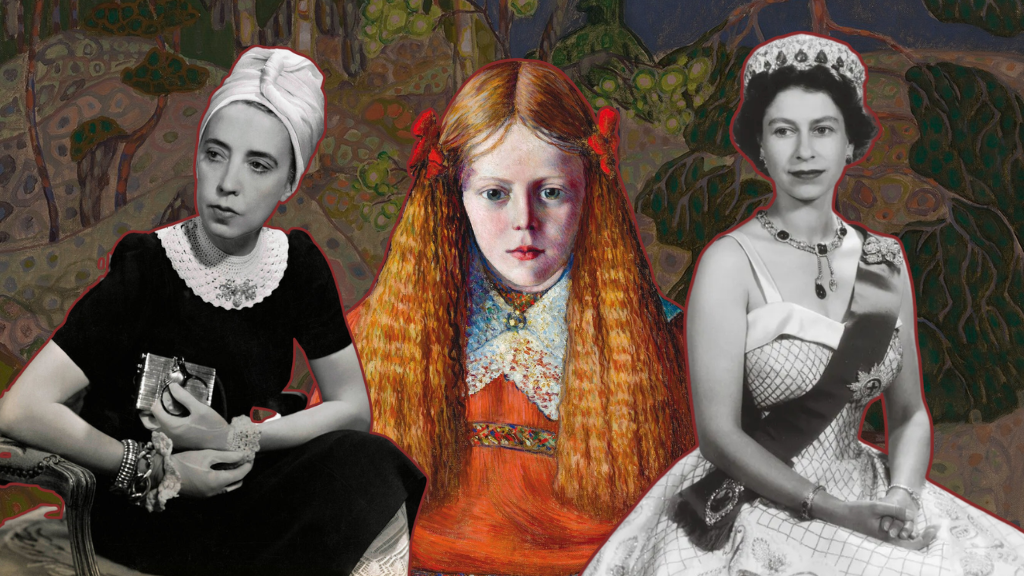
London’s spring art season 2026: retrospectives, rediscoveries and the spectacle of display
London’s art calendar rarely lacks ambition, but the spring of 2026 feels unusually dense with premieres and rediscoveries. From March through May, the city’s museums and galleries offer a sequence of exhibitions that oscillate between contemporary introspection and historical reassessment — from immersive installations and autobiographical confessions to baroque painting and surrealist fashion. Afisha.London magazine highlights the exhibitions shaping the capital’s spring art season.
This article is also available in Russian here
What emerges is not simply a parade of blockbuster shows, but a broader portrait of how museums are rethinking the stories they tell: who is rediscovered, who is canonised, and how spectacle increasingly shapes the experience of art.
At the Hayward Gallery, two major installations set the tone for the season. The Chinese artist Yin Xiuzhen presents Heart to Heart, her first large-scale retrospective in the UK, bringing together three decades of installations constructed from discarded clothing, glass, concrete and everyday objects. Her work, often built from materials charged with personal history, reflects on memory, displacement and the quiet anxieties of globalisation. Nearby, Chiharu Shiota’s exhibition Threads of Life envelops visitors in dense webs of red, black and white thread, suspending shoes, keys and furniture in a network that suggests the fragile architecture of human connection. The installations are undeniably immersive — though one sometimes wonders whether the emotional symbolism is felt or simply staged.
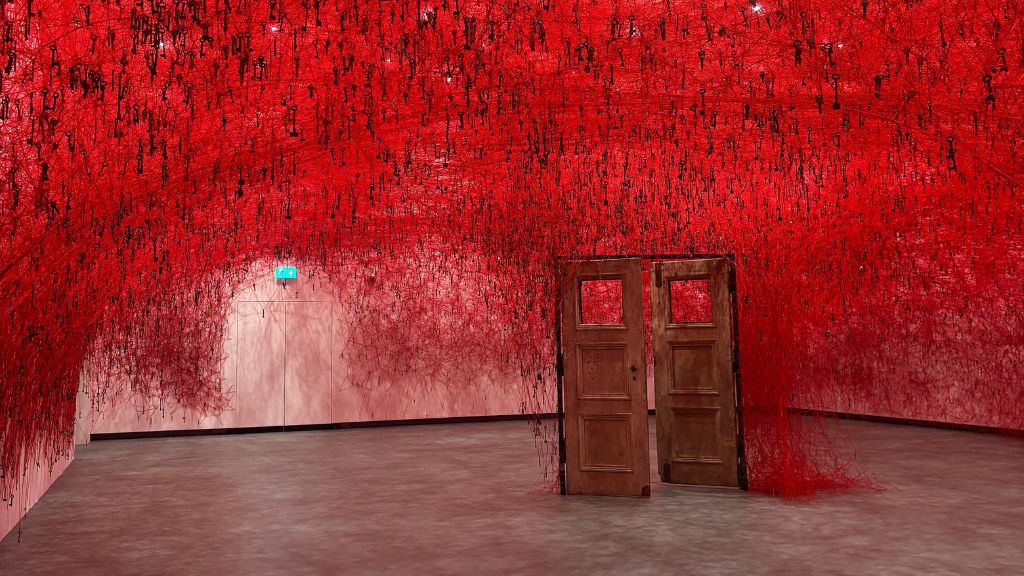
Photo: Afisha.London
The season’s most anticipated retrospective arrives at Tate Modern, where Tracey Emin presents A Second Life. Bringing together more than a hundred works, the exhibition traces four decades of a practice defined by confession and confrontation. Emin’s installations and drawings — including the notorious My Bed — once shocked audiences with their rawness, transforming private experience into public art. Seen today, the works carry a different resonance. The shock has faded, but the vulnerability remains, and Emin’s voice — unfiltered, sometimes painfully direct — continues to hold a peculiar authority within British contemporary art.

At the Serpentine, meanwhile, David Hockney offers something closer to visual meditation. His monumental frieze A Year in Normandie stretches across ninety metres, composed of more than a hundred digital drawings made on an iPad during lockdown. Inspired by the Bayeux Tapestry and Chinese scroll painting, the work records the slow turning of the seasons around his home in Normandy. For an artist often associated with sunlit Californian pools, the result is unexpectedly contemplative — a quiet manifesto for paying attention to the everyday. Even at 88, Hockney remains restless, shifting effortlessly between analogue tradition and digital experimentation.
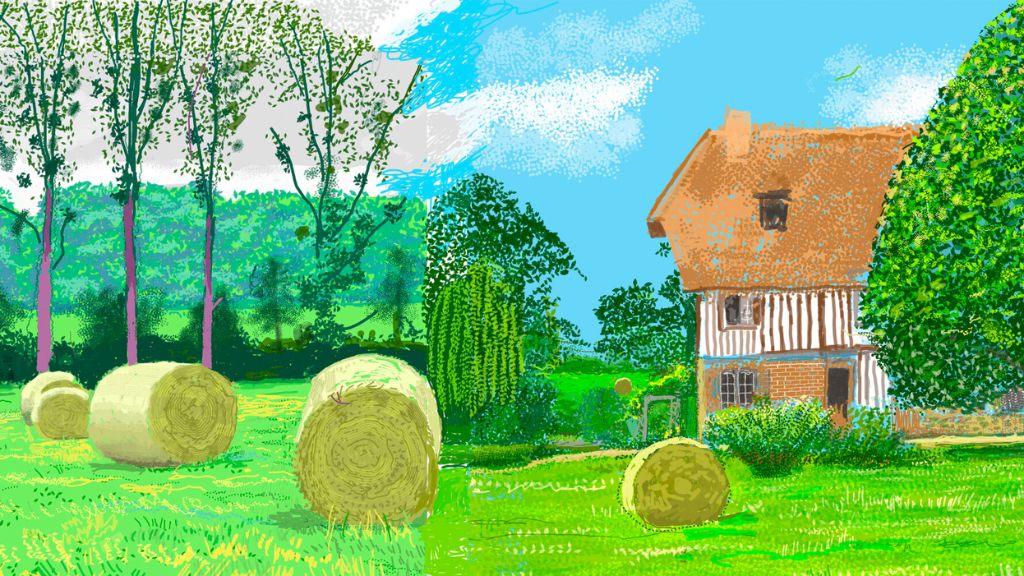
Photo: A Year in Normandie / © David Hockney
Fashion enters the museum canon at the Victoria and Albert Museum, where Schiaparelli: Fashion Becomes Art traces the evolution of the house founded by Elsa Schiaparelli in the 1920s. Her collaborations with surrealist artists — Salvador Dalí, Jean Cocteau and Man Ray among them — blurred the line between couture and art long before such crossovers became fashionable. The exhibition gathers more than 200 objects, from the famous Skeleton Dress to Dalí’s shoe-shaped hat. It also quietly reminds visitors that fashion, for all its theatricality, has always been entangled with questions of authorship, spectacle and power.

Elsewhere, the season offers several acts of historical recovery. At the Royal Academy, the Flemish painter Michaelina Wautier — largely forgotten for centuries — receives the first major exhibition of her work in Britain. Working in the 17th century, she ventured into the grand historical subjects typically reserved for male artists. Her monumental Triumph of Bacchus is both theatrical and subversive: the artist herself appears among the revellers, calmly meeting the viewer’s gaze. Only in recent decades has scholarship restored her reputation, making the exhibition a reminder of how fragile art history can be.
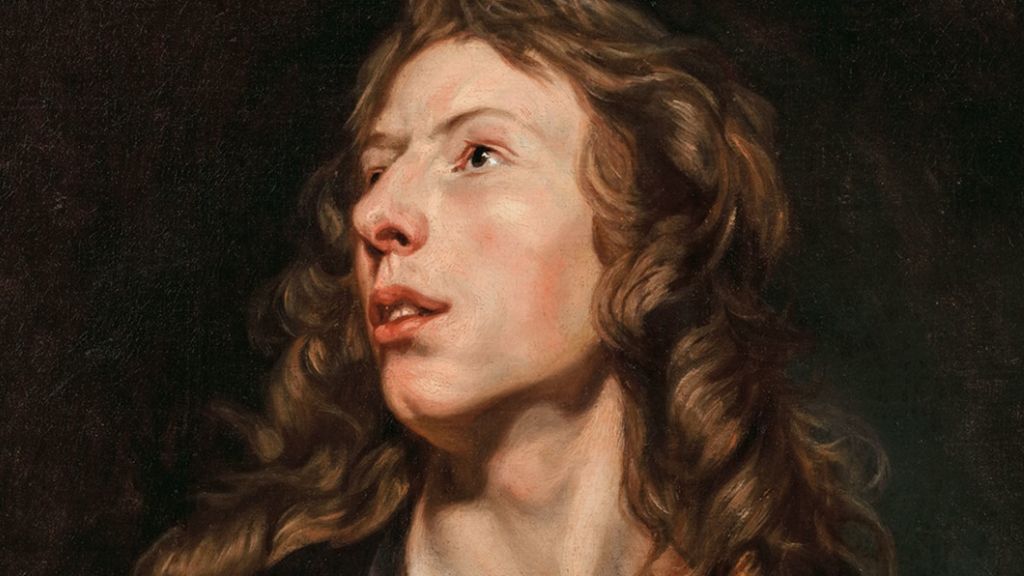
Michaelina Wautier – Saint John the Evangelist (detail). Photo: The Parity Project
Another rediscovery arrives at Dulwich Picture Gallery, where the Estonian modernist Konrad Mägi is introduced to British audiences. His paintings — luminous landscapes shifting between impressionism and expressionism — carry an intensity shaped by the turbulent politics of early 20th-century Europe. The exhibition positions Mägi not merely as a regional figure, but as part of the broader modernist conversation that stretched across the continent.
The spring programme also moves beyond painting. The British Library’s exhibition Fairy Tales transforms its galleries into a theatrical landscape of forests, castles and mythical creatures, displaying manuscripts and illustrations ranging from the Brothers Grimm to Lewis Carroll. It is part literary history, part immersive stage set — a reminder that museums increasingly operate somewhere between scholarship and spectacle.
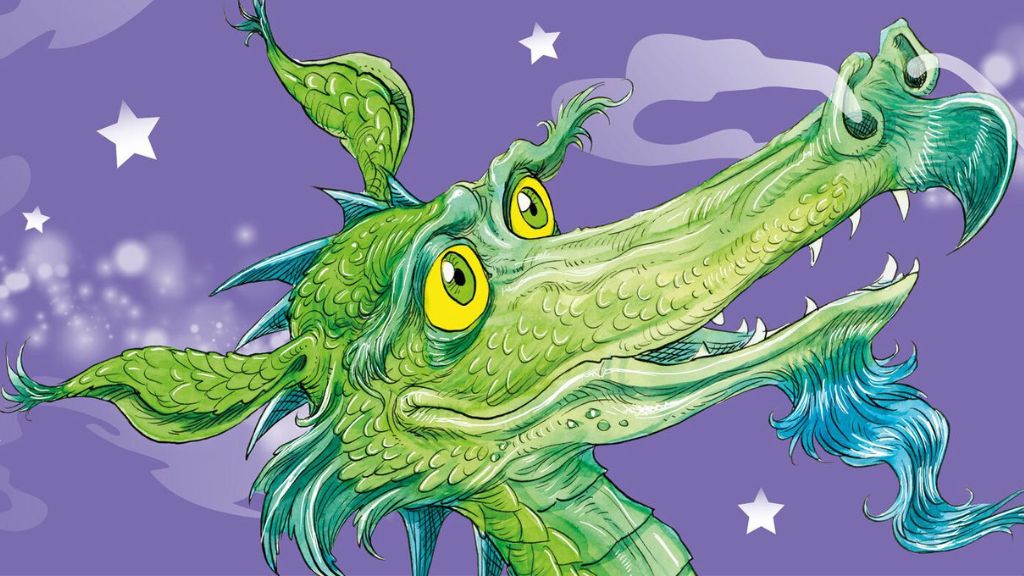
Photo: © Chris Riddell
More traditionally historical in tone is the National Gallery’s major exhibition devoted to Francisco de Zurbarán, one of the great painters of the Spanish baroque. His austere saints and luminous still lifes possess a quiet intensity that feels almost modern in its restraint. The exhibition also highlights the painter’s extraordinary sensitivity to texture — wool, silk and leather rendered with almost tactile precision.
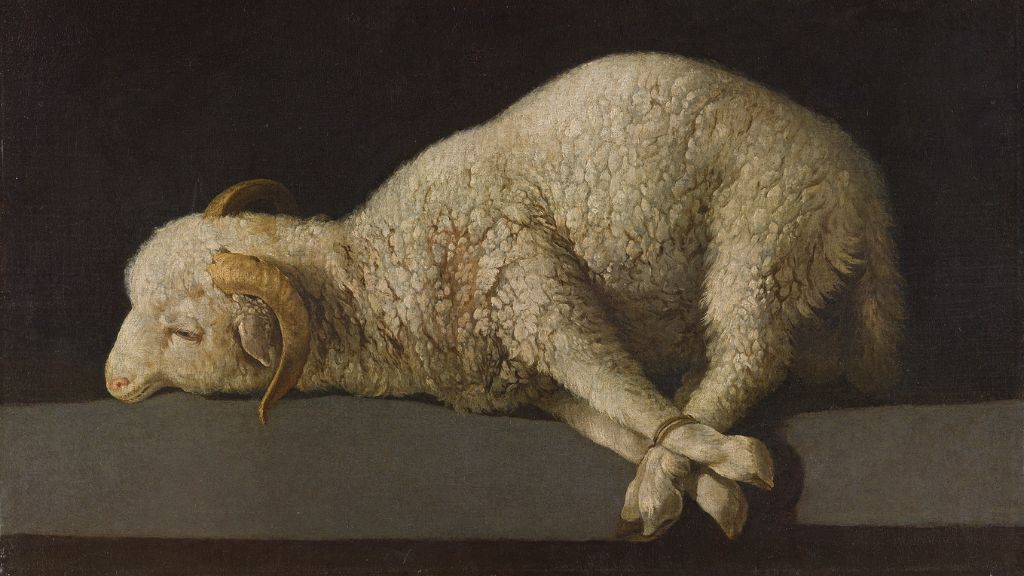
Francisco de Zurbarán, Agnus Dei, 1635 – 1640 Photo: Museo Nacional del Prado, Madrid © Photographic Archive Museo Nacional del Prado
A more ceremonial exploration of visual culture arrives at The King’s Gallery at Buckingham Palace, where Queen Elizabeth II: Her Life in Style marks the centenary of the monarch’s birth. Bringing together around 200 objects from the Royal Collection, the exhibition traces Elizabeth II’s life through the language of dress — from the carefully preserved garments of Princess Elizabeth’s childhood to the diplomatic ensembles and vividly coloured coats that came to define her public image. Among the highlights are the Queen’s 1947 wedding dress and the coronation gown designed by Norman Hartnell, reminders that royal clothing functioned not merely as personal adornment but as a carefully calibrated instrument of state symbolism. In this context, fashion becomes part of the theatre of monarchy itself — a language through which continuity, authority and national identity were quietly staged.
Finally, at Kew Gardens, sculpture escapes the museum walls altogether. Henry Moore: Monumental Nature will scatter thirty monumental bronzes across the landscape of the botanical gardens. Moore believed sculpture belonged in dialogue with nature, and the vast lawns and avenues of Kew provide a fitting stage for these abstract forms. Here, art history becomes something to walk through rather than merely observe.
Read also: Modernist Legend Henry Moore and His Muse, Irina Radetzky
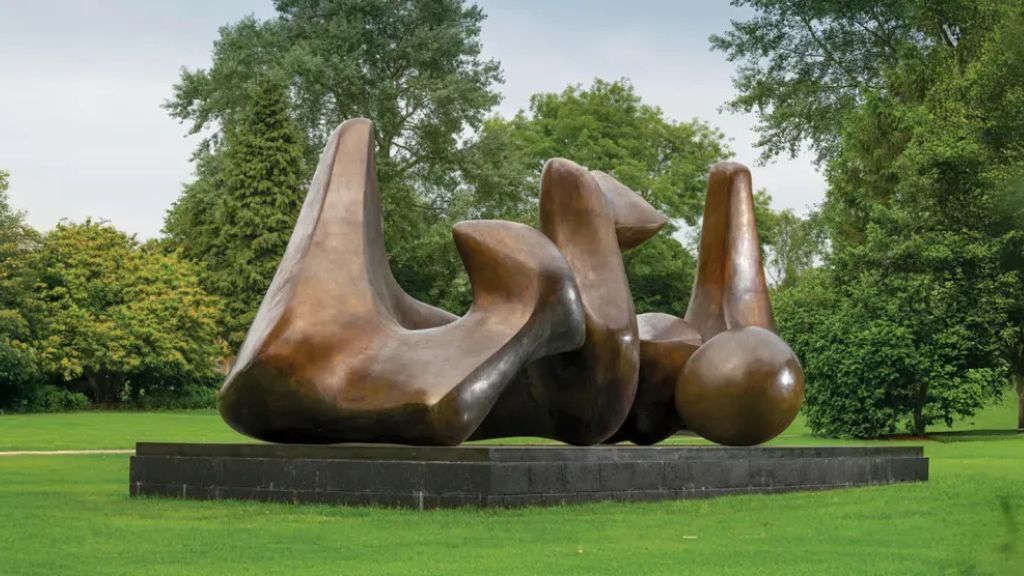
Two Large Forms, 1969 Photo: © Jonty Wilde
Taken together, the exhibitions of spring 2026 reveal a cultural moment poised between retrospection and reinvention. Museums continue to rediscover overlooked artists, revisit the giants of modernism and stage increasingly immersive experiences for contemporary audiences. The result is a season that asks a familiar question in new ways: how do we look at art now, and what stories do we choose to tell through it?
Cover photo: collage Afisha.London (Konrad Magi, Norwegian Landscape- Bog Landscape, 1908-1910 / Konrad Mägi, Portrait of a Norwegian Girl, 1909. Courtesy of Tartu Art Museum / Designer Elsa Schiaparelli wearing black silk dress with crocheted collar of her own design and a turban, photograph by Fredrich Baker, Vogue, 1940 © Condé Nast via Getty Images / Queen Elizabeth II, Baron, 1956 @The Royal Collection Trust)

Read also:
The right to create: A conversation with Dmitry Krymov
Fortnum & Mason: how the queen’s footman created London’s legendary emporium
Russian classics on London stages in 2026: from Turgenev to Chekhov
Related Articles
SUBSCRIBE
Receive our digest once a week with quality Russian events and articles