The Romanovs: a history without an ending
In the summer of 2025, London hosted a presentation of The Romanovs – an event that might otherwise have seemed like yet another return to the familiar narrative of Russia’s last imperial family, were it not for a crucial distinction. Playwright Natalia Rubtsova spoke of the Romanovs not as historical figures embalmed in textbooks and memoirs, but as living people whose family tragedy continues to resist closure. Afisha London reflects on how Rubtsova’s dramaturgy invites us to consider not only what happened, but why we remain unable to stop thinking about it.
This article is also available in Russian here
The story of the Romanov imperial family belongs to a rare category of historical narratives that refuse to settle into a finished form. It resists conclusion, returning repeatedly to cultural consciousness as an unresolved question.
This may lie in the story’s very nature – its dense convergence of the private and the political, love and duty, family and state. Or perhaps in the fact that the execution of Russia’s last imperial family came to signify more than the destruction of individual lives: it became a symbol of a foreclosed future, one that continues to unsettle cultural memory. This preoccupation is not confined to Russia. In Britain, too, the Romanovs remain an uneasy subject – perhaps because the story carries an unspoken awareness of a choice not taken, of help withheld, that might have altered the course of events. What if the British Crown had intervened? What if dynastic and familial ties had outweighed political calculation?

A shared memory
In the summer of 2025, London also hosted a presentation of The Romanovs organised with the support of the Society of Grand Duchess Elizabeth Feodorovna Romanova. Canonised by both the Russian Orthodox Church Outside Russia and the Russian Orthodox Church as a holy martyr, she is venerated as a New Martyr and Confessor. Her statue stands on the façade of Westminster Abbey among the martyrs of the twentieth century, while a memorial cross on the Isle of Wight commemorates the last Russian emperor Nicholas II, his family, and Elizabeth Feodorovna herself – founder of the Martha and Mary Convent.
Read also: Emigration of the Romanovs to Great Britain: the story of Grand Duchess Xenia
-
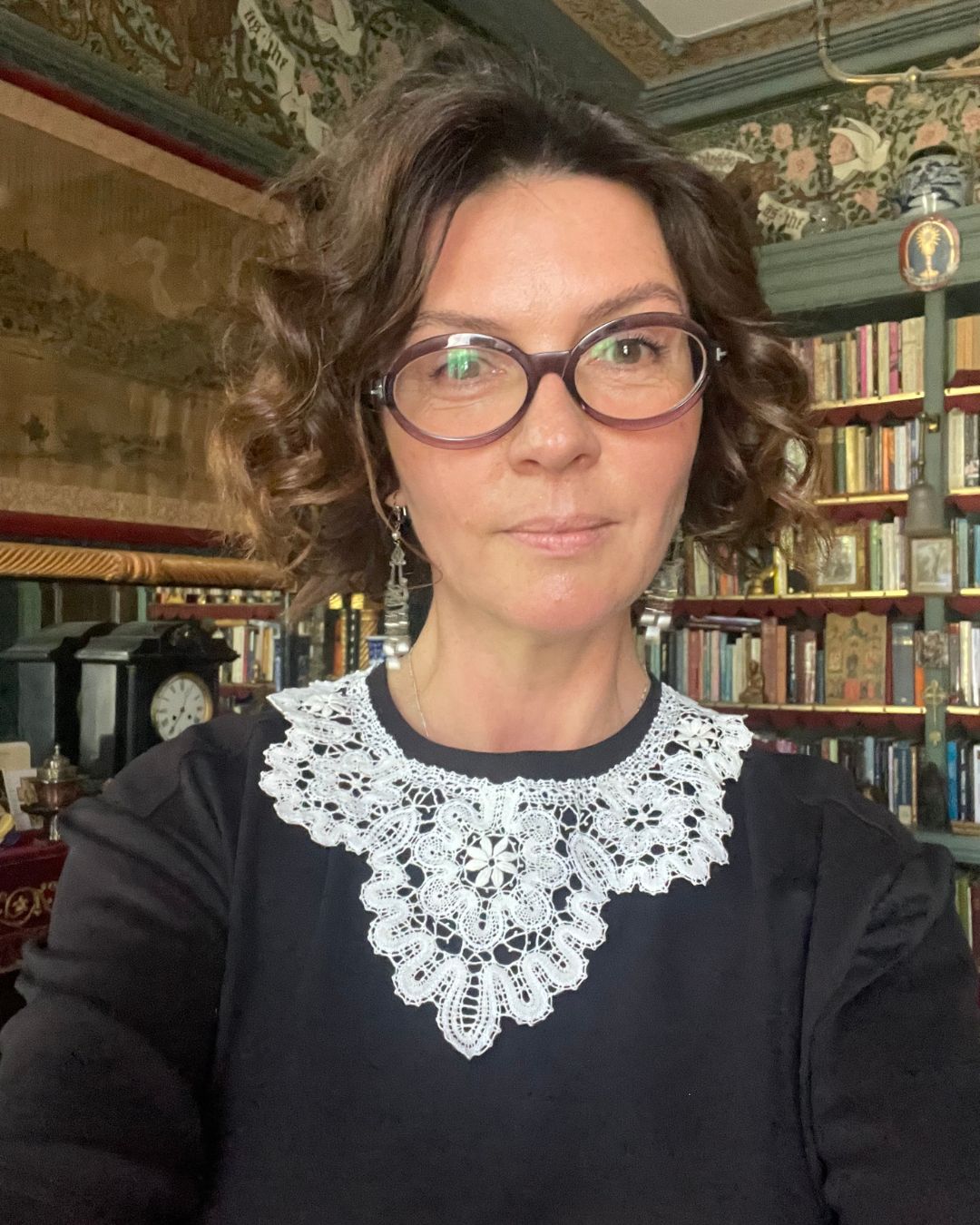
- Natalia Rubtsova
-
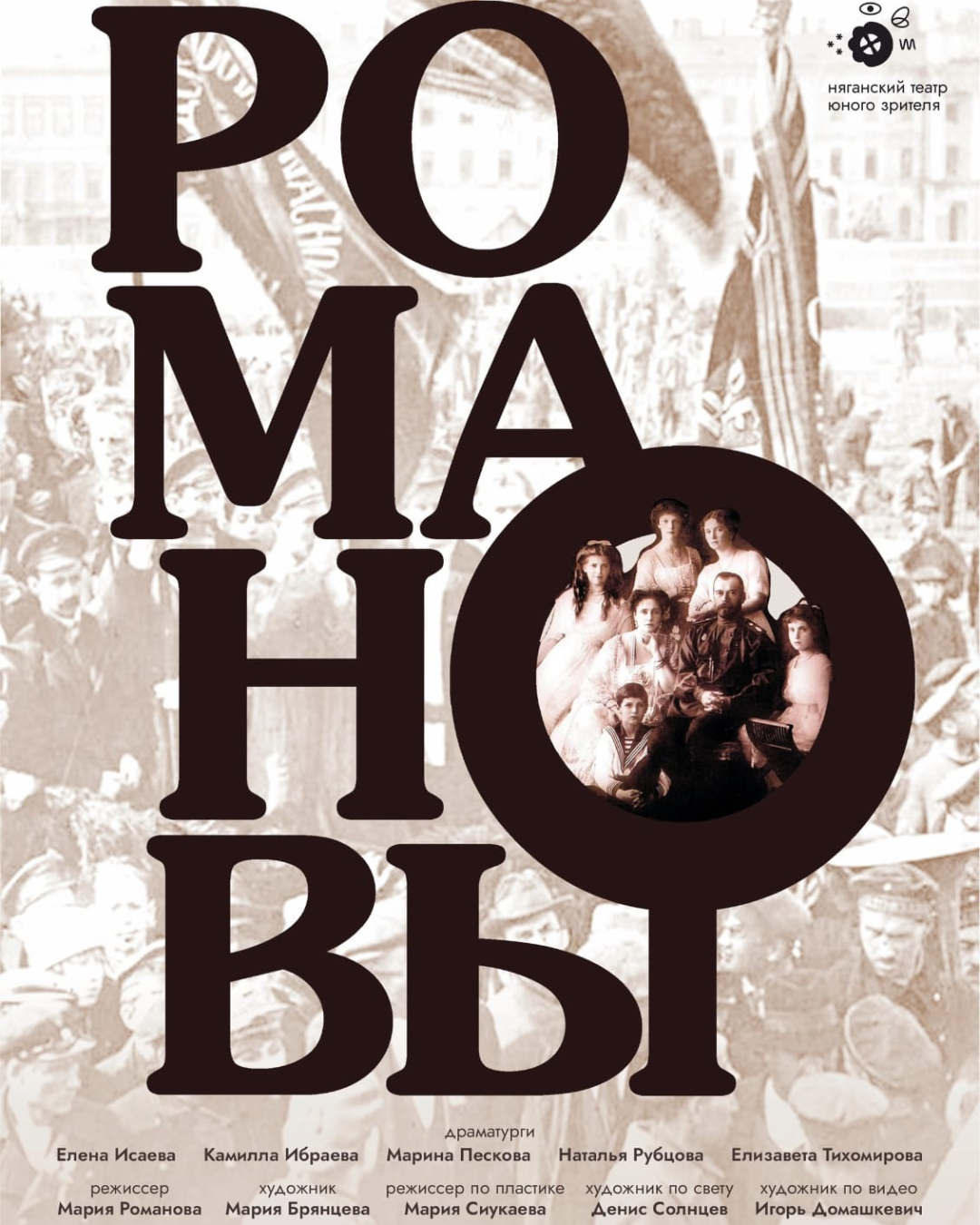
- Theatre poster
The event, at which one of the play’s dramatists, Natalia Rubtsova, spoke, made clear that this conversation extends far beyond a national framework. Here, the Romanovs were approached not as a “Russian tragedy”, but as part of a broader European story of missed possibilities and moral compromise.
Read also: Felix Yusupov and Princess Irina of Russia: love, riches and emigration
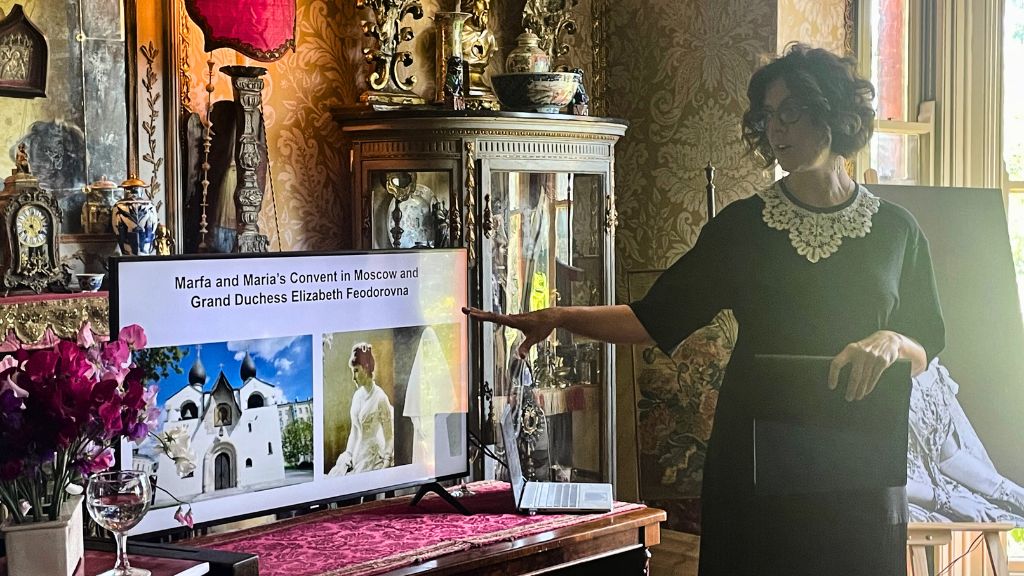
Photo: Maria Harwood
In her address, Rubtsova described her approach to historical drama not as an attempt to reconstruct events, but as an engagement with memory, inner experience and the human perception of catastrophe. She then read excerpts from the play.
Family as a point of rupture
For Rubtsova, the Russian Empire and the fate of the last emperor’s family are not simply recurring subjects, but the focus of an intensely personal inquiry. Her work enters this terrain not as biography, but as an attempt to engage with cultural memory itself – where tragedy is not a closed historical fact, but an ongoing inner dialogue.
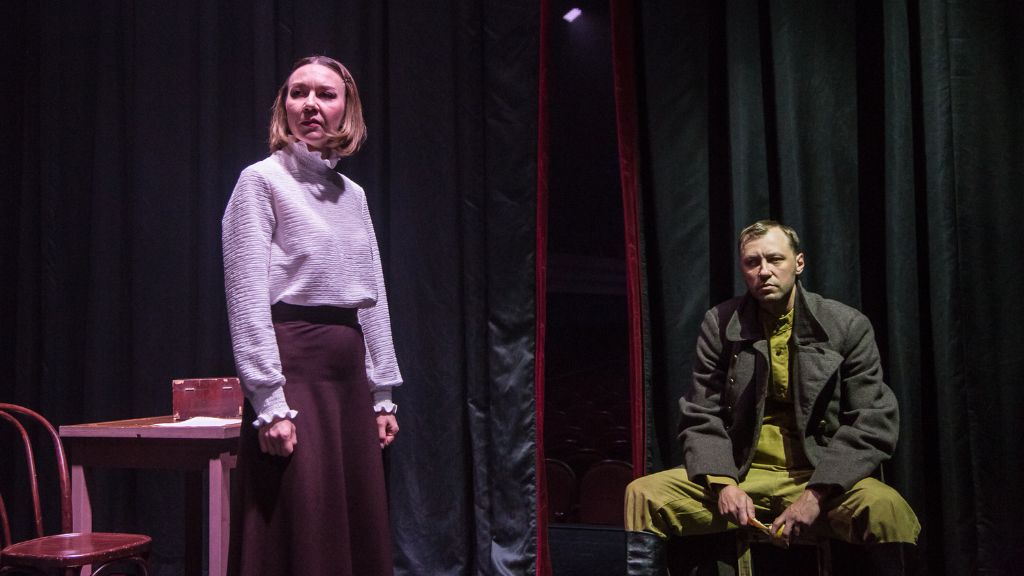
Photo: the premiere performance at the ROSTA Theatre (photographer Galina Fesenko)
One of the most significant shifts proposed by her dramaturgy is a refusal to treat the Romanovs solely as symbols of empire. Instead, the family moves into the foreground – fragile, exposed, and caught within the machinery of historical collapse. Inevitably, a disturbing question arises: does history have the right to intrude into the space of the family, destroying it without remainder?
Rubtsova’s first engagement with this theme came in Four Sisters (2024), co-written with Marina Peskova, Kamilla Ibraeva and Elizaveta Martynova. The play grants each of Nicholas II’s daughters her own voice. Rubtsova focused on Tatiana Nikolaevna, the second daughter – the child closest to her parents, reserved, deeply religious, and seemingly already aware of the cost of duty and sacrifice.
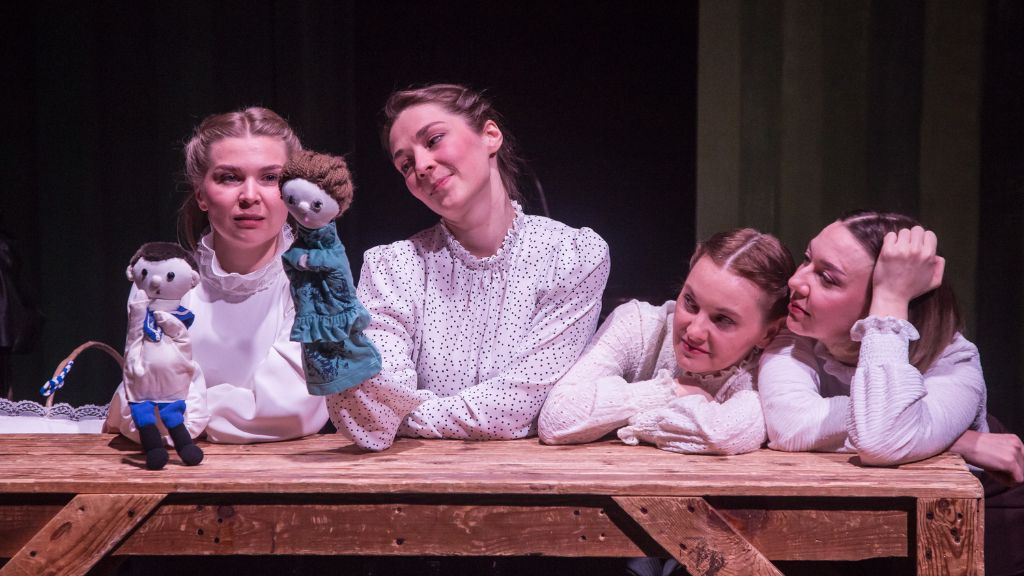
Photo: the premiere performance at the ROSTA Theatre (photographer Galina Fesenko)
Developed under the mentorship of the acclaimed playwright Elena Isaeva, who also originated the concept, the work established a method in which historical catastrophe is refracted through intimate, human experience.

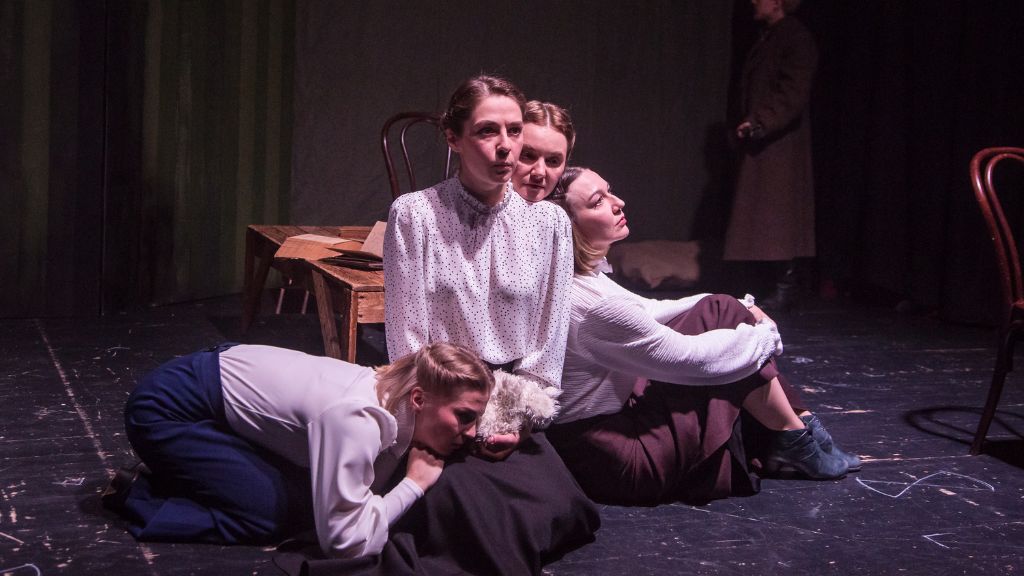
A shortened version of the play, The Romanov Sisters: The Final Days, was staged in 2025 at the ROSTA Theatre (formerly the Moscow Regional State Theatre for Young Audiences). The production was designed to generate an increasing sense of confinement and inescapability. Guards appear during the sisters’ monologues, less as fully realised characters than as manifestations of power – marking the physical and existential pressure under which the sisters lived, when even the right to inner silence is stripped away. Here, the Romanov story is not narrated; it is inhabited – almost tactilely – within a space of intimacy and imminent separation.
History without linear time
Rubtsova returns to the imperial family in The Romanovs (2025), commissioned by the Nyagan Theatre for Young Audiences and co-written with Elena Isaeva, Kamilla Ibraeva, Elizaveta Tikhomirova and Marina Peskova. In this production, the family’s final days are presented not as the climax of a political drama, but as a period of psychological compression – a moment in which the future becomes unimaginable and the past oppressive.
Read also: Nicholas II and George V: A History of Friendship and Duty
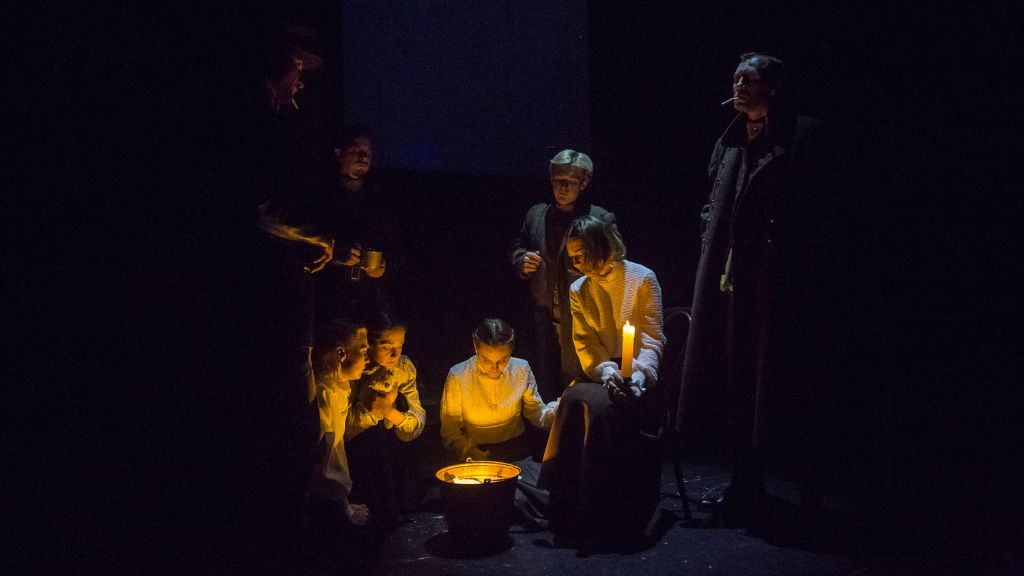
Photo: the premiere performance at the ROSTA Theatre (photographer Galina Fesenko)
The play’s structure deliberately abandons chronology. What emerges instead is a kaleidoscope of overlapping moments: the tender meeting of Princess Alix of Hesse and the future Nicholas II; their wedding, fatally shadowed by the tragedy on Khodynka Field; balls and receptions coexisting with Bloody Sunday. These scenes are not sequenced but layered.
This is not an attempt to reproduce history as linear narrative, but to mirror the workings of memory, in which events surface according to emotional intensity rather than temporal order. Happiness and foreboding occupy the same space, as if to remind us that in this story, joy was never insulated from catastrophe.
Read also: Serge Lifar: reformer of the Paris Opera, the protégé of Sergei Diaghilev, and friend of Coco Chanel
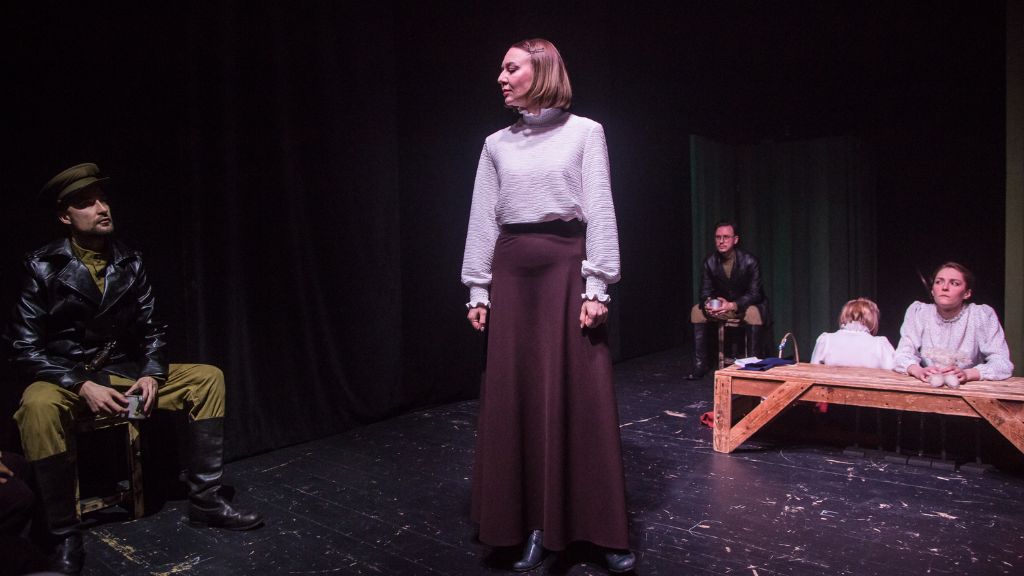
Photo: the premiere performance at the ROSTA Theatre (photographer Galina Fesenko)
The play’s nonlinear structure conveys with particular force the density and pressure of that historical moment. Nicholas II’s decision to place family above state reads as a profoundly tragic choice, its consequences rippling through the entire fabric of the work.
These reflections are sharpened by an unavoidable question – rarely articulated, yet constantly present beneath the surface: what if history had unfolded differently? What if the British Crown had not refused assistance to the last Russian emperor’s family? If the proposed evacuation of 1917 had gone ahead? Might the twentieth century have taken a different course – not only for Russia, but for Europe itself? These questions resist resolution, and it is precisely this irresolution that ensures their return.
Rubtsova’s dramaturgy offers no counterfactual fantasy. Instead, it confronts the impossibility of reversing history, while showing how an unrealised future continues to shape the collective imagination.

An unrealised future
To engage with the Romanovs is to confront questions that cannot be neatly resolved. In her current work on a new play, developed with Elena Isaeva and centred on Empress Maria Feodorovna, Rubtsova extends this inquiry. The perspective of a woman who survived the death of her husband, the execution of her son and grandchildren, and the destruction of much of her family allows catastrophe to be understood not as an endpoint, but as an extended aftermath – as life lived after history’s apparent conclusion.
In contemporary culture, the Romanovs are not a monument, but an open text. And perhaps this is their enduring significance: they compel us to ask, again and again, not what happened, but why we remain unable to stop thinking about it.
Margarita Bagrova
Cover photo

Read also:
Ivan Turgenev’s Sojourn in London: a literary ambassador between the Russian Empire and the West
How Diaghilev’s “Saisons Russes” influenced the European art world of the 20th century
Leo Tolstoy in London: shaping the british literary landscape
Related Articles
SUBSCRIBE
Receive our digest once a week with quality Russian events and articles