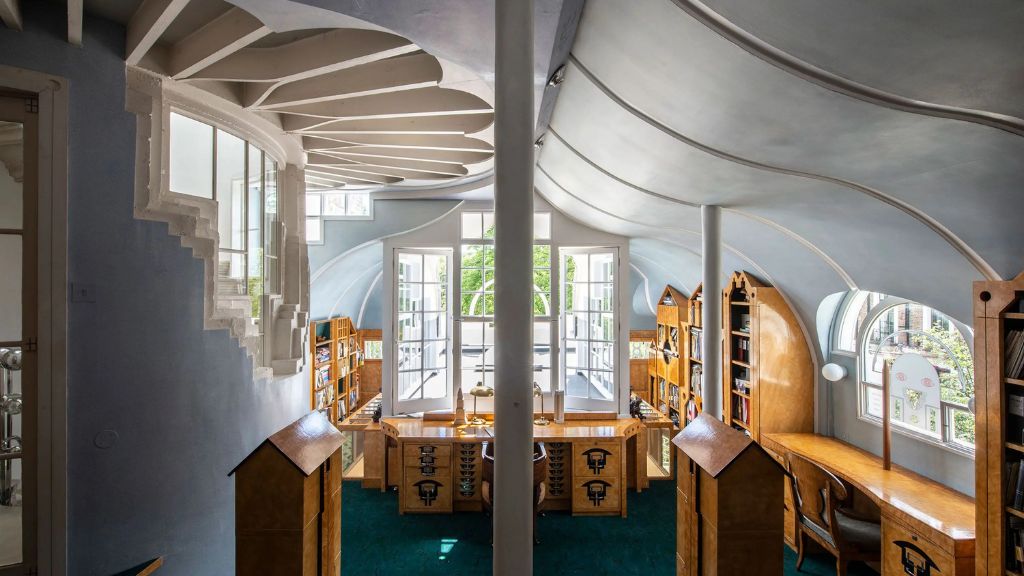
The Cosmic House: inside London’s surreal postmodern masterpiece
Long closed to the wider public, The Cosmic House — now protected with Grade I listed status — has once again opened its doors to visitors. Charles Jencks’ former home remains one of the most extraordinary examples of postmodern architecture in London: a house filled with architectural riddles, hidden symbolism and surreal interiors. Together with architect Tamara Muradova, founder of Archiproba studio, Afisha.London explores why The Cosmic House in Notting Hill has returned to the centre of cultural attention, what lies behind its seemingly classical façade, and why it deserves a place on every serious hidden London and architecture lover’s must-visit list.
This article is also available in Russian here
A house as manifesto
The house was built between 1978 and 1983 by architectural theorist Charles Jencks and his wife, artist and landscape designer Maggie Keswick Jencks, with the involvement of Sir Terry Farrell, the architect behind London’s iconic MI6 building. Conceived as an architectural experiment, the house became a space of symbols, visual jokes, hidden meanings and references to the human body, cosmology and the philosophy of time.

Architect Tamara Muradova describes The Cosmic House as a true manifesto of postmodern architecture, where Charles Jencks and his wife transformed architecture into a language of emotion, symbolism and science. This vision is reflected in the sculptural quality of the house, its layered interiors and the extraordinary attention to detail. Unlike modernism’s principle of “form follows function”, everything here carries meaning — from the door handles to the façade itself.
Read also: Southbank Centre on London’s South Bank has been granted Grade II listed status
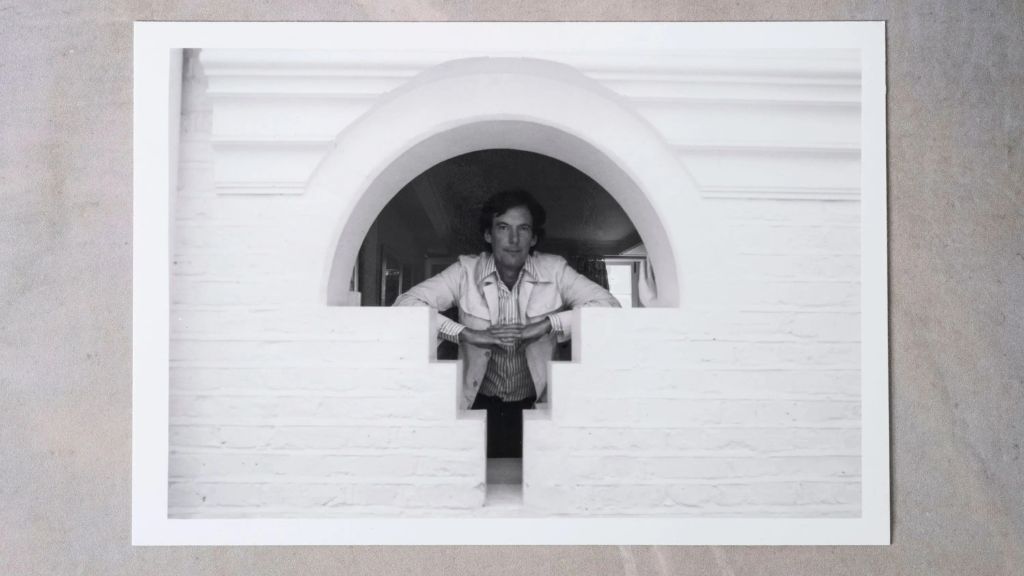
Charles Jencks portrait. Photo: unknown author / The Cosmic House
-
- Photo: No Swan So Fine, CC BY-SA 4.0, via Wikimedia Commons
-
- Photo: No Swan So Fine, CC BY-SA 4.0, via Wikimedia Commons
Charles Jencks was not only an architect, but also an influential landscape designer. His projects are unmistakable: rather than simply creating parks, he attempted to reconstruct the universe within the scale of a single landscape. At the heart of his work lies the fusion of nature, mathematics and symbolic form. Jencks’ landscapes can still be found across Britain, including at Jupiter Artland near Edinburgh.
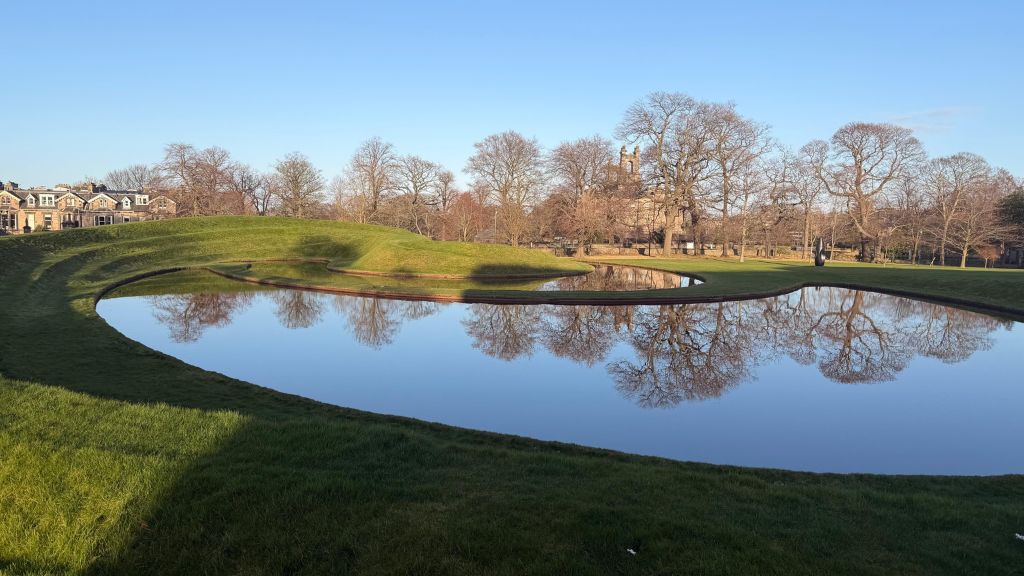
Jupiter Artland. Photo: Afisha.London
Another significant and deeply personal direction of his work emerged through a project developed with his wife, centred less on architecture itself and more on the architecture of care. After being diagnosed with breast cancer at the age of 47, Maggie Keswick Jencks founded Maggie’s — a charity that transformed the way psychological support is offered to people living with cancer in Britain.

As part of the initiative, leading architects including Norman Foster and Frank Gehry designed a series of “care houses” beside hospitals across the country. These spaces, which feel far closer to warm domestic interiors than medical institutions, offer emotional support, practical guidance and a sense of normal life at moments when life itself feels particularly fragile.
Read also: Modernist Legend Henry Moore and His Muse, Irina Radetzky
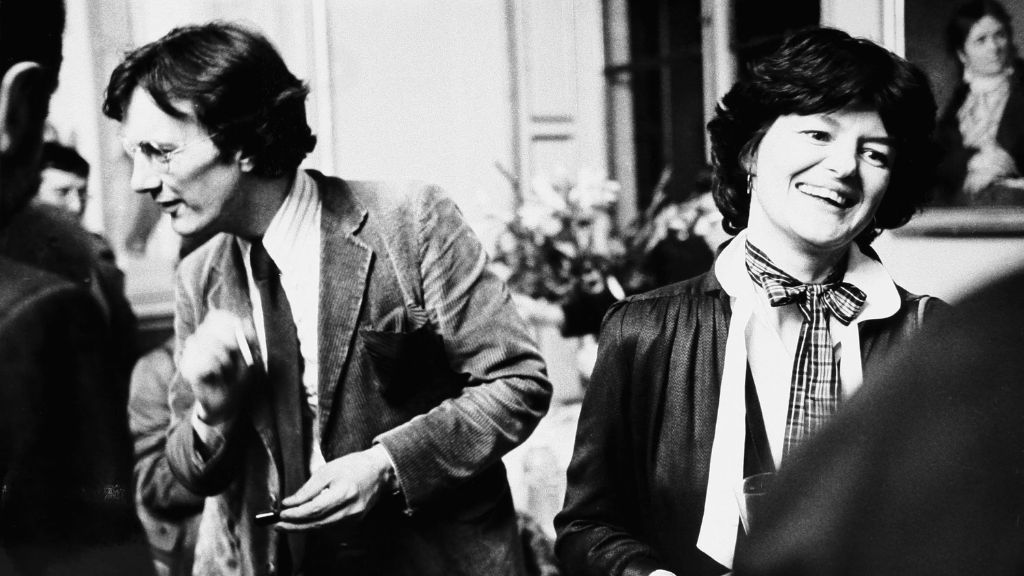
Maggie Keswick Jencks and Charles Jencks at the École des Beaux-Arts, Paris, 1981. Photo: Eustachy Kossakowsky / The Cosmic House
A time capsule in Notting Hill
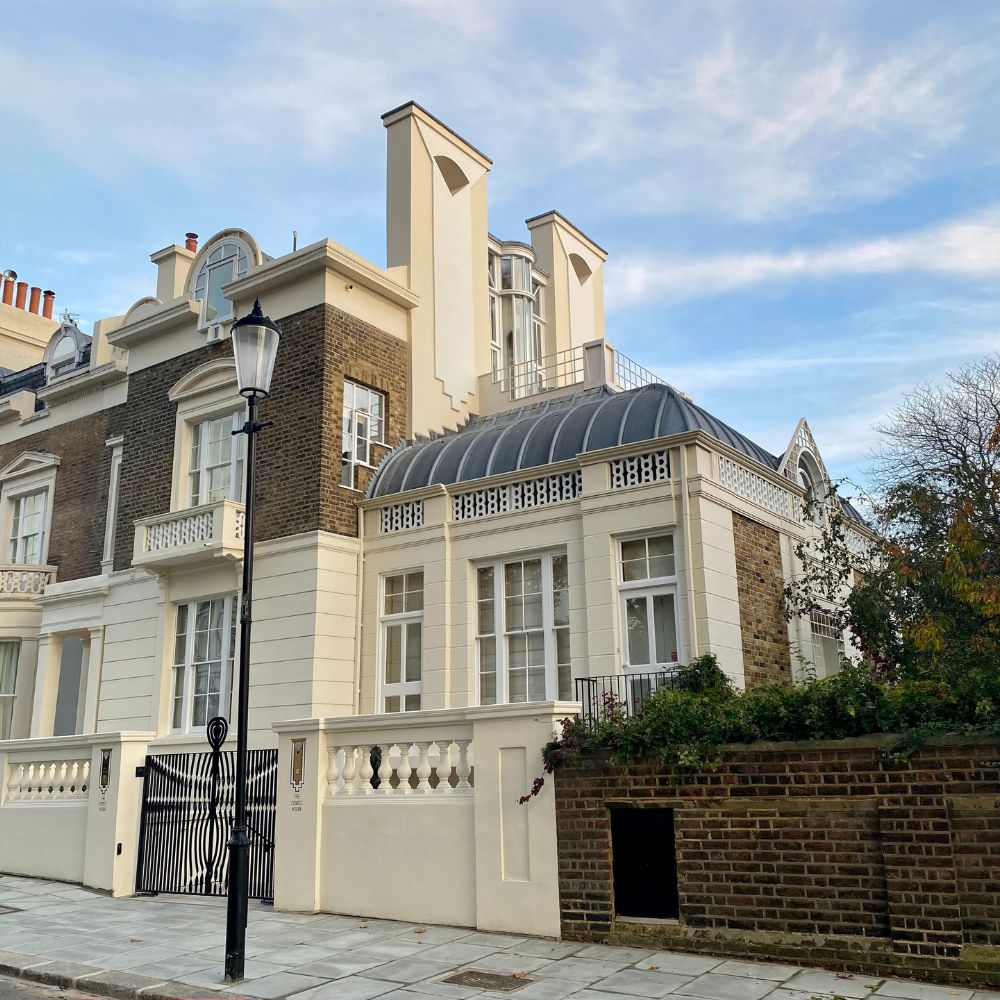
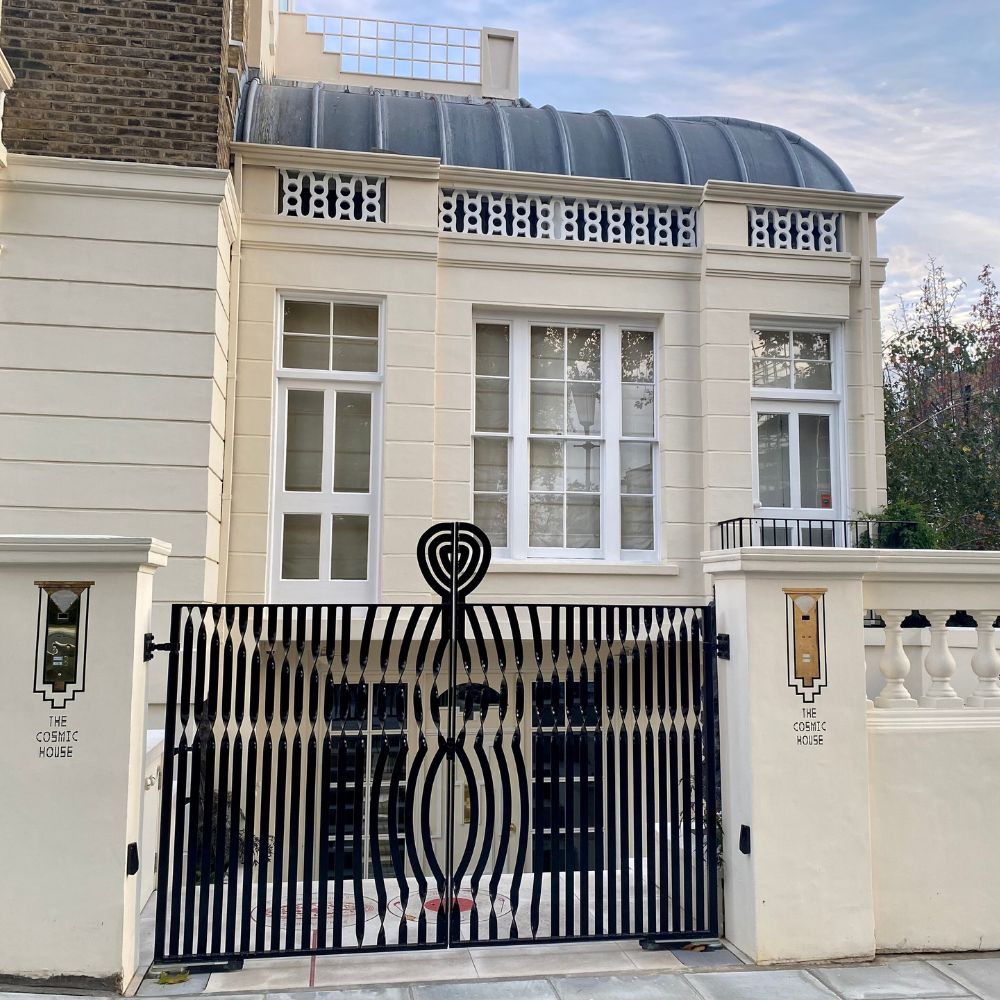
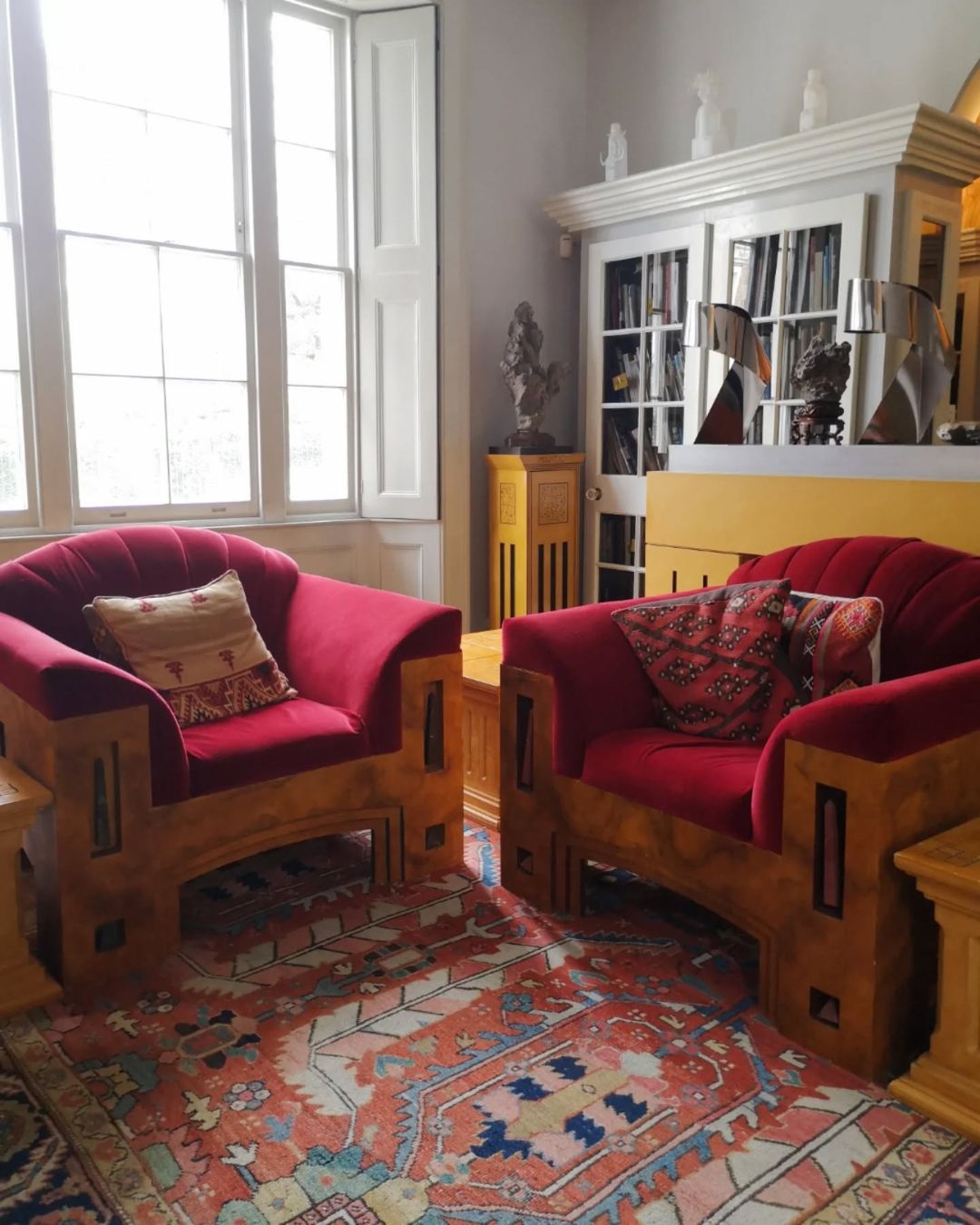
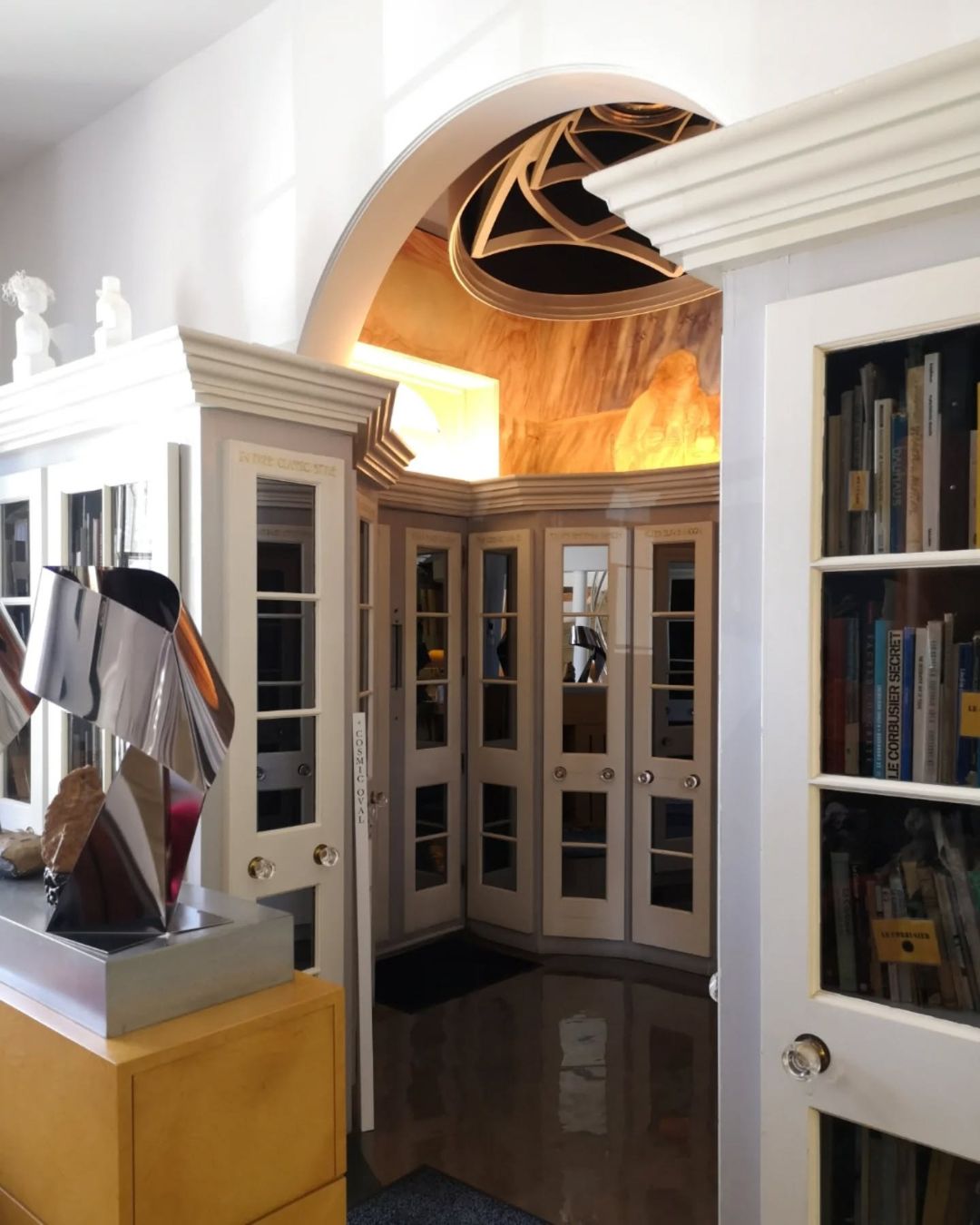
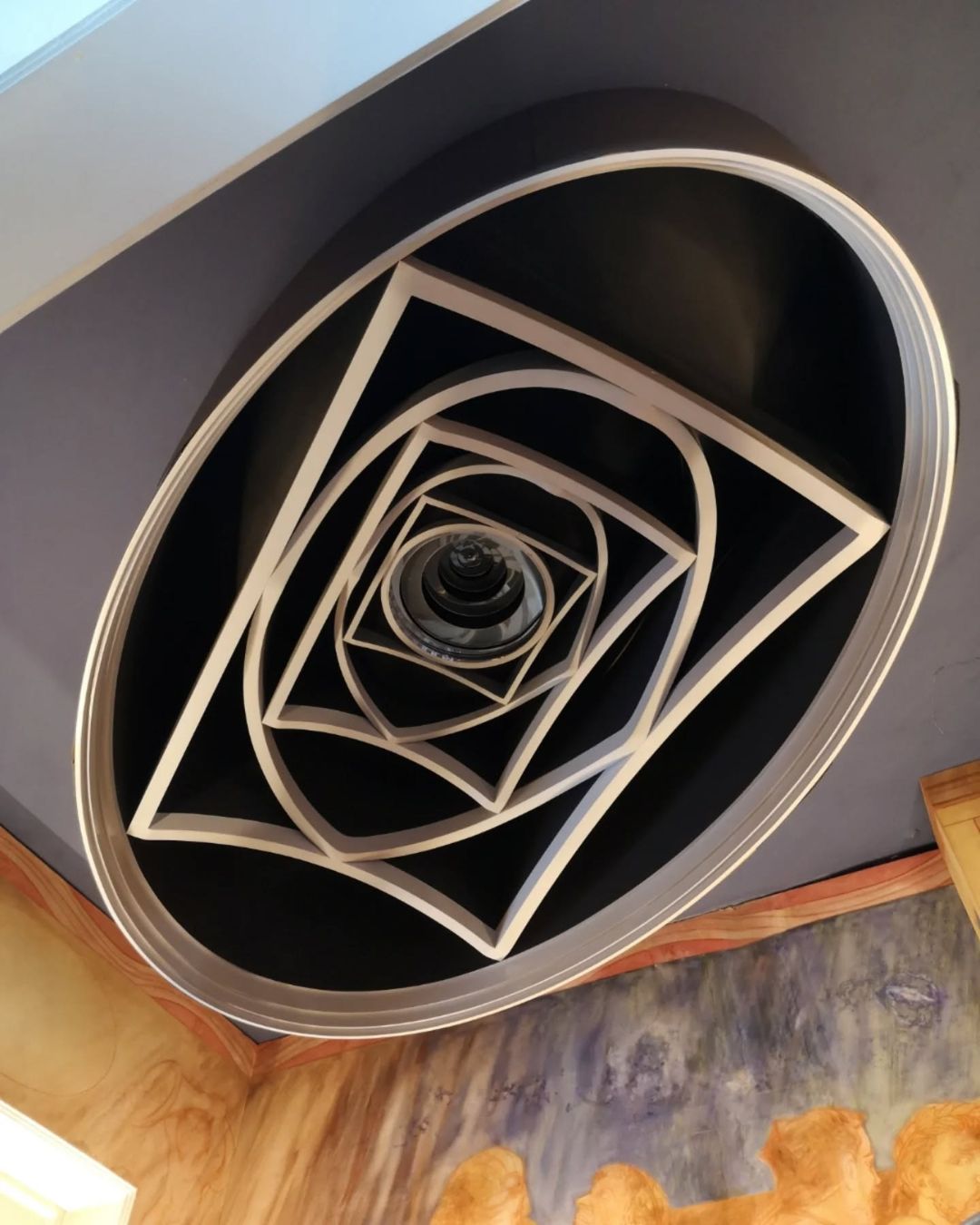
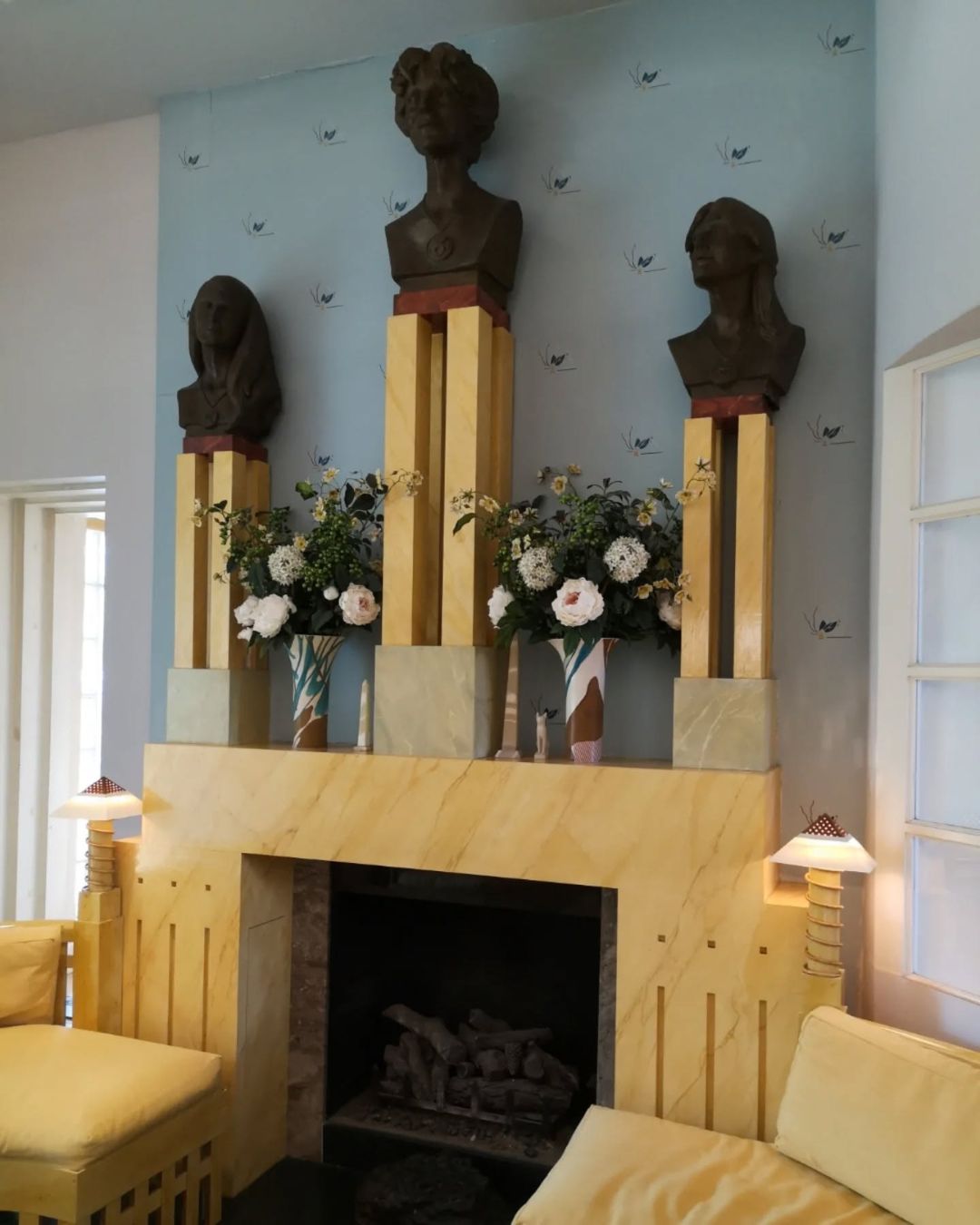
Against this backdrop, The Cosmic House appears as Jencks’ own personal manifesto — the place where all his ideas converged. From the outside, it resembles a typical Notting Hill townhouse. Inside, however, lies a surreal architectural labyrinth: a spiral staircase conceived as a calendar, a domed jacuzzi, a sundial archway and countless surrealist details embedded into the interiors. Every element was designed not merely for beauty, but as an intellectual game for the visitor. Rooms are themed around the seasons, while the house itself is filled with artworks created by friends of the Jencks family.

Part of The Cosmic House’s architectural importance lies in its remarkable state of preservation. The house has survived almost entirely intact, with its authentic details carefully preserved, making it feel like a time capsule or a jewellery box that has reached the present day almost untouched. This is especially significant given how many important postmodernist buildings have since been radically altered or demolished altogether. It is no coincidence that in 2018 the house received Grade I listed status — the highest level of heritage protection in the United Kingdom. The house also functioned as an intellectual salon where figures such as Zaha Hadid, Rem Koolhaas and Richard Rogers gathered to discuss the future of architecture and culture, notes Tamara Muradova.
-
- Photo: The cosmic house / Facebook
-
- Photo: The cosmic house / Facebook
-
- Photo: The cosmic house / Facebook
-
- Photo: The cosmic house / Facebook
How to visit The Cosmic House in London
Following Charles Jencks’ death in 2019, The Cosmic House was transformed into a museum and opened to the public in 2021. Today, visitors can enter only on limited days each week — from Wednesday to Friday, between 12:30pm and 4:30pm. Because the house sits within a residential area in Notting Hill, visitor numbers remain strictly limited, and tickets tend to sell out quickly. New ticket slots are released on the third Friday of each month. For anyone interested in London architecture, unusual museums or hidden cultural spaces, advance booking is highly recommended.
Is postmodernism experiencing a revival?
Interest in postmodernism, architect Tamara Muradova believes, never truly disappeared — only the lens through which it was viewed changed over time. In her view, postmodernism was never tasteless, but rather one of the most experimental moments in architectural history, whose importance was always understood within the industry itself. Today, in the age of social media and a renewed fascination with texture, detail and craftsmanship, it feels unexpectedly relevant once again. The reopening of The Cosmic House comes at a moment when younger audiences are rediscovering postmodernism through design culture, interiors and visual storytelling online. The very format of contemporary visual culture has changed the way people see the world: we now experience reality through the vertical frame of stories and reels, where every fragment becomes an image. In that sense, The Cosmic House feels almost perfectly designed for the Instagram and TikTok era — every centimetre of it reads like a new frame, while its central idea remains deeply contemporary: architecture as an emotional experience embodied in space.
Cover photo: Sue Barr / The Cosmic House
Read also:
“Swan Lake”: how Tchaikovsky’s ballet became a symbol of protest
Related Articles


SUBSCRIBE
Receive our digest once a week with quality Russian events and articles