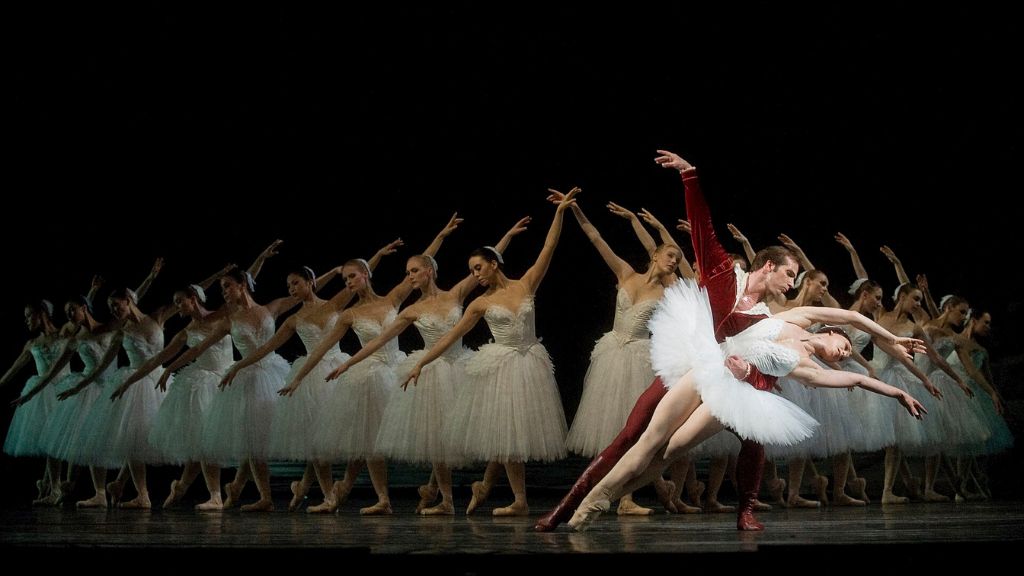
“Swan Lake”: how Tchaikovsky’s ballet became a symbol of protest
Why does Swan Lake repeatedly emerge as the defining ballet of moments of crisis? Tchaikovsky’s masterpiece has survived empires, the Soviet Union and an entirely new political reality, changing its meaning each time along the way — from an imperial stage spectacle to a coded political signal. Today, it is no longer merely a work of classical ballet, but a symbol of protest in its own right. In this feature, Afisha.London explores the history of Swan Lake, the profound influence of Maya Plisetskaya on its worldwide fame, and the extraordinary way in which this ballet evolved into a language through which entire eras have learned to speak.
This article is also available in Russian here.
Pyotr Tchaikovsky’s Swan Lake is one of the most famous ballets ever created and a cornerstone of Russian cultural history. At the heart of the ballet lies the tragic love story of Prince Siegfried and Princess Odette, who has been cursed by the evil sorcerer Rothbart. By day she is transformed into a swan, and only a vow of eternal fidelity can break the spell. Yet Siegfried falls victim to deception: mistaking Odile, Rothbart’s daughter, for Odette, he declares his love to the wrong woman. Upon discovering that the vow has been broken, the real Odette throws herself into the lake, and Siegfried follows her.

This tragic conclusion is widely regarded as the canonical ending to Tchaikovsky’s ballet, though throughout its long theatrical life Swan Lake has been quoted, reimagined and radically reconstructed countless times — from scholarly reconstructions to avant-garde reinterpretations. In Illusions Like Swan Lake (1976), the American choreographer John Neumeier transformed the classical narrative into the story of the mad Bavarian King Ludwig, imprisoned within his own mind, while British choreographer Matthew Bourne’s Swan Lake (1995) famously cast men in all the swan roles. We previously explored the most unusual reinterpretations of Swan Lake in a separate feature for Afisha.London — an article that has since been frequently cited by British journalists.
Read more about the most unconventional versions of Swan Lake in Afisha.London
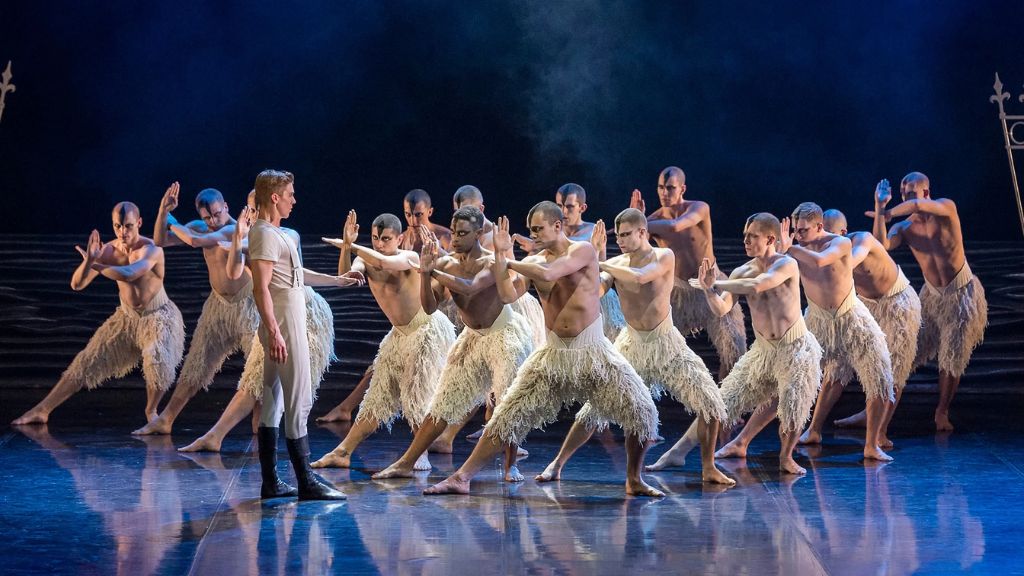
Matthew Bourne’s Swan Lake. Photo: Craig Schwartz Photography / Center Theatre Group, Ahmanson Theatre
Paradoxically, the version of Swan Lake now considered canonical was itself born out of extensive revision. The ballet’s first production, staged at Moscow’s Bolshoi Theatre in 1877, was unsuccessful: critics found the choreography weak, while Tchaikovsky’s score was considered too complex and musically ambitious for ballet audiences of the time.

Only in the 1890s did the work return to the stage, now within a completely different cultural climate. By then, Tchaikovsky had been recognised as a genius, and The Sleeping Beauty had achieved enormous success. A new production of Swan Lake at the Mariinsky Theatre was entrusted to Marius Petipa, who soon delegated a substantial part of the choreography to his collaborator Lev Ivanov. Following the composer’s death in 1893, the score was revised together with conductor and composer Riccardo Drigo: sections were cut, rearranged and supplemented. It was in this revised production that one of the most recognisable moments in dance history was born — the celebrated “Dance of the Little Swans”.

Pyotr Tchaikovsky remains one of the most internationally admired Russian composers, whose music long ago became part of the global cultural canon. His repeated visits to Britain, performances in London and warm reception by British audiences formed an important chapter in both his life and artistic development. You can read more about Tchaikovsky’s relationship with London — from his first impressions to his ultimate triumph — in our separate feature.
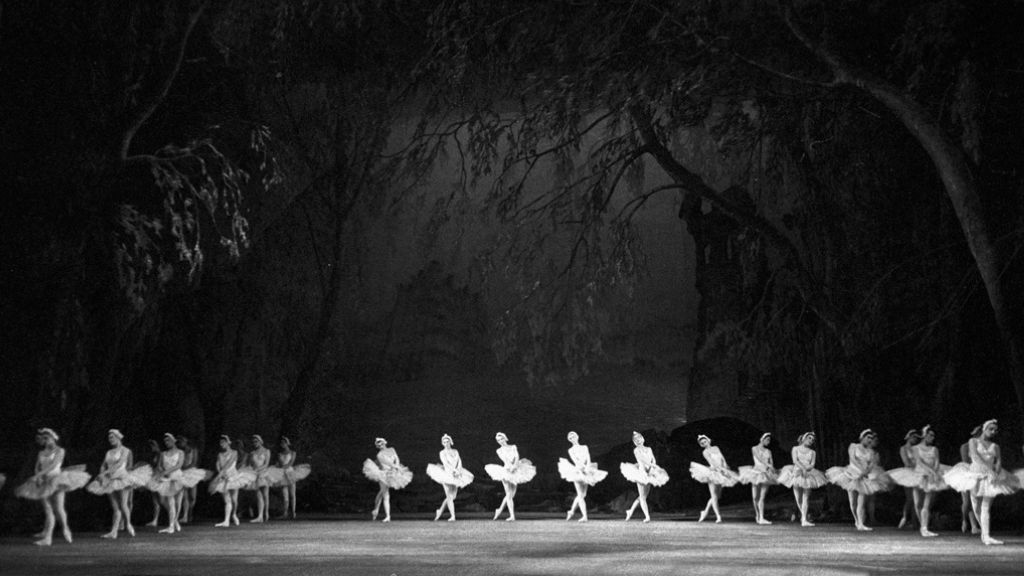
Scene from Pyotr Ilyich Tchaikovsky’s ballet Swan Lake. Bolshoi Theatre, 1950. Photo: RIA Novosti archive, image #854874 / Anatoliy Garanin / CC-BY-SA 3.0, CC BY-SA 3.0, via Wikimedia Commons
Maya Plisetskaya: the face of Swan Lake
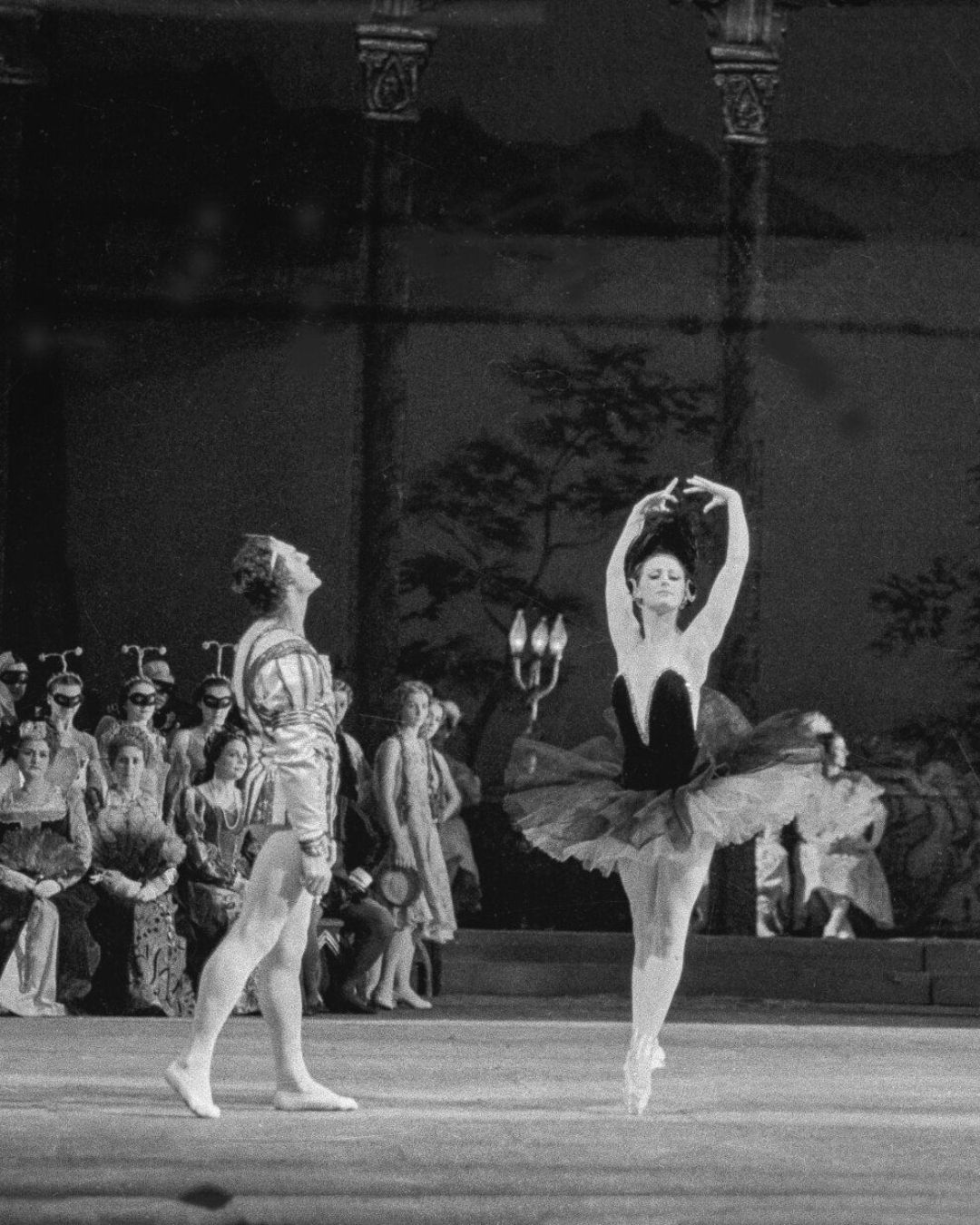
Swan Lake became the defining symbol of Russian ballet largely thanks to Maya Plisetskaya. She first performed the dual role of Odette–Odile at the Bolshoi Theatre in 1947 and continued returning to it for more than three decades, well into the late 1970s. According to various estimates, Plisetskaya danced the role over 700 times.

Her artistic career was inseparable from the cultural and political realities of the Soviet Union. In 1956, Soviet authorities refused to allow Plisetskaya to travel to London with the Bolshoi Ballet due to suspicions held by the security services, who closely monitored artists touring abroad and feared possible defections. Those fears proved far from unfounded: in 1961, the celebrated Soviet dancer Rudolf Nureyev famously refused to return to the USSR during a tour in Paris and instead requested political asylum in France — one of the most high-profile cultural defections of the Cold War.
-
-
Swan Lake in Bolshoi Theatre 1951. Photo: Mos.ru, CC BY 4.0
-
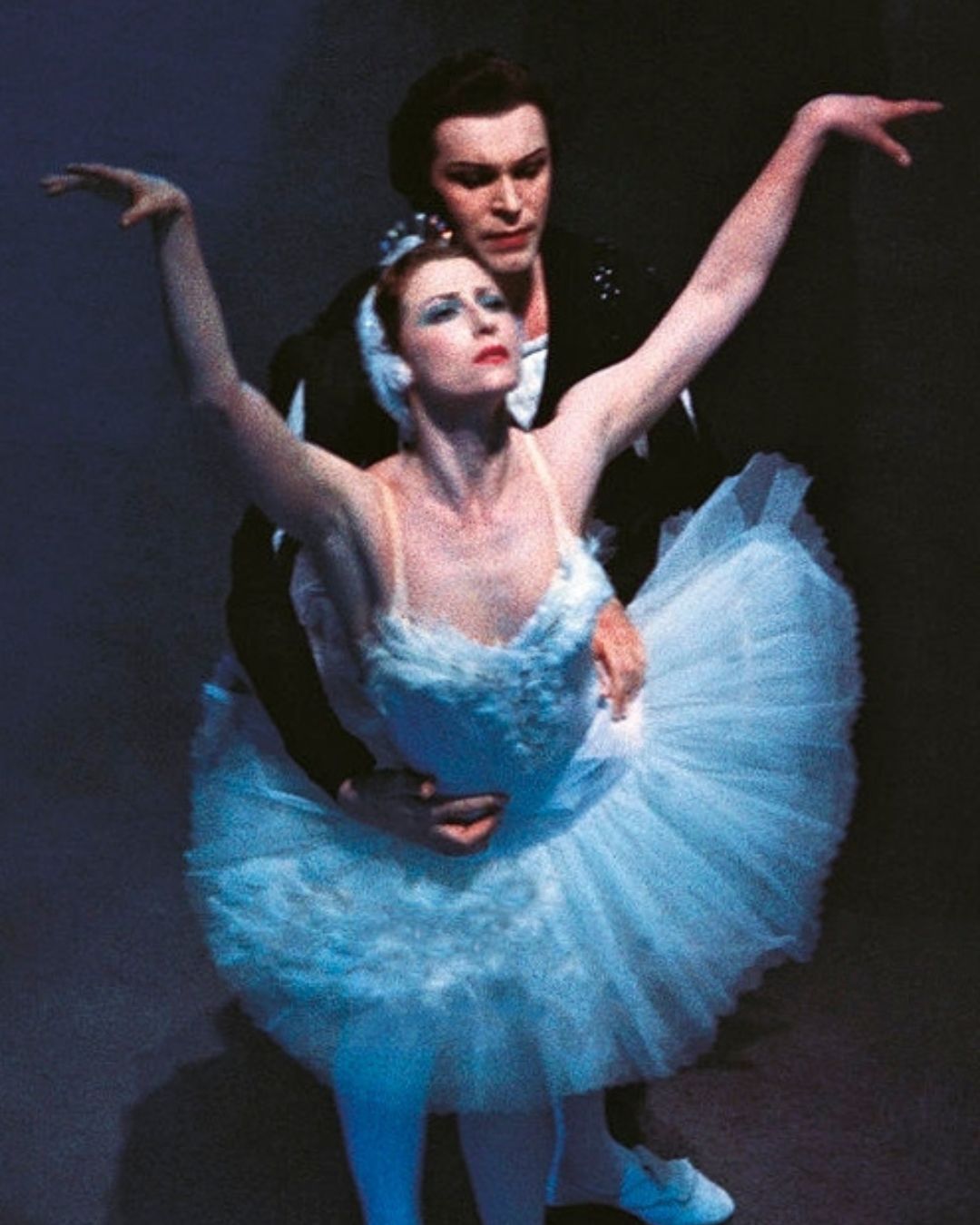
- Maya Plisetskaya and Nikolai Fadeyechev, 1964. Photo: Unknown (Mondadori Publishers), Public domain, via Wikimedia Commons
Nevertheless, despite the anxieties of the Soviet authorities, it was precisely the Bolshoi Theatre’s international tours that played an enormous role in transforming Soviet ballet into a global cultural phenomenon and strengthening the international fame of Swan Lake. Plisetskaya herself was granted permission to travel abroad only towards the end of the 1950s, under Nikita Khrushchev. In 1959, she performed in the United States, where her artistry was met with enthusiasm by both critics and audiences, including major publications such as The New York Times.
For Plisetskaya, Odette–Odile became a defining role. Her expressive arm movements, elongated lines and extraordinary dramatic tension profoundly influenced the development of classical ballet throughout the second half of the twentieth century.
Swan Lake in Soviet cultural politics
During the twentieth century, Swan Lake became an important instrument of Soviet cultural diplomacy. Abroad, it was presented as a symbol of refined high culture — emotionally intelligible even without translation. Within the USSR itself, however, the ballet gradually acquired another, highly specific function: a televised one.
Over time, audiences began to perceive Swan Lake not merely as a classical ballet, but as a coded signal. This association first emerged in the early 1980s, when regular television broadcasting schedules were replaced with recordings of the ballet following the death of Leonid Brezhnev, the longtime General Secretary of the Communist Party and leader of the Soviet Union. The same practice was repeated after the deaths of Soviet leaders Yuri Andropov and Konstantin Chernenko
Read also: Serge Lifar: reformer of the Paris Opera, the protégé of Sergei Diaghilev, and friend of Coco Chanel

By the beginning of the 1990s, the association had become almost instinctive: whenever Swan Lake appeared on television, viewers understood that something extraordinary was unfolding within the country. During the August Coup of 1991, the ballet was broadcast almost continuously for several days, permanently embedding itself in the collective memory of that moment.
It was this very practice that transformed public perception of the work itself. What had once represented cultural prestige gradually evolved into a symbolic code through which audiences interpreted the condition of the state.
Read also: How Diaghilev’s Ballets Russes transformed twentieth-century European art
Swan Lake as a symbol of protest
In the post-Soviet era, the meaning of Swan Lake shifted yet again. A ballet once associated with state power and official culture became an ironic and symbolic gesture. References to Swan Lake in contemporary media are often understood as allusions to instability, censorship or political crisis.
In Cooperative Swan Lake, a track by the Russian rapper and anti-war musician Noize MC, who has lived in exile since leaving Russia in 2022, the refrain “I want to watch ballet — let the swans dance” becomes an expression of collective anxiety and suspended anticipation, capturing a society waiting for change
Read also: Ballerina Anna Pavlova: a beautiful swan of two empires
More recently, actor Timothée Chalamet caused controversy after casually remarking in an interview that nobody needed ballet or opera anymore, provoking sharp criticism from the theatre community. Yet the debate that followed ultimately became less about decline than about resilience: artistic directors and theatres reported renewed interest in ballet, particularly among younger audiences, while the controversy itself only intensified attention towards contemporary productions.
In this context, the history of Swan Lake reveals how a work of art can survive multiple political and cultural eras while remaining not only part of the classical canon, but also a living instrument through which reality continues to be interpreted. Again and again, it resurfaces at the centre of cultural and political conversation.
In summer 2026, Swan Lake will return to the London stage at the London Coliseum, performed by the State Ballet of Georgia under the direction of Nina Ananiashvili. More information here.
In autumn 2027, Northern Ballet’s Swan Lake will be performed in London, with dates and venue details to be announced at a later date. More details here.
🔹️Follow Afisha.London magazine:
– Telegram: https://t.me/afishalondon
– Instagram: https://www.instagram.com/afisha.london/
– Facebook: https://www.facebook.com/afisha.london.media/
Cover photo: Alexander Kenney / Kungliga Operan, CC BY 3.0, via Wikimedia Commons

Read also:
Holding on to language: the rise of Russian libraries in Britain
Related Articles





SUBSCRIBE
Receive our digest once a week with quality Russian events and articles