An exhibition for the grown up kids: Winnie-the-Pooh in London
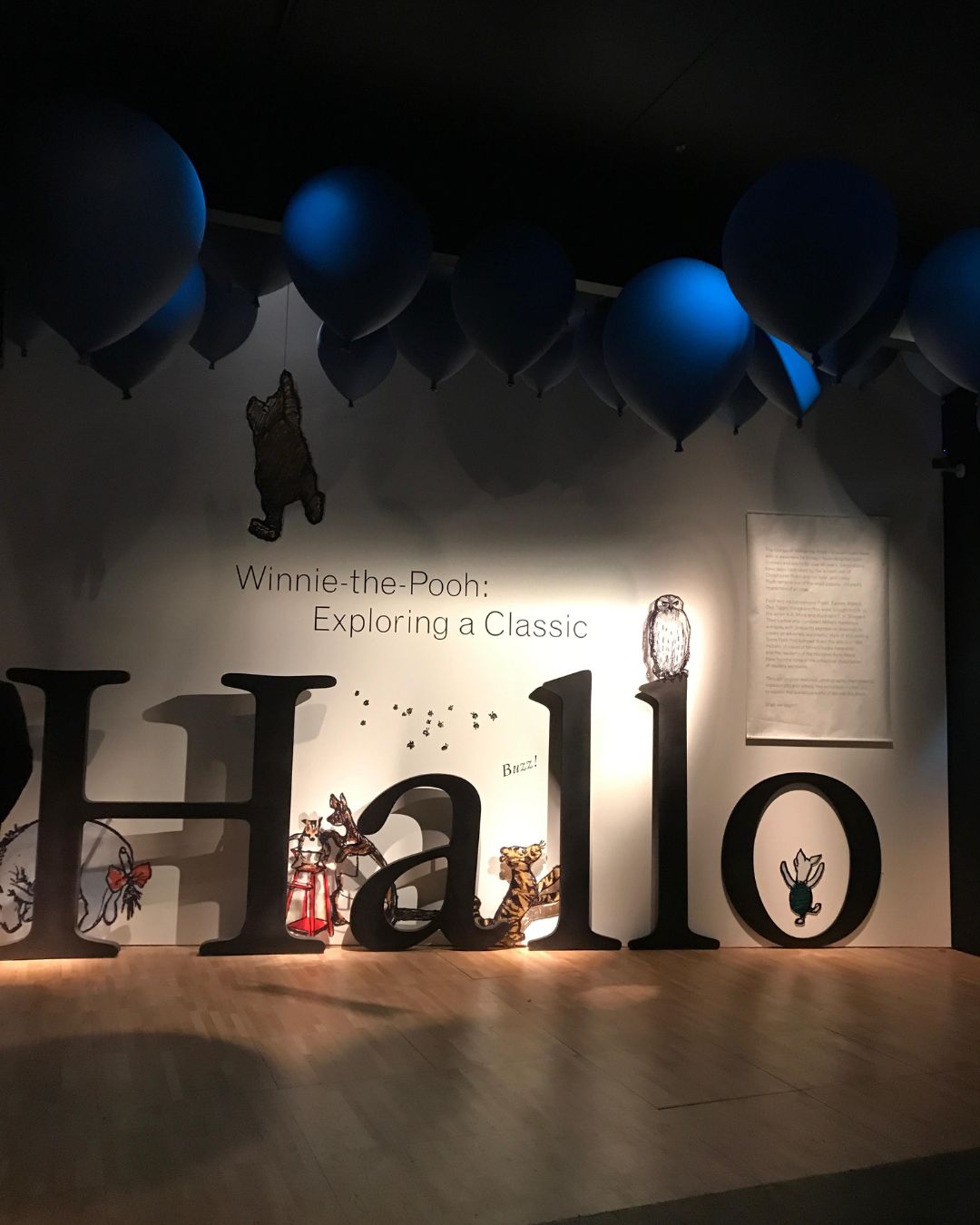
On 9 December 2017, the Victoria and Albert Museum opened an exhibition dedicated to the most famous bear in the world – Winnie-the-Pooh. The editorial team of Afisha.London was among the first to attend and is ready to share both its impressions and the story behind the creation of this legendary character.
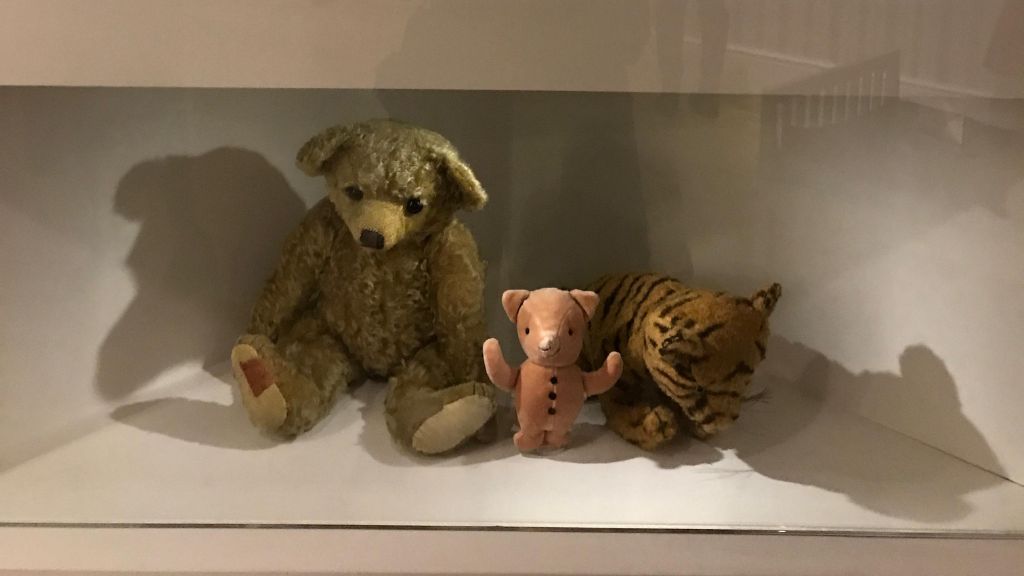
Like many of A. A. Milne’s characters, Winnie took his name from one of the toys belonging to the writer’s son, Christopher Robin. The boy named his favourite plush bear after Winnipeg, a real bear who lived at London Zoo at the time. Originally the mascot of the Canadian Army Veterinary Corps, she had been purchased from a Canadian hunter for $20 during the First World War and nursed back to health by army veterinarians before travelling to Britain with the troops.
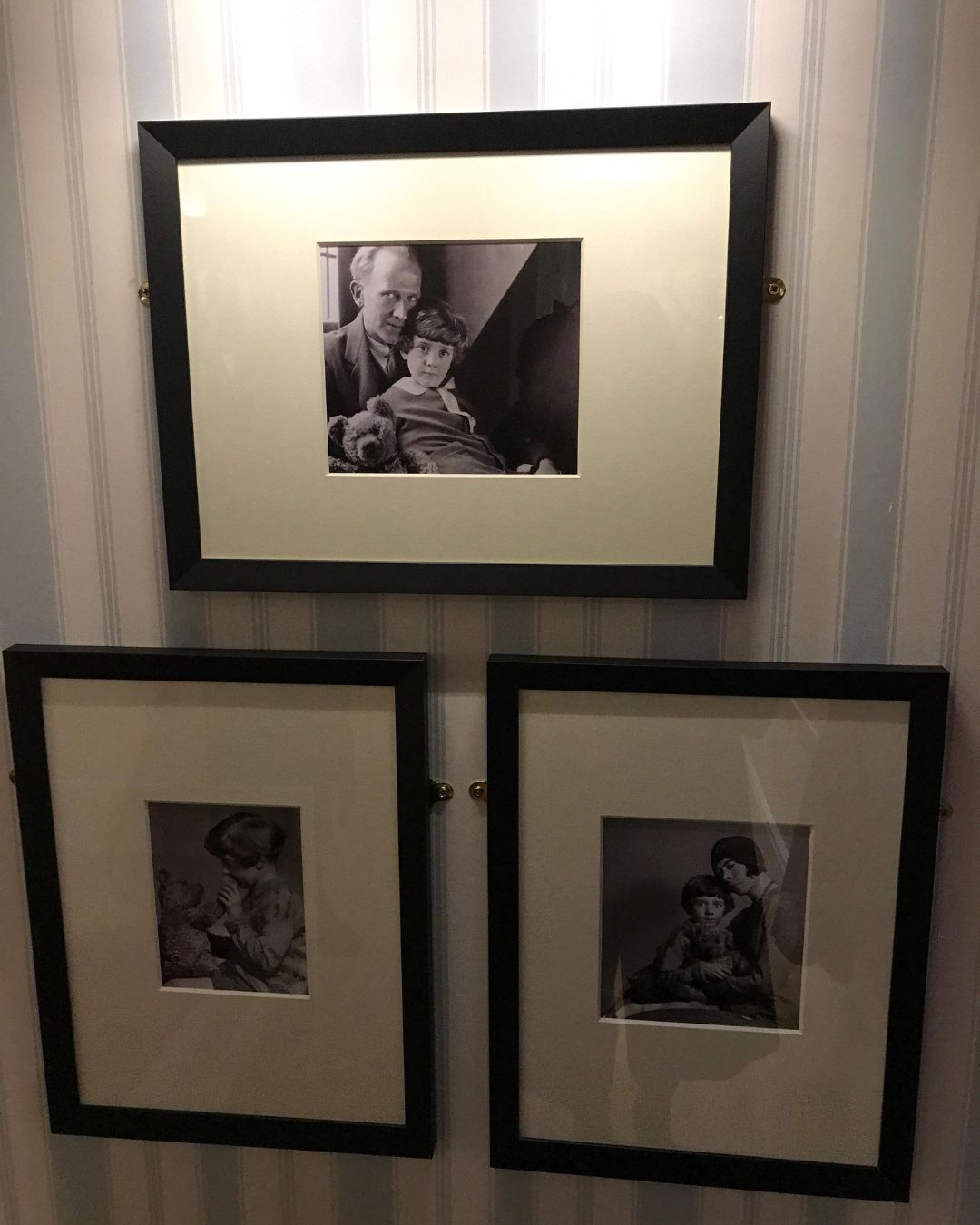
As the regiment was required to move on, the bear was left at London Zoo, where she quickly became a favourite with the city’s residents. Calm and well-mannered, she willingly allowed children to play with her. At the V&A exhibition, visitors can see a photograph of Christopher Robin with Winnipeg. Having met the bear at the age of four, the boy renamed his own teddy bear Edward (or Teddy) as Winnie. “Pooh”, meanwhile, was the name of a swan owned by family friends, while the epic definite article “the” inserted between the two added a note of comic grandeur.
-
- Выставка Winnie-the-Pooh. Фото: Afisha.London
-
- Выставка Winnie-the-Pooh. Фото: Afisha.London
Alongside photographs of the Milne family, the exhibition at the Victoria and Albert Museum tells – through drawings and letters – the story of the creative partnership between A. A. Milne and Ernest Shepard, the first illustrator of the Pooh books. Shepard had previously worked on The Wind in the Willows by Kenneth Grahame, a book that strongly influenced Milne himself. The exhibition also displays a wide range of toys inspired by the books from different countries and eras — from the earliest examples, including Christopher Robin’s original toys, to contemporary interpretations.

The Soviet Winnie-the-Pooh is also represented. This version was created by animator Fyodor Khitruk – responsible for the much-loved animated films – together with artist Eduard Nazarov, based on Boris Zakhoder’s Russian rendering of Milne’s books. Zakhoder famously described his work not as a translation but as a retelling: one that preserved the original’s tone and humour while making Winnie-the-Pooh unmistakably “his own” for Russian-speaking readers.
The exhibition is designed for both adults and young visitors. While much of the core material – rich in historical documents – may be demanding for children, the curators ensured that younger audiences could also engage with the space. Visitors can, for instance, take photographs inside Winnie’s burrow, hide inside a tree or slide down a small indoor hill.
-
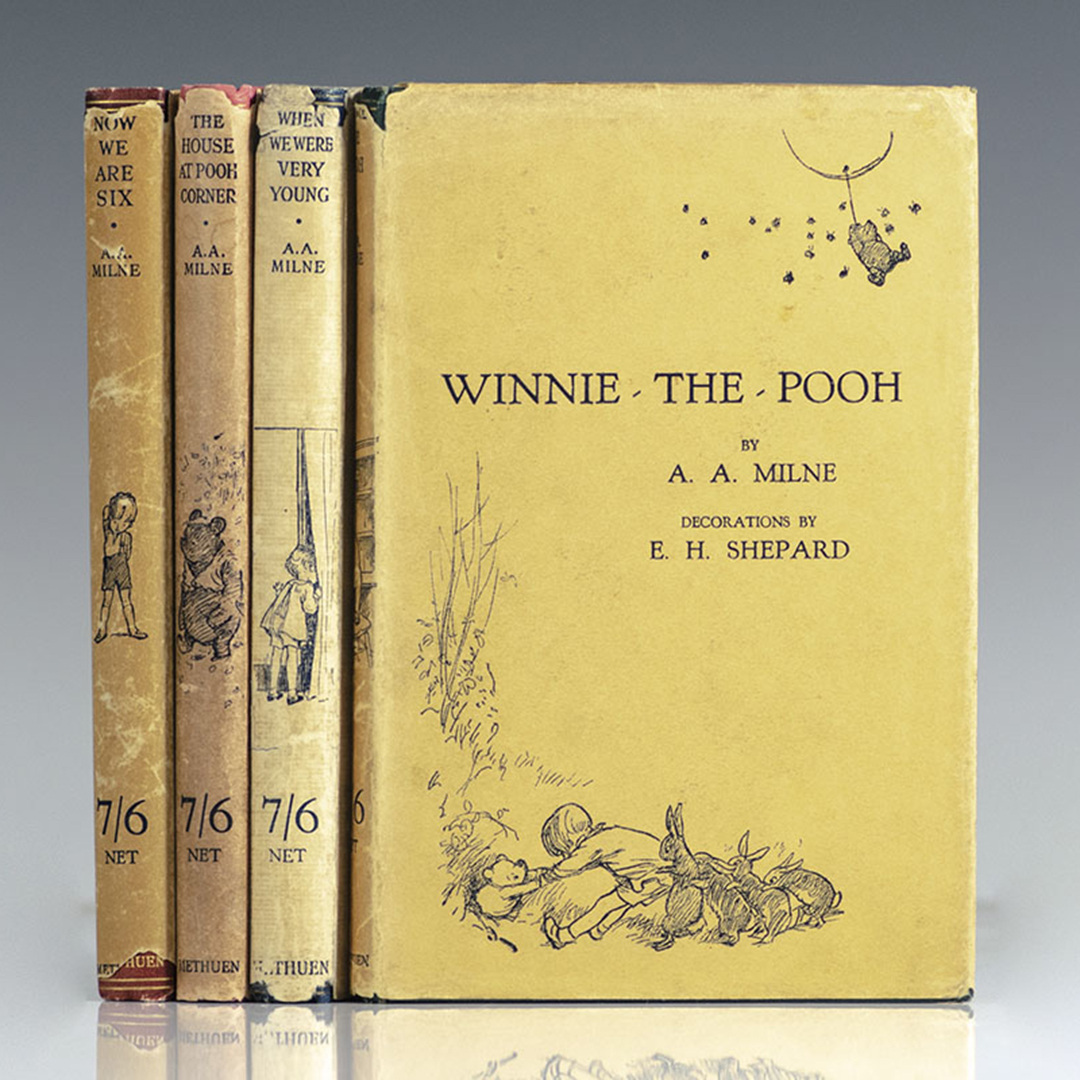
- The first edition of Winnie the Pooh. Photo: Raptis Rare Books
-
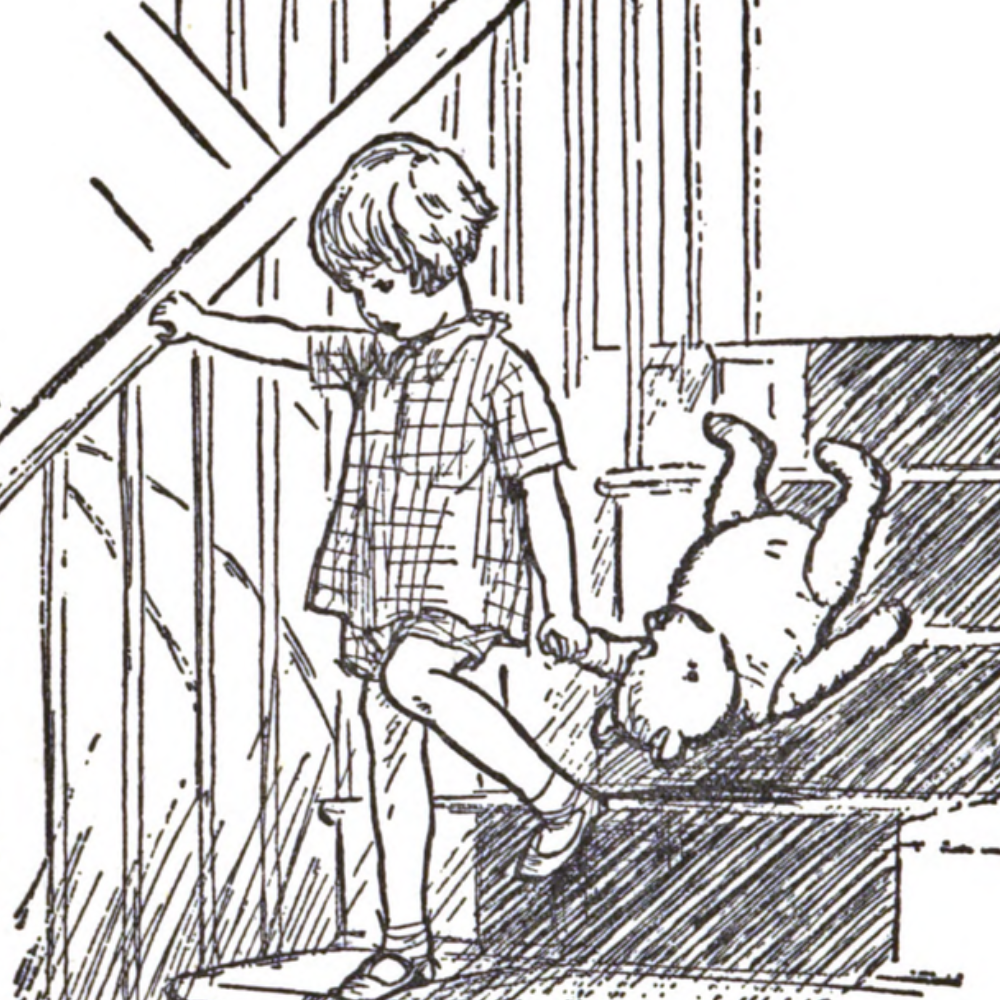
- Illustration by Ernest Shepard from Winnie the Pooh, 1926. Photo: Ernest Howard Shepard (illustrator), Public domain, via Wikimedia Commons
Winnie-the-Pooh has been loved by children all over the world for so long that many of those children, now grown up, continue to find wisdom — and even a certain philosophy – in quotations from the books and films. The editors of Afisha.London also have their favourite lines, which we are happy to share.
There are things that set me apart from others, and there are things that make me who I am.
And a few more:
- You are braver than you believe, stronger than you seem, and smarter than you think.
- Sometimes the smallest things take up the most room in your heart.
- Some people care too much. I think it’s called love.
- Rivers know this: there is no hurry. We shall get there one day.
- If you live to be a hundred, I want to live to be a hundred minus one day, so I never have to live without you.
- Weeds are flowers too, once you get to know them.
- I think we dream so we don’t have to be apart for so long. If we’re in each other’s dreams, we’re together all the time.
- Promise me you’ll never forget me, because if I thought you would, I’d never leave.
- A day without a friend is like a pot without a single drop of honey left inside.
Cover photo: Afisha.London
Read also:
Alan Milne: the writer who turned Winnie the Pooh into an icon of England
Charles Dickens Museum: a journey into the heart of Victorian London
London: dynamic pricing in the international theatre world triggers backlash
Related Articles


SUBSCRIBE
Receive our digest once a week with quality Russian events and articles