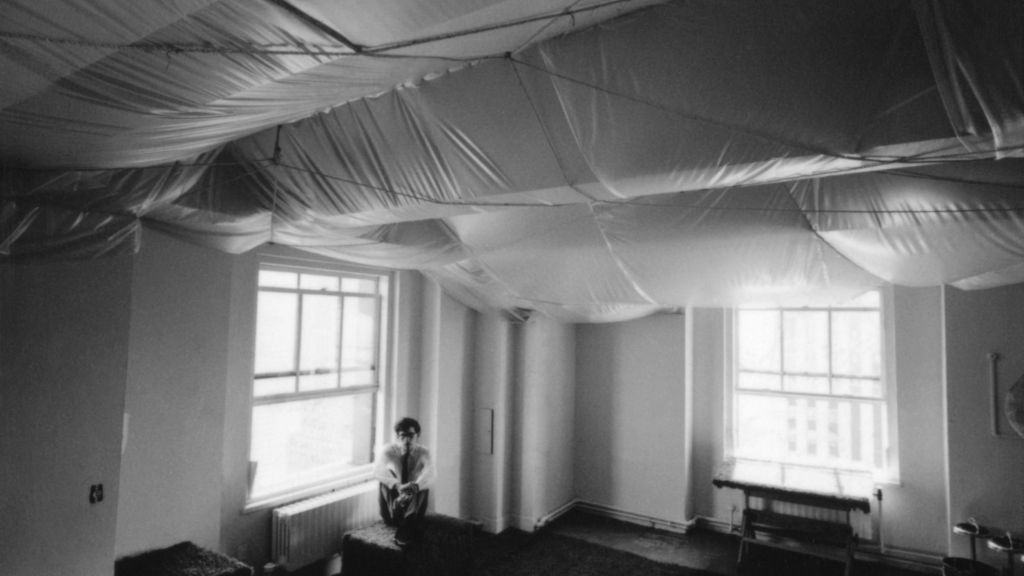
Christo’s air installation to be seen in London for the first time at Gagosian
The exhibition Christo: Air has opened at Gagosian London in Mayfair, dedicated to the work of Christo Javacheff — the artist renowned for “wrapping” objects of every scale and kind, from cars and typewriters to Paris’s Pont Neuf and Berlin’s Reichstag. Incidentally, it was this very Reichstag installation that our art community discussed during a recent visit to Berlin with Margarita Bagrova, publisher of Afisha.London.
The centrepiece of the current exhibition is Air Package on a Ceiling — a work conceived in 1968 that Christo never realised during his lifetime, and whose original plans were only rediscovered by the artist’s team fifty years later. Artist Annya Sand, founder and director of WAAWWorld, shared her reflections on Christo’s art with us.
This article is also available in Russian here
Who was Christo: the artist who wrapped the world
Christo Javacheff was one of the most celebrated artists of the twentieth century, best known for his monumental temporary installations. Born in Bulgaria in 1935, he studied at the Sofia Academy of Fine Arts before moving, in the late 1950s, first to Paris and later to New York. It was in France that he met Jeanne-Claude, who would become both his wife and his lifelong creative partner.

Over decades of collaboration, the pair realised projects that transformed the appearance of entire cities and landscapes: they draped eleven islands in Biscayne Bay in pink fabric, installed 7,503 saffron-coloured gates throughout New York’s Central Park, and invited visitors to walk across floating piers on Italy’s Lake Iseo.
For Annya Sand, the defining phenomenon of Christo and Jeanne-Claude’s art lies precisely in its fleeting nature.
That is why each appearance of their work became more than an art event — it became an emotional memory. Their projects bring together space, fabric, architecture, the sensation of time, scale, and even something close to the impossible.
-
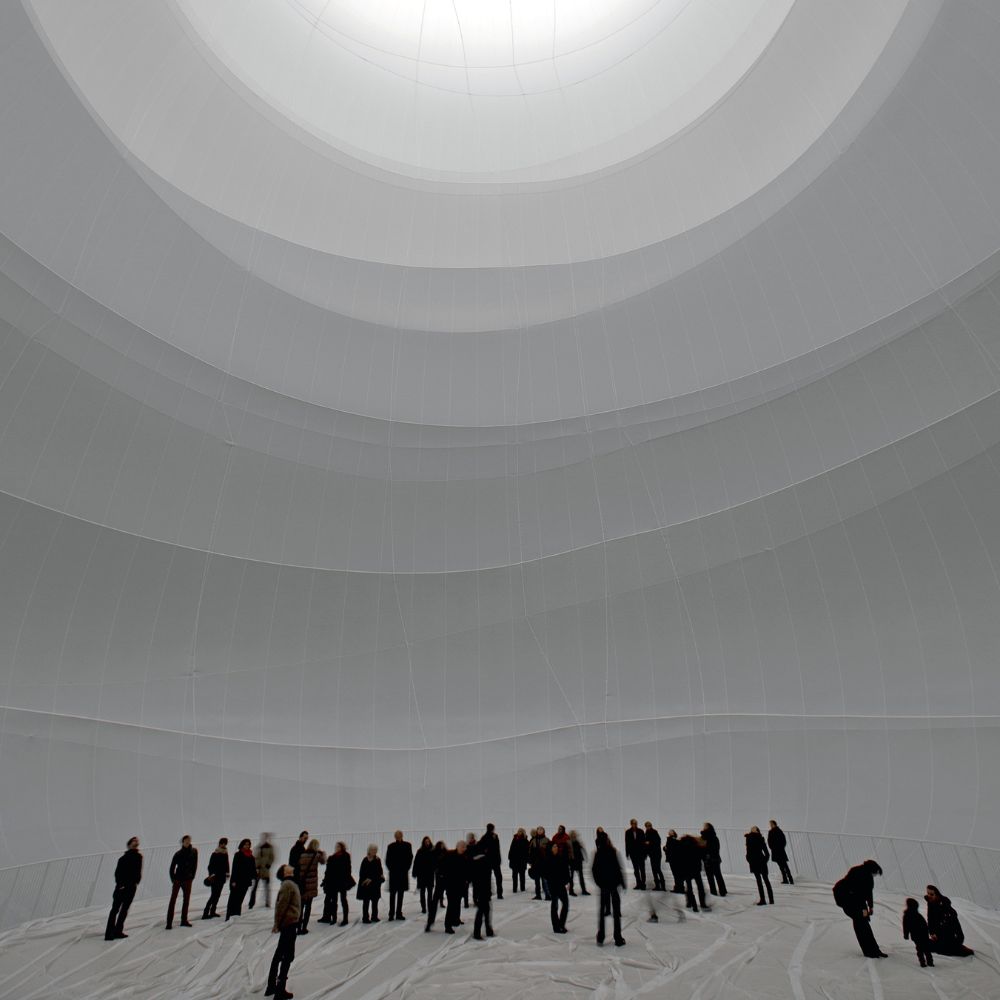
- Big Air Package Installation view: Gasometer Oberhausen, Germany, 2010-13. Photo: Christo and Jeanne-Claude Foundation and Gagosian
-
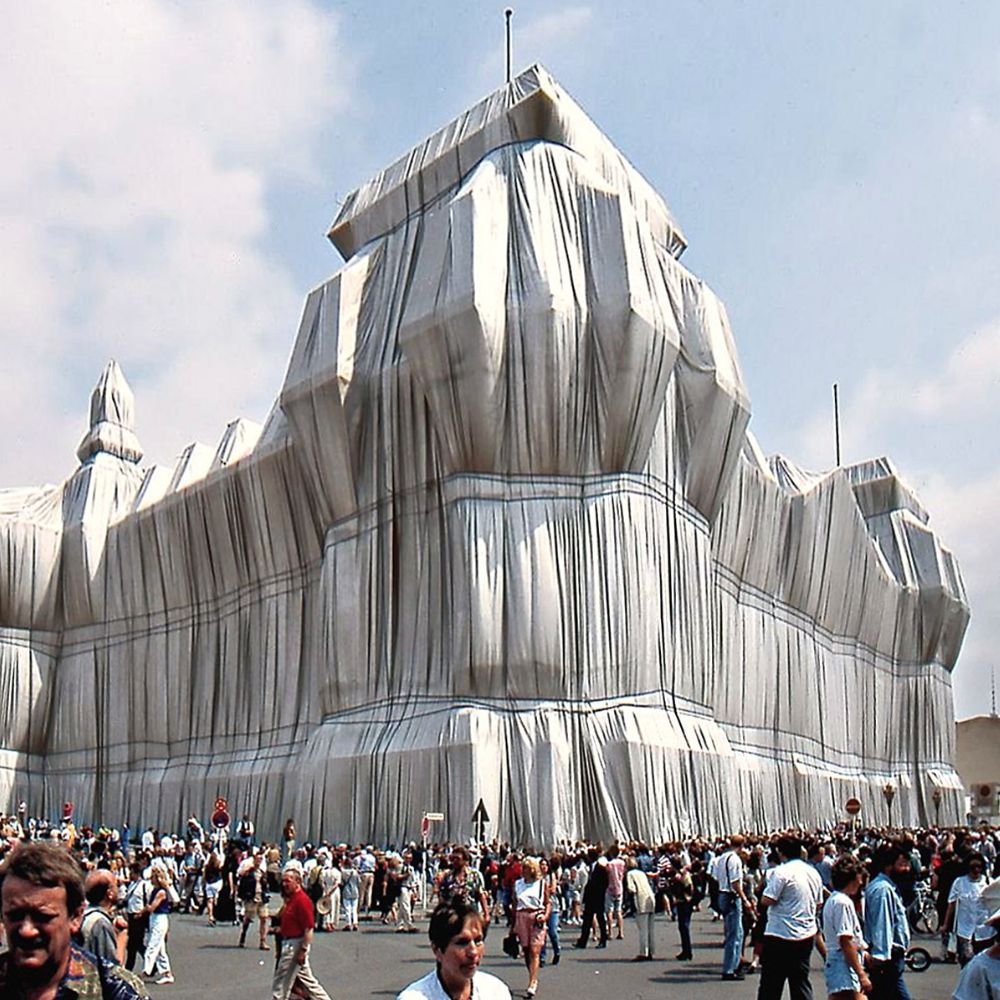
- Wrapped Reichstag, 1996. Photo: Christo and Jeanne-Claude Foundation
Air Package on a Ceiling: the installation awaited for almost sixty years
The work now presented in London occupies the entirety of the gallery. A translucent structure measuring sixteen metres in length and ten metres in width hovers beneath the ceiling, descending almost to visitors’ head height. Christo conceived the piece as an environment through which viewers would move physically.
The project was originally designed for the Institute of Contemporary Art in Philadelphia, yet in the late 1960s it proved technically impossible to realise.

Its eventual creation became possible thanks to an unexpected discovery in the artist’s studio. In 2018, Christo’s team uncovered a concealed maquette of the installation together with original drawings and a lighting scheme long believed lost. Vladimir Yavachev, Christo’s nephew and longtime collaborator, told The Guardian that the documents proved so remarkably detailed that they allowed the work to be realised with exceptional fidelity to the artist’s original vision.
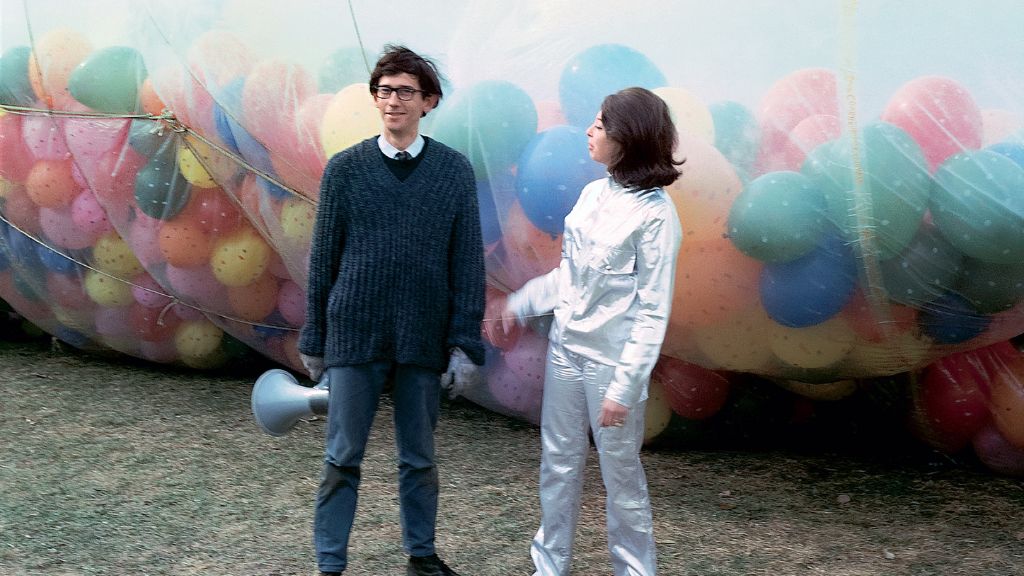
42,390 Cubic Feet Package, 1966 год. Фото: Christo and Jeanne-Claude Foundation / Gagosian
What else to see at Christo: Air in London
The exhibition also traces how Christo’s early experiments with polyethylene, rope and “packaged air” evolved into the monumental projects for which he later became famous.
On view are rare drawings and archival works from the 1960s, alongside Wrapped Automobile – Volvo, Model PV-544 (1981), a work not exhibited for almost three decades. The vehicle once belonged to the artist’s friend, Belgian art dealer Serge de Blau, who asked Christo to preserve the car as an artwork before it was scrapped.
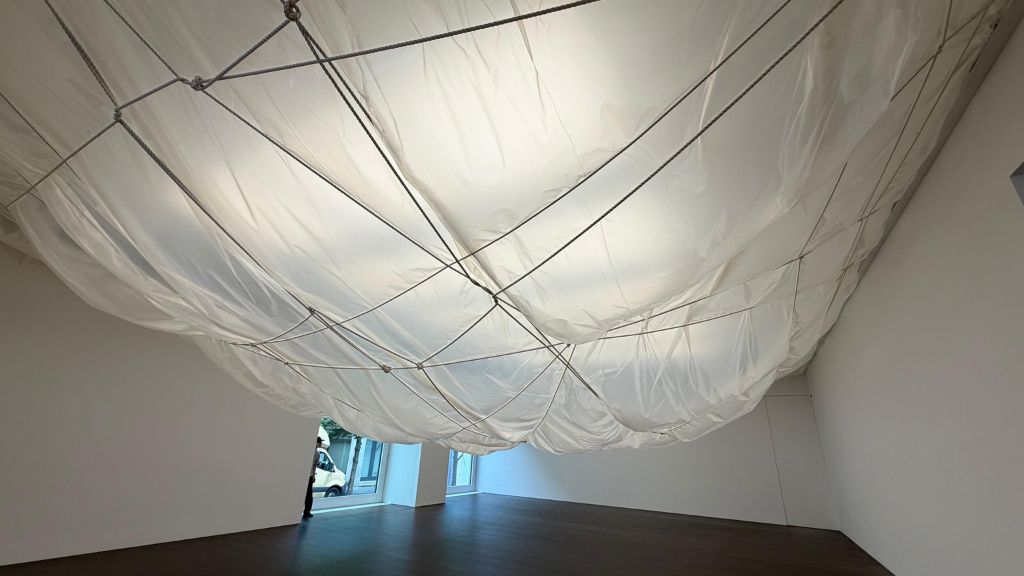
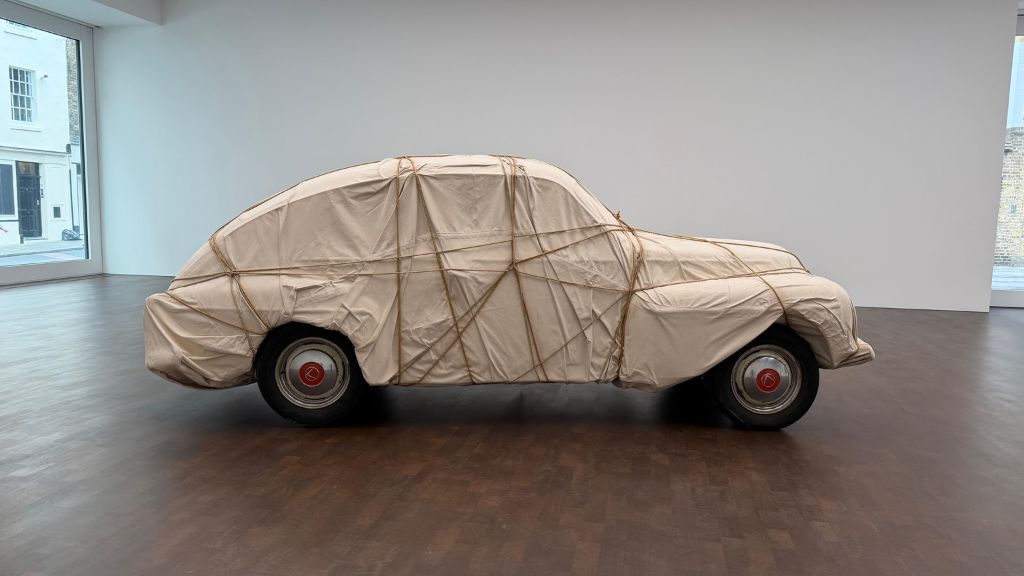
Christo:Air. Photo: Afisha.London
Christo began exploring the idea of wrapping in the 1960s, creating transparent volumetric forms cinched with rope. These experiments became the foundation for the monumental temporary works he later developed with Jeanne-Claude — projects that transformed familiar cityscapes and natural environments through fabric, polyethylene, rope and air, including the now-iconic wrapped Reichstag.
Their installations required years of preparation, existed only briefly, and were then entirely dismantled and recycled. Christo and Jeanne-Claude famously refused sponsorship and financed their projects independently through the sale of sketches, preparatory drawings and collages.

Annya Sand admits that, if given the chance to experience one project in person, she would choose The Floating Piers.
The possibility of walking on water feels deeply poetic and almost meditative to me. There is an extraordinary combination of grandeur and silence in that project — the movement of light and water, and at the same time a profoundly personal sense of journey. I feel very close to the idea of art that does not separate the viewer from itself, but invites us to become part of the work both physically and emotionally.
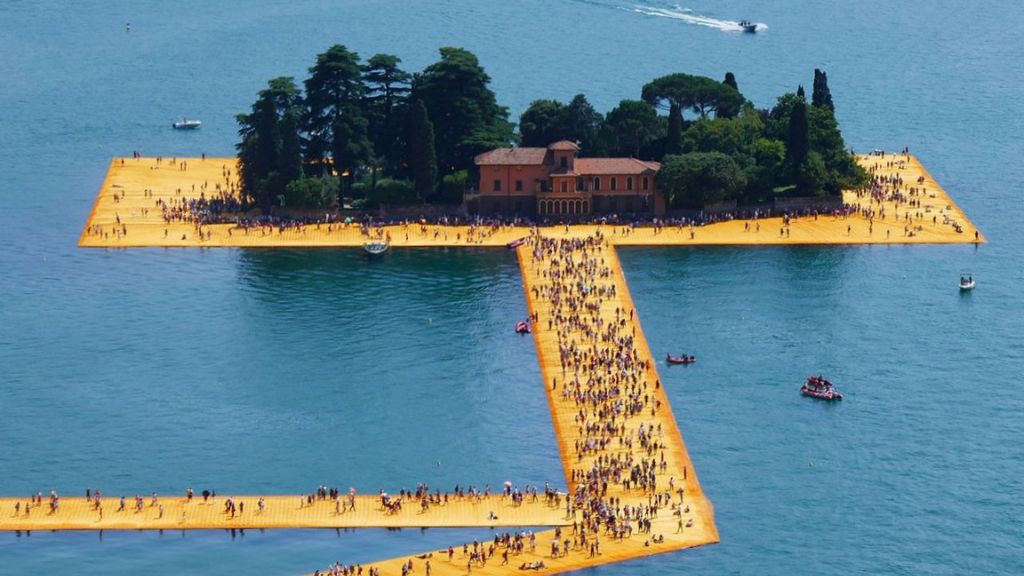
The Floating Piers, 2016. Photo: NewtonCourt, CC BY-SA 4.0, via Wikimedia Commons
Christo himself believed that his art existed in the service of freedom and curiosity. His works, he argued, should belong to no one and were under no obligation to endure. Once completed, every installation was dismantled, leaving behind only memory, photography and archival trace.
Christo: Air is open at Gagosian until 21 August 2026.
20 Grosvenor Hill, London W1K 3QD.
gagosian.com
Cover photo: Christo and Jeanne-Claude Foundation and Gagosian
Read also:
“Swan Lake”: how Tchaikovsky’s ballet became a symbol of protest
Wardrobe as Diplomacy: an exhibition marking the centenary of Queen Elizabeth II in London
Related Articles


SUBSCRIBE
Receive our digest once a week with quality Russian events and articles