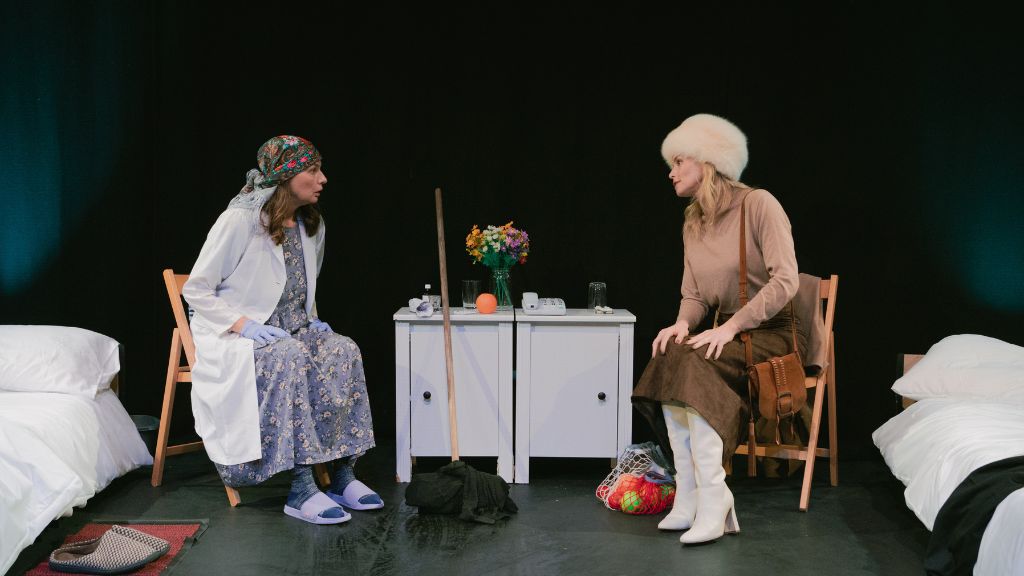
Two Women: a comedy about female rivalry
Contemporary drama rarely spares its audience, choosing subjects that make us uncomfortable and quietly shift in our seats, wondering: are we being accused of something right now, or are we simply being shown ourselves — funny and awkward as we are? And when it comes to love triangles, adultery and female rivalry — subjects that today can easily slip either into melodrama or outright farce — contemporary drama becomes particularly merciless. But if we turn the clock back just a little, choosing a text not from the 2020s but, for example, from the late 1990s, the emphasis suddenly begins to look very different. That is why the material on which Two Women is based seems, at first glance, to be quite a risky choice.
All the more interesting, then, is watching how director Yanina Hope manages to avoid all the obvious traps contained in the original material. Krasnogorov presents us with the full package: passions, caricatured characters and moralising conclusions. Yanina, in turn, offers the audience a subtle psychological comedy. The anecdotal nature of the situations moves into the background, and we become observers of human nature.
This article is also available in Russian here
The production brings together two plays by Valentin Krasnogorov, whose action unfolds under different circumstances and even in different historical periods. Krasnogorov’s plays themselves are difficult to call contemporary. They were written at the end of the twentieth century, and this is felt not only in the language but also in the dramatic structure itself. Stories about a wife and a mistress forced to sort out their relationship because of a man now seem more like a legacy of television melodramas from the past than material for contemporary theatre.
However, the director finds an internal rhyme between them, turning the evening not into a collection of separate stories but into a single reflection on how relationships between women are constructed and why society so often offers them the role of rivals. The text was clearly written at a time when feminism was still something people spoke about with disdain (not that very much has changed today, but we are glad that at least there are attempts to change the patriarchal way of looking at these things). Krasnogorov’s plays demonstrate an unmistakably male gaze, whereas the production attempts to shift this into a comedy of situations and towards female self-expression through interpersonal conflict.
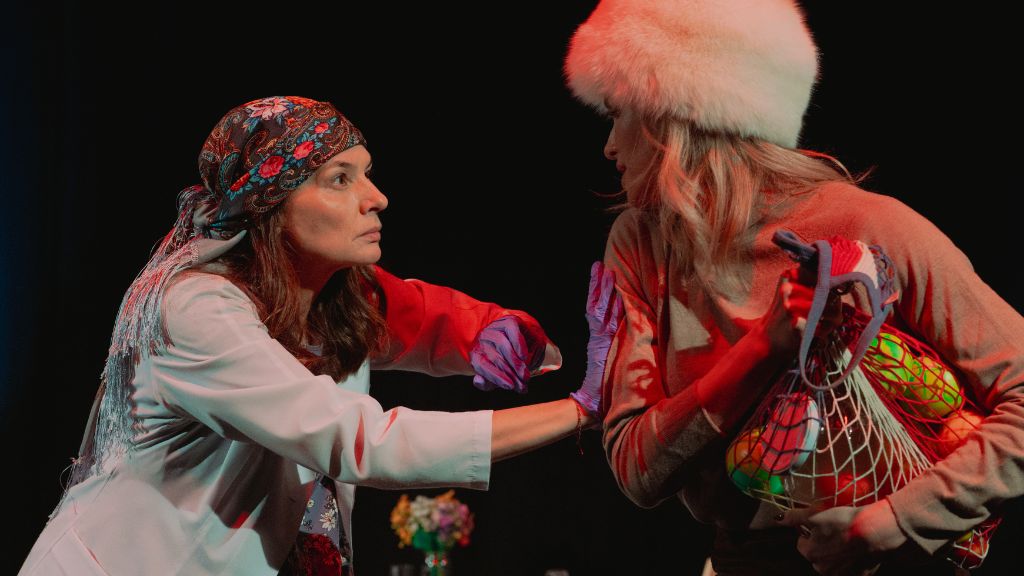
“Two women”
One of the production’s most successful decisions is the casting. The same two actresses perform the characters in both plays, and this device turns out to be far more than simply an effective theatrical trick. Because of it, the audience begins to notice recurring intonations, similarities of fate and situations appearing on opposite sides of time. Women whom we are accustomed to setting against one another unexpectedly become reflections of each other. The man, in this sense, appears more as part of the scenery and a given circumstance than as the trophy he was in the original text.
At the same time, the production does not attempt to present a simple manifesto about female solidarity. Its strength lies precisely in its nuances. There are no clearly right or wrong characters here, no heroines who exist only as victims or rivals. Thanks to the actresses and the creators for shifting the focus within this endless conflict between women. To be funny? Oh yes! Let’s! To be jealous? None of us is without sin. But please, let us remove one thing from the agenda: the idea that we are fighting over a man as though he were a trophy. At the centre of the story are women — their choices, their dignity and their right to be not a function of someone else’s story but the authors of their own. Before us appear living people with their own weaknesses, fears and hopes. Together with the heroines, we laugh and enjoy ourselves.
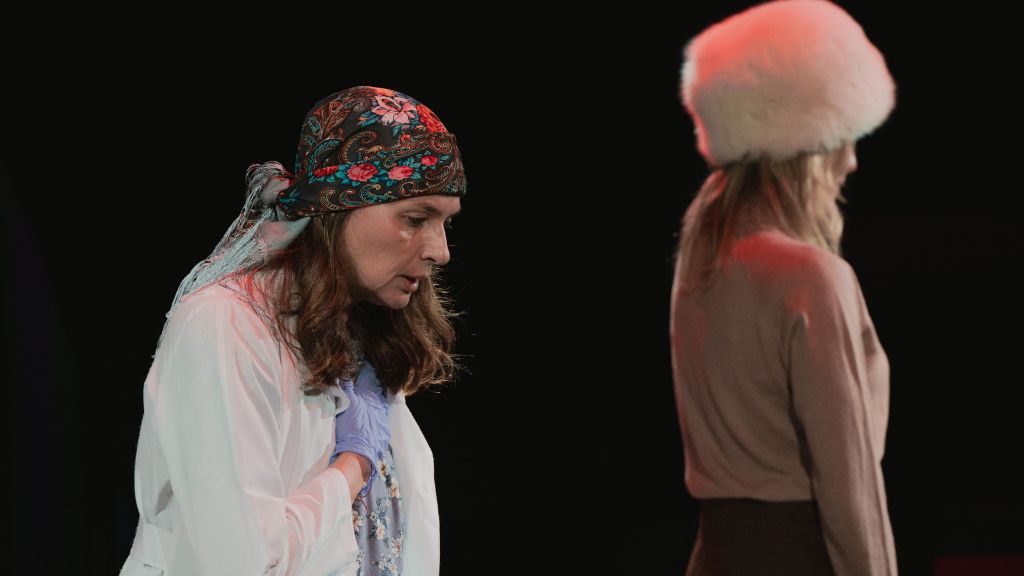
“Two women”
To a great extent, this balance is achieved thanks to the performances of Alina Nizova and Polina Polyakova. The actresses feel the boundary between comedy and drama with remarkable precision, never allowing their characters to turn into a collection of social stereotypes. Their heroines are funny, touching, vulnerable and recognisable at the same time.
Director Yanina Hope does not attempt to artificially “modernise” the text or disguise its age. Instead, she carefully shifts the emphasis. Where it would have been easy to end up with either farce or domestic melodrama, the production opens a conversation about female agency — about the ability of its heroines to determine their own lives outside the imposed roles of wife, mistress or rival.

This is precisely why the production becomes more interesting than its original source material. Stories that might have seemed outdated begin to sound unexpectedly relevant. As a result, Two Women becomes a production not so much about romantic conflicts as about the ability to see another person behind the familiar roles assigned to them. And that is a far more complex and far more interesting subject than the title or the plot might at first suggest.
Text by Zoe Ruter
Playwright, theatre director and theatre critic
Cover photo: Two Women

Read also:
Robin Hood’s legendary Major Oak has died in Sherwood Forest
UK museum charges: Britain debates the future of free access
Elsa Schiaparelli: from Italian aristocrat to fashion’s boldest visionary
Related Articles

SUBSCRIBE
Receive our digest once a week with quality Russian events and articles