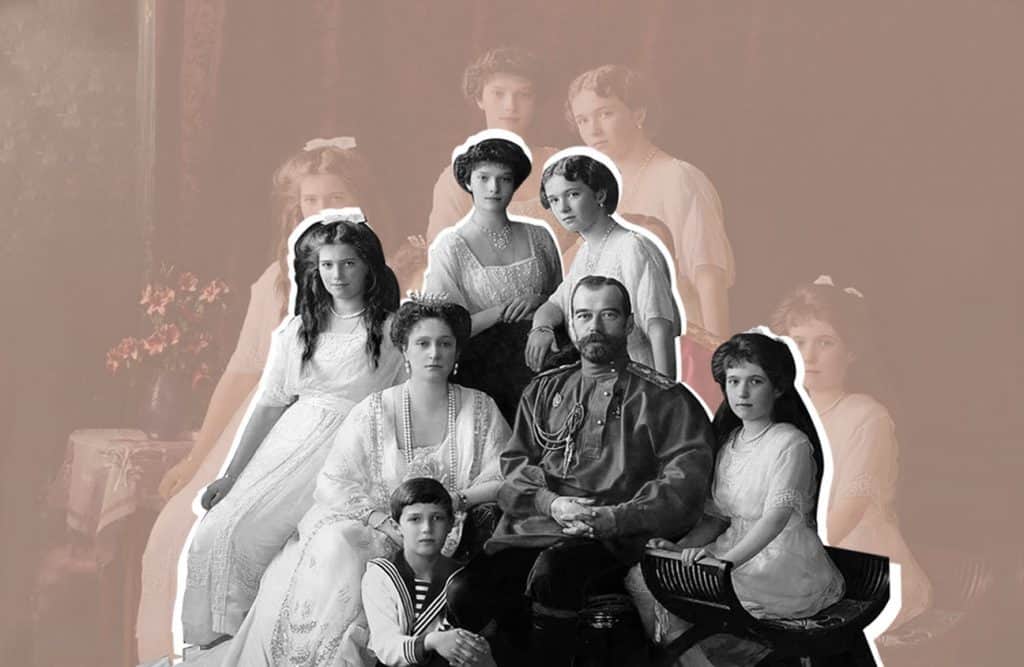
The Last Tsar: Blood and Revolution opens at London’s Science Museum
The centenary of the murder of the imperial family is a significant date not only for Russia. In Britain, too, it has not gone unnoticed: the story of the Romanovs has long held a particular fascination here. Partly, perhaps, because of their close ties to the House of Windsor. King George V was a first cousin of Nicholas II: the Tsar’s mother, Maria Feodorovna, was the sister of Queen Alexandra, while Empress Alexandra was herself a granddaughter of Queen Victoria. Afisha.London takes a closer look at The Last Tsar: Blood and Revolution, now on display at the Science Museum in London.
This article is also available in Russian here
What is on display?
The exhibition The Last Tsar: Blood and Revolution, which opened at the Science Museum in September, explores the role of science in the life and death of Emperor Nicholas II and his family. It offers visitors a chance to engage with one of the most enduring and complex stories of the 20th century.
At its core, the exhibition examines how advances in medicine shaped the private lives of the imperial family during the turbulent years between 1900 and 1918, and how scientific developments later played a crucial role in uncovering the truth of their fate.

Among the highlights are rare personal items, including family diaries and jewellery recovered from the site of the execution. One of the most striking pieces is a Fabergé egg, presented by Empress Alexandra to Nicholas just a year before the fall of the dynasty. These objects open a window onto the intimate world of the Romanovs. The exhibition also features, for the first time, photo albums compiled by the family’s English tutor.
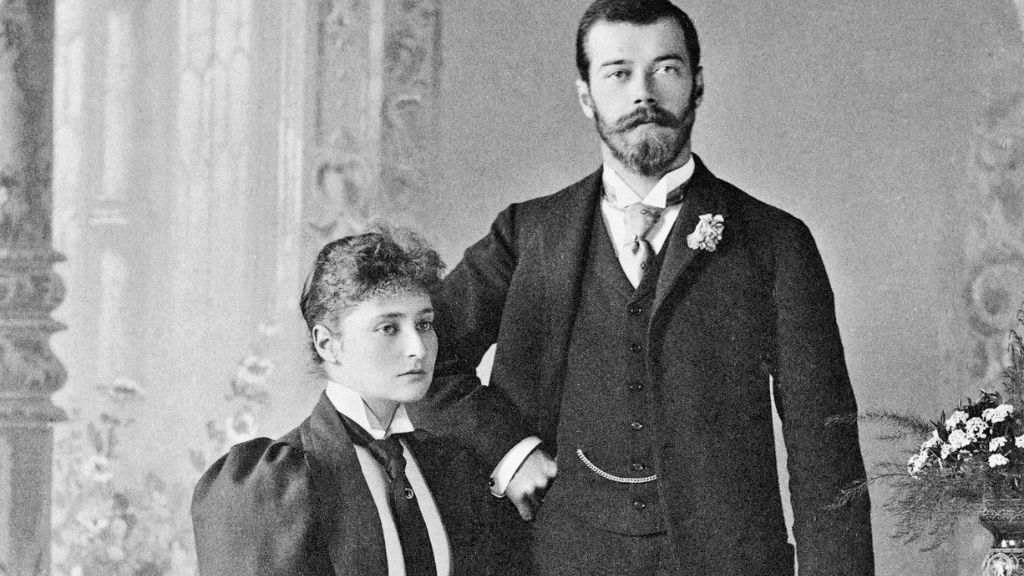
Tsarevitch Nicholas Alexandrovitch of Russia and Princess Alix of Hesse. Photo: Gustav William Henry Mullins, Public domain, via Wikimedia Commons
Alexandra and Nicholas
The exhibition sheds light on the ways in which the imperial family navigated moments of crisis, turning both to modern medicine and to more questionable remedies. This is particularly evident in their attempts to manage haemophilia, the so-called “royal disease” suffered by the Tsarevich Alexei and inherited through Queen Victoria’s line.
The need to keep the illness secret, combined with the limits of contemporary medicine, led the Romanovs to seek unconventional forms of treatment, including the intervention of Grigori Rasputin. His influence is often seen as one of the factors that contributed to the eventual collapse of the 300-year-old dynasty.

Perspectives
Sir Ian Blatchford, Director of the Science Museum, notes:
“This exhibition marks the centenary of the end of the Romanov dynasty and explores one of the most dramatic periods in Russian history through the lens of science. Our curatorial team has brought together an exceptional range of rare objects to tell this story. I am deeply grateful to our colleagues in the UK, Russia and the United States for making this exhibition possible.”
The exhibition also addresses the long and complex investigation into the fate of Nicholas II and his family, which began in 1918 and, in many respects, continues to this day. Visitors are invited to examine evidence from the execution site alongside other materials, from the Tsar’s physician’s dental prosthetics and a diamond earring belonging to the Empress to a bullet-scarred icon, piecing together the events of that night.

The investigation, involving British experts among others, became one of the earliest examples of DNA analysis being applied to historical inquiry. Blood samples from surviving relatives, including Prince Philip, Duke of Edinburgh, together with advances in DNA research and 3D reconstruction, enabled scientists to identify the remains with a high degree of certainty.
Today, there is little doubt within the scientific community regarding these findings. Formal recognition by the Russian Orthodox Church was anticipated around the centenary but has yet to be confirmed.
Historian and author Helen Rappaport observes:
“I was deeply disappointed that the Russian Orthodox Church did not offer a sense of closure and reconciliation on such a significant anniversary. It would have been right to acknowledge what is now widely understood and finally bring this chapter to a close.”
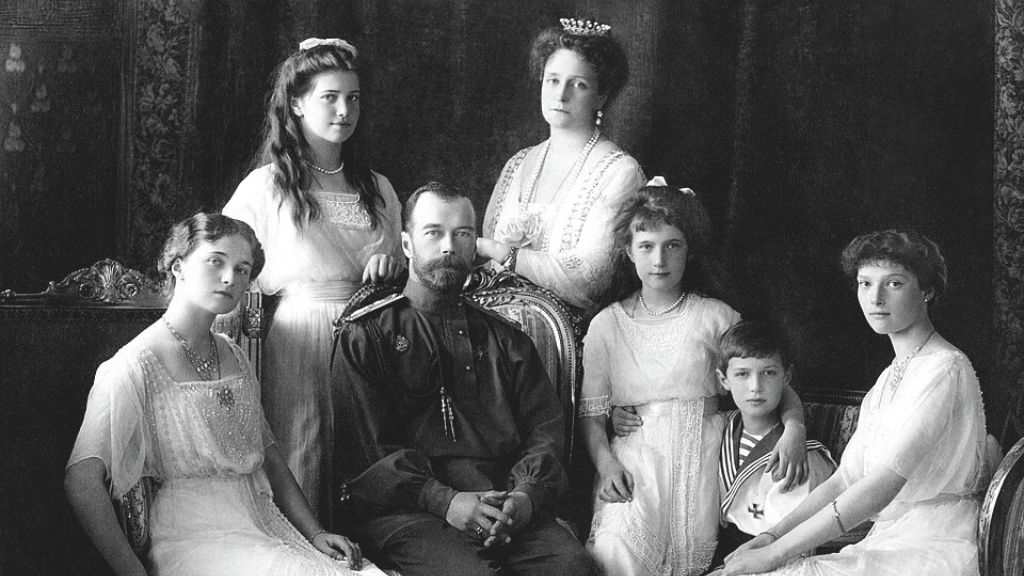
Imperial Family, 1913. Photo: Boasson and Eggler St. Petersburg Nevsky 24., Public domain, via Wikimedia Commons
The Romanov daughters
Alexandra Tolstoy, a distant relative of Leo Tolstoy and daughter of the historian Nikolai Tolstoy, reflects:
“For Britain, it is important to understand the tragic events of the Russian Revolution and the murder of the imperial family. The value of history lies in learning from it and ensuring such tragedies are not repeated. The fate of Nicholas II and his family is not only of historical significance; the dignity and composure with which they faced their end continue to resonate today.”
Cover photo: collage Afisha.London
Read also:
Nicholas II and George V: A History of Friendship and Duty
The last Stroganov: how Hélène de Ludinghausen revived a lost Russian legacy
Felix Yusupov and Princess Irina of Russia: love, riches and emigration
Related Articles



SUBSCRIBE
Receive our digest once a week with quality Russian events and articles